



Antique Revolving Book Shelf
An antique revolving book shelf turns a towering stack of volumes into an accessible library, bringing practical British invention directly to your desk or fireside.
Antique Revolving Book Shelf
An antique revolving book shelf brings compact storage and smooth rotation to the study, sitting room, or library. These timber items let readers reach multiple volumes without leaving the armchair.
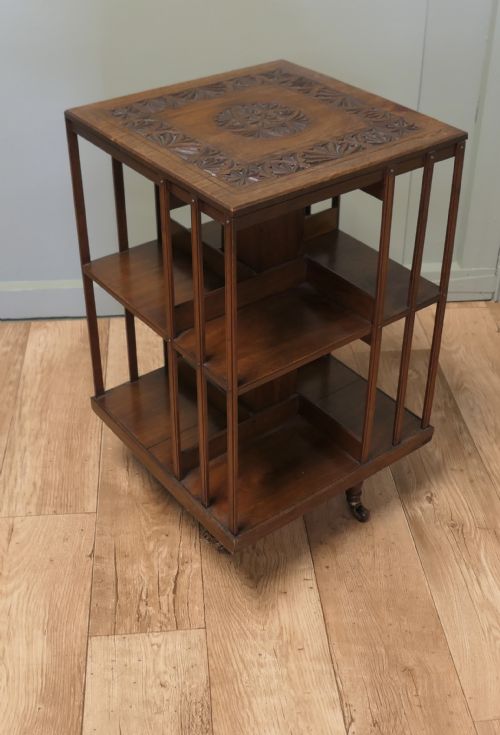
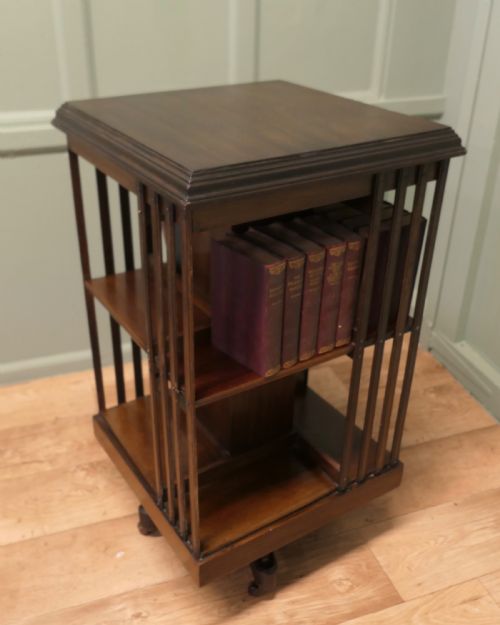
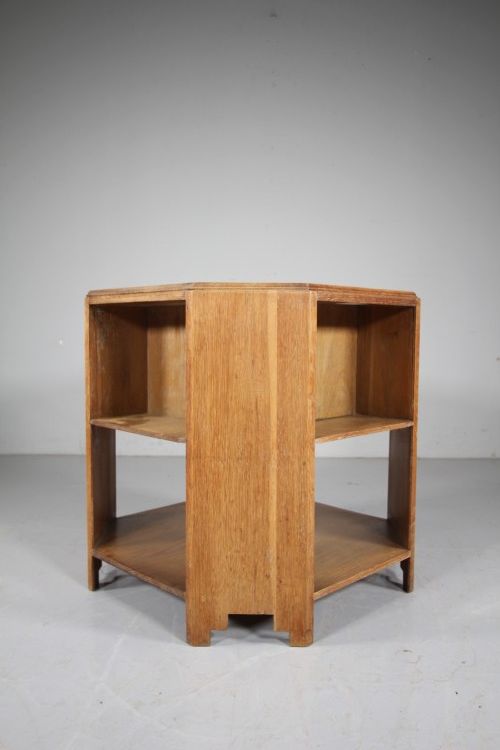
The versions met most often on this page date from the late nineteenth century and the Edwardian era. Makers constructed them in sturdy oak and rich mahogany, occasionally adding satinwood inlay or brass details for decorative lift.
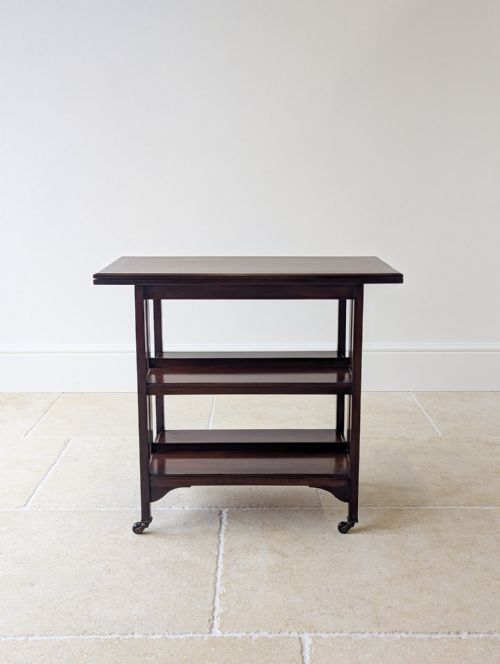
Most examples stand on low frames with cast iron mechanisms hidden beneath to ensure steady movement. Alongside dedicated bookcases, variations include games tables fitted with bookshelf bases from the early twentieth century.
How they were made
Cabinet makers built these revolving book shelves using solid mahogany and oak, selecting close-grained timbers that could bear the heavy weight of bound volumes. Panels were joined securely to prevent warping as the seasons changed.
Internal mechanisms relied on cast iron and brass components to support the weight and permit effortless rotation. Inlaid satinwood banding and intricate carved details were added by hand on finer Edwardian and Victorian examples.
Antique Revolving Book Shelf Retail Price Guide 2026
Typical asking prices for revolving book shelf among the pieces listed under this phrase on Sellingantiques today, from the lower quarter to the upper quarter. They describe what is for sale here now, not the wider market.
Listings span the late nineteenth century through the 1930s, featuring oak, mahogany, and occasional satinwood inlay.
What varies in quality
The standard of timber selection and depth of cabinet work set the better examples apart from standard workshop production. Fine grain matching on mahogany panels and crispness in carved details indicate superior construction.
Smoothness of rotation reveals the quality of the hidden internal mechanism. A well-balanced frame turns without listing or catching, maintaining steady equilibrium even when fully loaded with books.
The Antique Revolving Book Shelf Glossary
- Edwardian
- A stylistic period spanning the reign of King Edward VII, noted for lighter furniture forms and classical revival details. Pieces from this era often feature delicate satinwood inlay.
- Mahogany
- A durable, reddish-brown tropical hardwood favoured for fine British cabinet making throughout the nineteenth century. Its stability made it ideal for items requiring complex joinery.
- Satinwood
- A lustrous, yellow-toned timber used primarily for decorative stringing and inlay work on dark woods. It adds subtle contrast to Edwardian bookcase tiers.
- Cast iron
- A strong, heavy metal alloy utilised in the concealed undercarriages and revolving mechanisms of these bookcases. It provides the necessary ballast to prevent tipping during rotation.
Antique Revolving Book Shelf: Frequently Asked Questions
How do revolving bookcases work?
These pieces use a concealed internal pivot mechanism, typically built from cast iron and brass, mounted on a low cruciform base. This allows the upper tiers to spin freely while the heavy base stays firmly planted on the floor.
Weight distribution matters for smooth turning. Placing heavier volumes on the lower shelves keeps the centre of gravity low and prevents any wobble during rotation.
Are Edwardian revolving bookcases sturdy?
Edwardian examples are exceptionally robust, constructed from solid oak or mahogany designed to hold dense rows of hardback books. Their wide four-legged bases provide a stable foundation that resists tipping even when fully loaded.
Over decades of use, the internal pivot might accumulate dust or dry out. A gentle cleaning and lubrication of the hidden metal parts usually restores effortless movement.
What woods were used?
Makers relied principally on mahogany and oak for the main body and shelves of these pieces. Oak offers a pronounced grain and robust strength, while mahogany provides a smooth, dark surface suited to traditional interiors.
Finer versions incorporated contrasting satinwood inlay or bandings along the shelf edges. These decorative touches reflect the refined tastes of late Victorian and Edwardian cabinet makers.
How do I care for the wood?
Protect the timber by keeping the bookcase away from direct heat sources and strong sunlight, which can dry out mahogany and fade oak finishes. Occasional application of a suitable wax preserves the natural lustre of the polish.
Avoid excessive moisture when cleaning the surfaces. A soft, dry cloth is sufficient for routine dusting of both the shelves and the carved exterior details.