





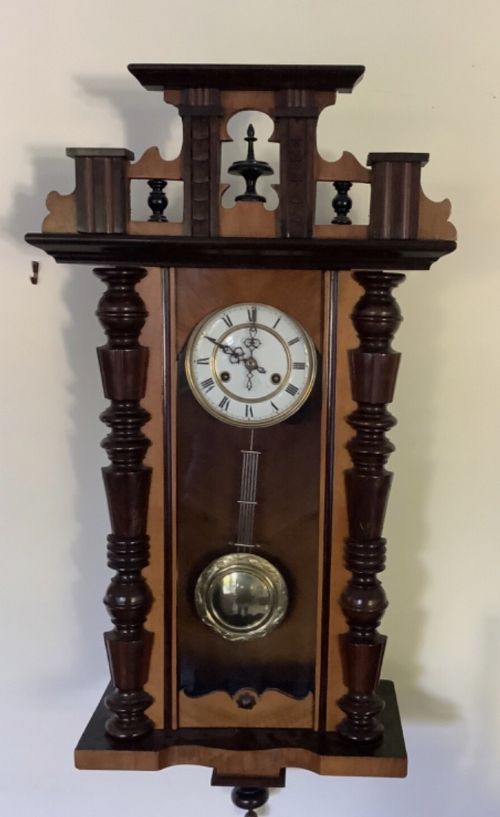

Antique Regulator Wall Clock
An antique regulator wall clock brings precision timekeeping and stately presence to a room, drawing the eye with pendulum movement and polished timber.
Antique Regulator Wall Clock
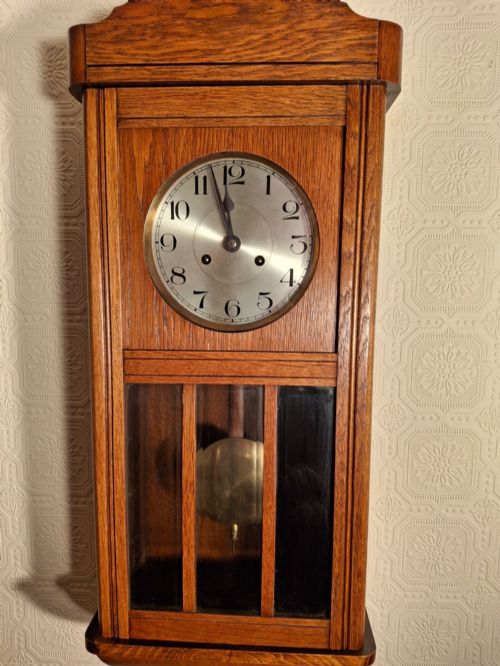
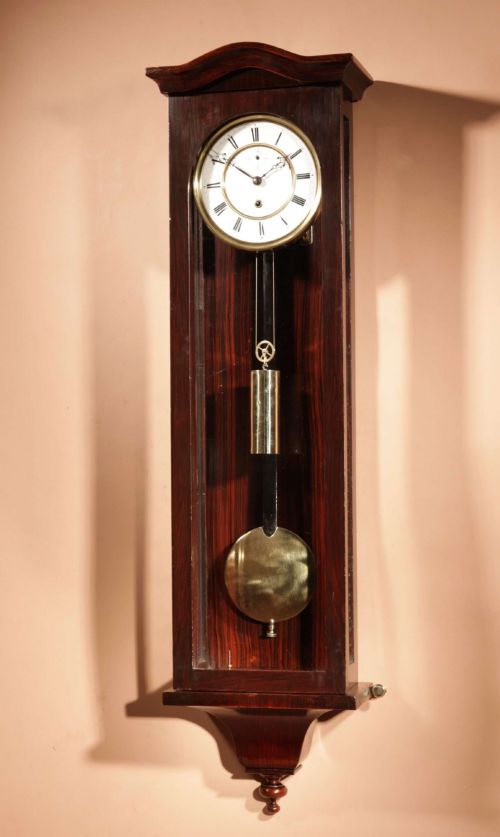
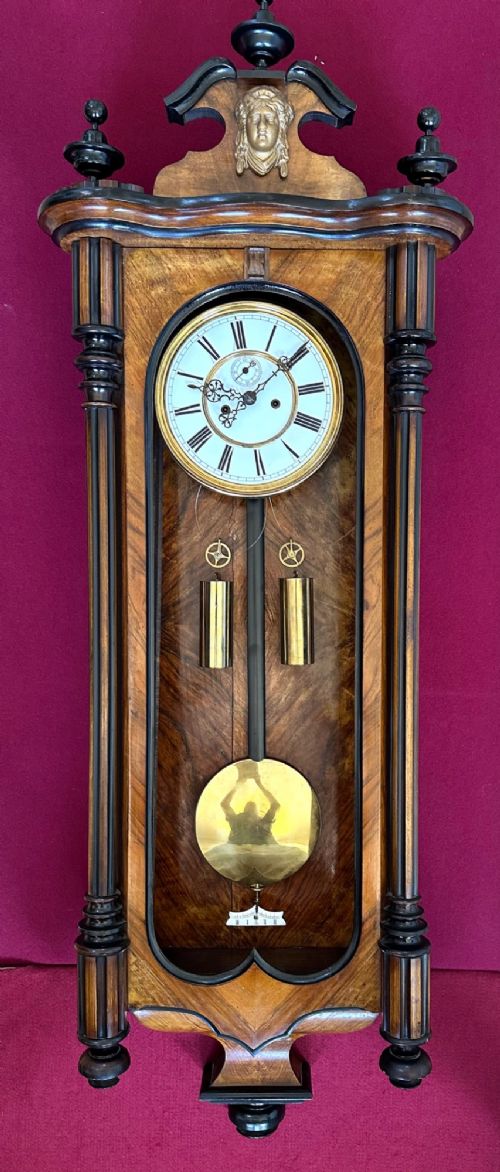
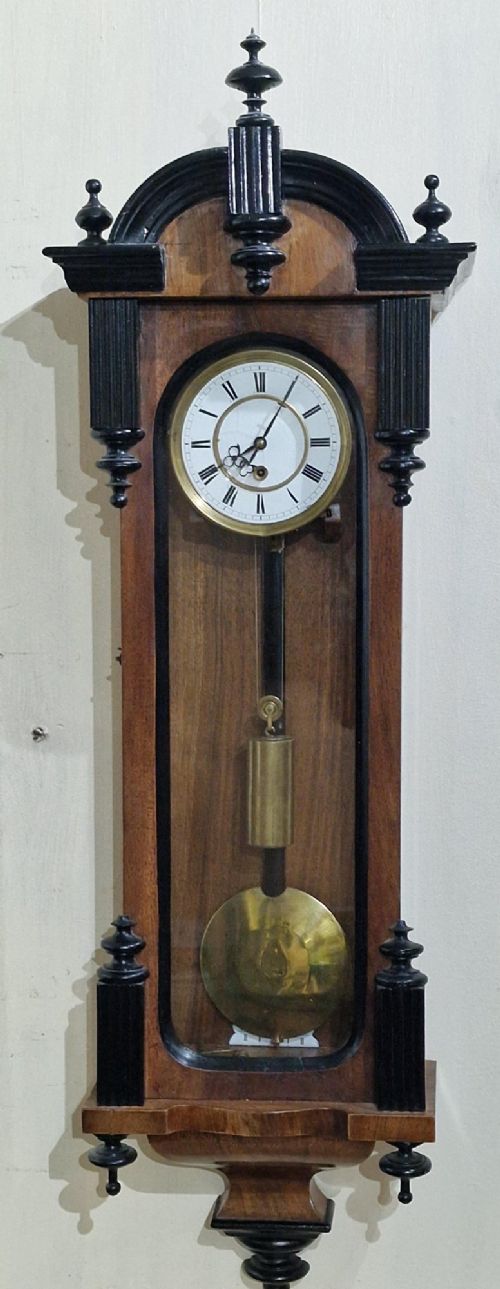
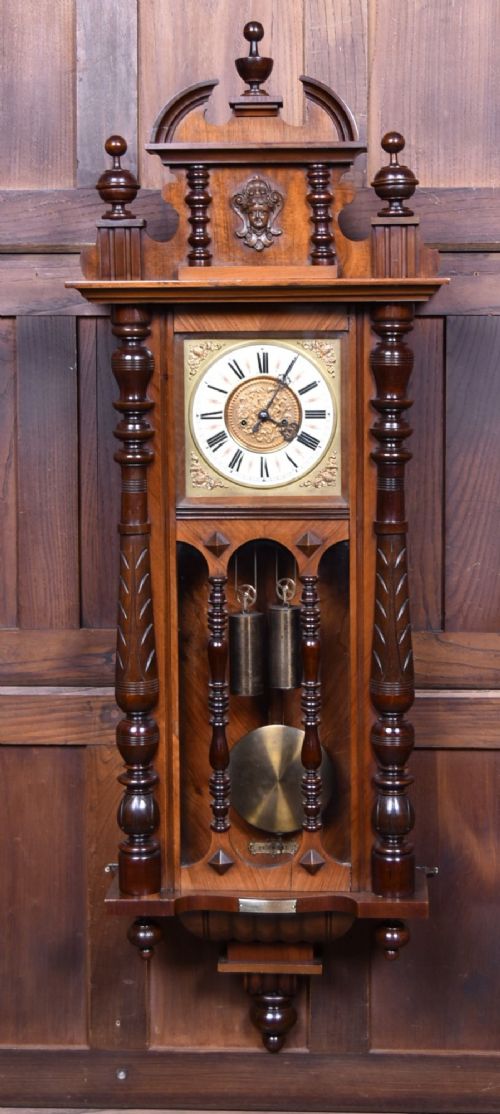
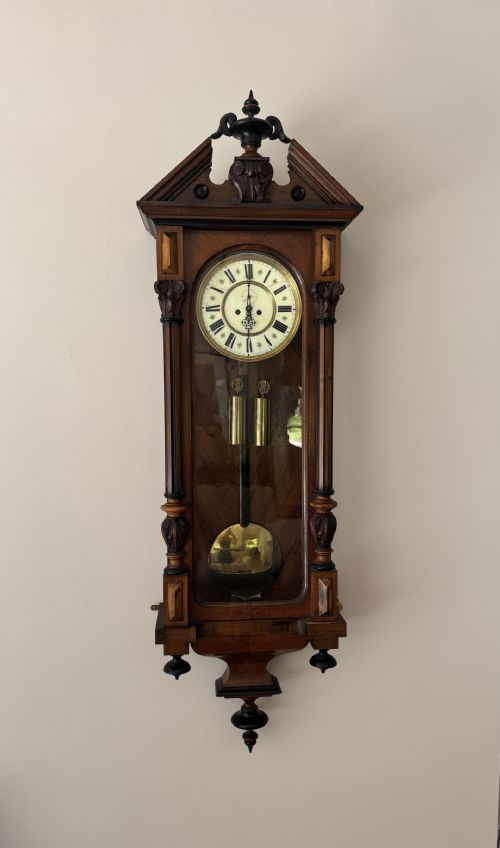
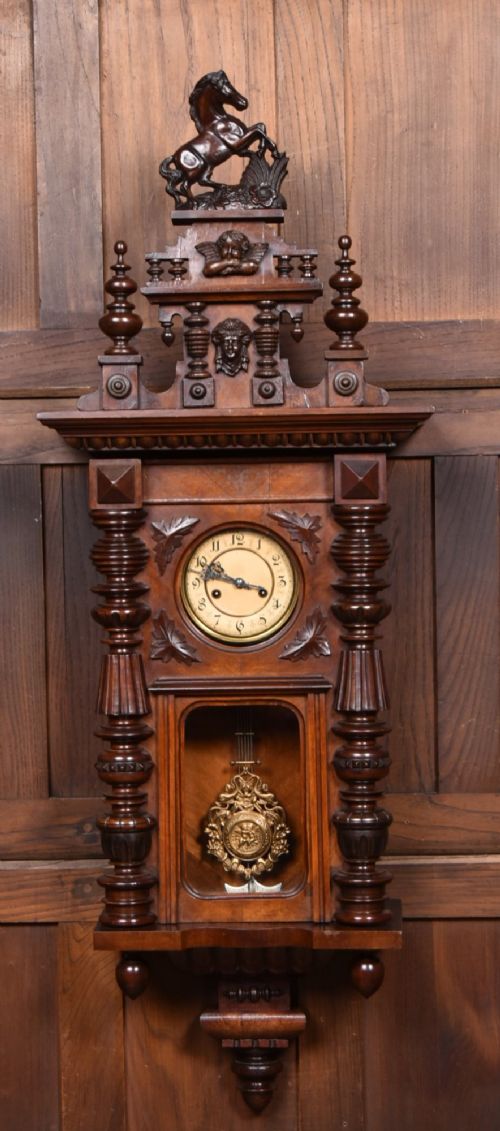
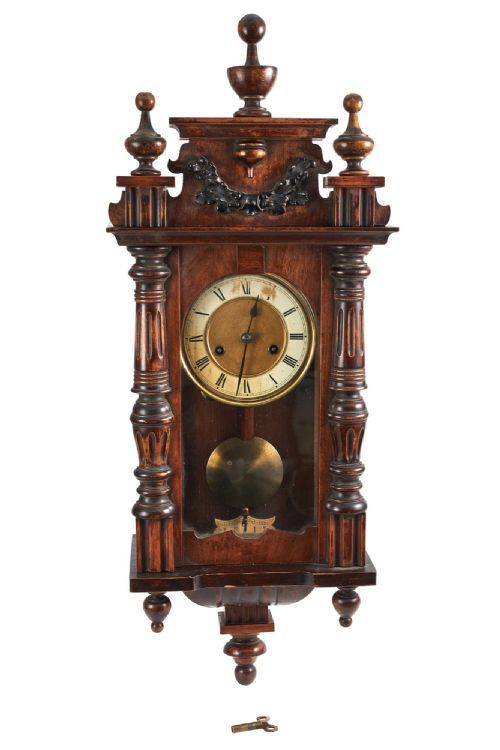
An antique regulator wall clock encompasses the refined vertical timepieces developed in the nineteenth century, with walnut cases dominating the selection. Buyers most frequently encounter Victorian Vienna regulators, which feature prominent glass panel doors and weighted movements designed for exact timekeeping.
Beyond the standard Austrian and German models, the selection includes English drop dial designs, French Art Deco oak and walnut pieces, and Black Forest variants. These clocks span from the mid-nineteenth century through to mid-century examples, each maintaining the wall-mounted format and pendulum drive characteristic of regulators.
Makers such as Gustav Becker, Johann Baptist Beha, and AG Lenzkirch appear among the German and Austrian output, alongside London retailers like John Walker. Cases range from small miniature timepieces to large double and triple weight architectural house clocks.
Timber and Brass Construction
Cases rely heavily on walnut, often burr walnut or carved oak, alongside ebonised wood and mahogany. These timbers are shaped into architectural or glass-fronted housings designed to showcase the swinging pendulum and descending brass weights.
Internal mechanisms combine brass gear trains with enamel dials, steel components, and glass panels. Eight-day, month duration, and striking configurations dictate the complexity of the brass weight or fusee setups housed within.
Listings feature walnut as the predominant timber, spanning Victorian, Biedermeier, and Art Deco periods across English, German, and French origins.
Movement Complexity and Case Carving
Distinction across the range rests upon movement duration and weight configuration, moving from simple single-train timepieces up to double and triple weight grande sonnerie striking systems. Month-duration movements and specialised automation further separate standard models from finer productions.
Case craftsmanship defines visual hierarchy, where crisply carved walnut woodwork, architectural pediments, and bevelled glass doors elevate a piece far above plain utilitarian housings. Signed dials from notable makers add documented provenance to the mechanics.
Gustav Becker·Johann Baptist Beha·AG Lenzkirch·John Walker·Odo·Girod·Ansonia
The Antique Regulator Wall Clock Glossary
- Regulator
- A precision pendulum clock designed for high accuracy and timekeeping reference. These pieces typically feature a long glass door to observe the pendulum and weight descent.
- Vienna Regulator
- A prominent wall clock style originating in nineteenth-century Austria and Germany, celebrated for walnut cases and weight-driven movements. They often incorporate elaborate carved wooden pediments and side pillars.
- Fusee
- A conical pulley used in clock movements to equalize the declining power of a mainspring as it unwinds. This mechanism ensures consistent force is delivered to the gear train for steady timekeeping.
- Grande Sonnerie
- A complex striking train that chimes the hours and quarters automatically on every quarter hour. It represents a high degree of clockmaking skill found in multi-weight regulator movements.
Antique Regulator Wall Clock: Frequently Asked Questions
How do I wind my regulator wall clock?
Winding involves using a matching key to raise the brass weights or tension the springs via the dial winding holes. Care must be taken not to overwind the movement.
Most eight-day models require weekly attention, while month-duration variants need significantly less frequent winding to maintain their operational cycle.
Where should I hang a wall clock?
Mounting requires a secure, solid wall using appropriate fixings to support the substantial weight of timber cases and metal movements. A stable surface prevents vibrations that disrupt the pendulum swing.
Positioning should also avoid areas subject to dampness, extreme temperature fluctuations, or direct sunlight to protect the walnut veneer and delicate enamel dial.
What is the difference between a timepiece and a striking clock?
A timepiece indicates the hours and minutes without producing audible chimes or strikes on the hour. These movements generally feature a single weight or spring train.
Striking clocks incorporate additional gear trains, hammers, and gongs or bells to sound the passage of time audibly. Double and triple weight models control these supplementary striking and chiming functions.
How do I set the correct time?
Setting the time involves moving the minute hand gently in a clockwise direction until the correct hour is reached. Moving hands anticlockwise can damage the striking mechanism.
Allow the clock to strike fully after each hour change before advancing further, and let the pendulum settle into an even beat once the hands are set.