



Antique Regimental Portrait
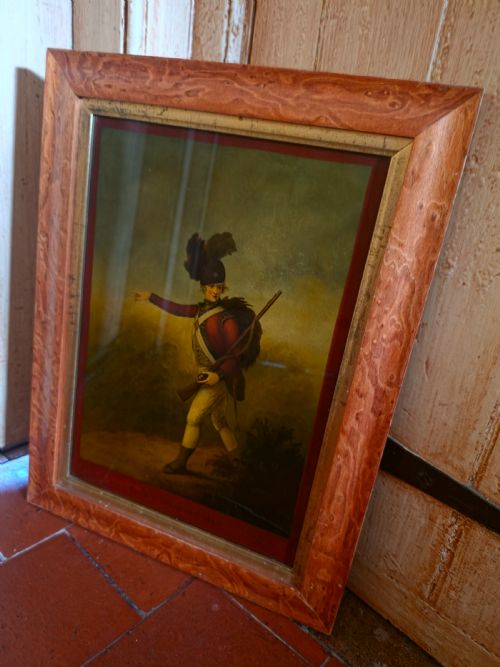
An antique regimental portrait captures the military officer or soldier through oil, watercolour, and reverse glass.
Antique Regimental Portrait
An antique regimental portrait documents military figures from the eighteenth century to the early twentieth century. These works appear as oil paintings on canvas, delicate miniatures, watercolours, and reverse glass pictures.
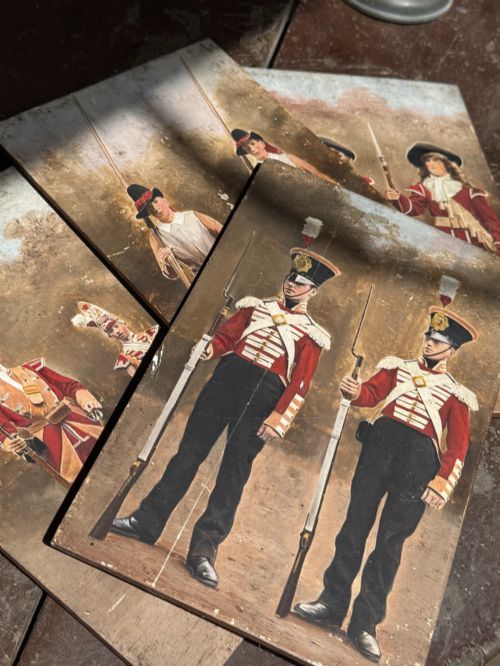
The selections on this page range from Georgian depictions of general officers to Victorian militia members and Edwardian military watercolours. Buyers encounter framed canvas works, painted panel soldiers, and dedicated picture frames.
Subjects include named officers of specific regiments such as the Royal Artillery, the 5th Royal Lancashire Militia, and the 15th King's Hussars. Horses and individual soldiers also form part of this military tradition.
Materials and construction methods
Artists painted these subjects using oil on canvas, oil on panel, and watercolour on paper. Some works utilise reverse glass painting techniques to present detailed imagery of infantrymen.
Support structures involve wood panels and woven canvas stretched for oil application. Frames incorporate metal and silver plating to house portrait photographs and pictures.
One portrait records the likeness of a horse named Balmoral.
Factors of artistic quality
The distinction in quality rests upon the precision of the uniform details and the skill of the portraiture. Works attributed to known hands or documented sitters carry distinct historical weight.
Medium choice influences the character of the piece, where detailed watercolour and controlled oil paint reveal the rank and regiment with greater clarity.
Henry Walton·Sir Richard Westmacott·Snaffles
The Antique Regimental Portrait Glossary
- Reverse glass
- A technique where the artist paints directly onto the reverse side of a glass sheet, creating a finished image viewed from the front. This method yields a distinct glossy surface.
- Portrait miniature
- A small, detailed painting on materials such as card or vellum, often housed in a protective case. These intimate works capture facial likenesses with fine brushstrokes.
- Watercolour
- A paint consisting of pigment suspended in a water-based solution, applied to paper. It offers transparent washes and delicate line work.
- Oil on canvas
- Pigments bound in a medium applied to a stretched woven fabric base. This combination allows for rich colour blending and texture.
- Panel
- A flat piece of wood used as a rigid support for painting. Artists utilised panels before canvas became the dominant medium.
Antique Regimental Portrait: Frequently Asked Questions
What periods do these portraits cover?
The available pieces span from the eighteenth century through the Victorian era and into the early twentieth century. This timeline covers Georgian, Victorian, and Edwardian aesthetic approaches.
Each period reflects distinct military uniforms and artistic conventions of the time.
How were these military portraits displayed?
Many oil paintings and watercolours hung in private homes, mess halls, or officers' quarters to commemorate service. Miniature portraits remained intimate keepsakes, often carried or kept on desks.
Silver plated frames housed photographic portraits of military personnel during the Edwardian period.
Are the regiments usually identified?
Several works name specific units, such as the Royal Artillery, the Bengal Army, and the 5th Royal Lancashire Militia. Details in the uniform often point to particular regiments.
Inscribed titles on the frame or canvas frequently clarify the sitter's identity and rank.
What materials support these artworks?
Canvases, wooden panels, and glass serve as the primary supports for the painted images. Watercolours utilise paper supports.
Frames incorporate wood and metal with silver plating to protect and present the artwork.