


Antique Red Desk Light
An antique red desk light brings rich colour and steady illumination to a workspace, drawing the eye with painted surfaces and warm metal tones.
Antique Red Desk Light
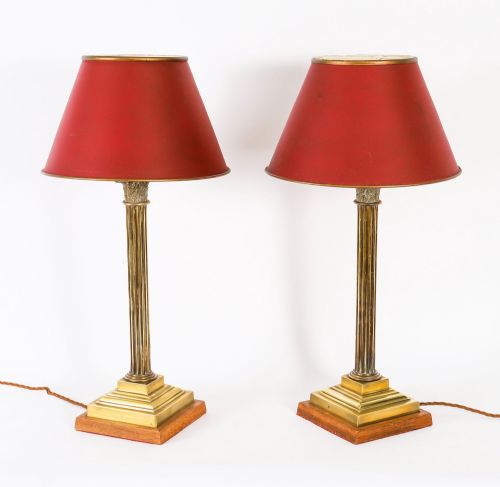
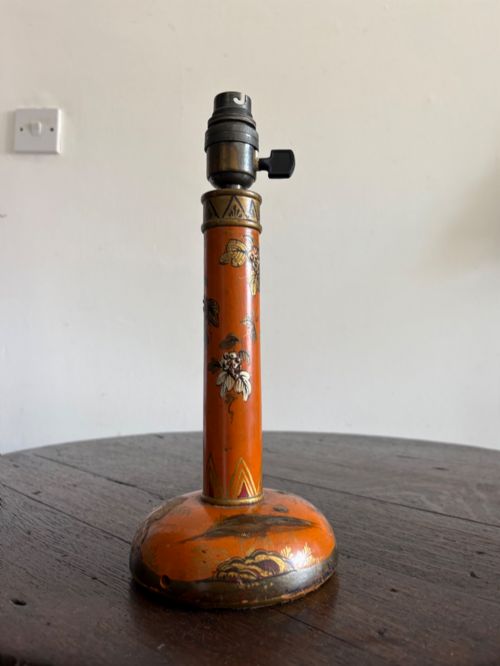
When you search for an antique red desk light, you encounter table lamps, candle screens, and desks formed across several centuries. The selection includes vibrant mandarin orange lacquer, hand-painted faience, and cold-painted bronze from the 1920s, alongside earlier Victorian and 19th-century lighting forms.
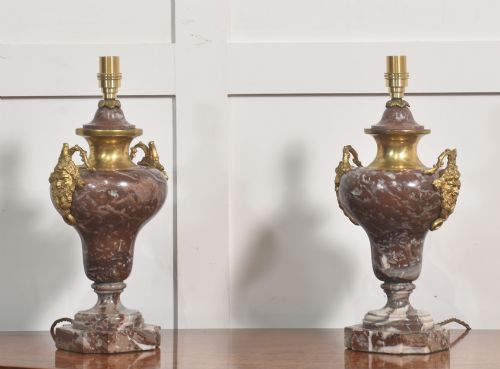
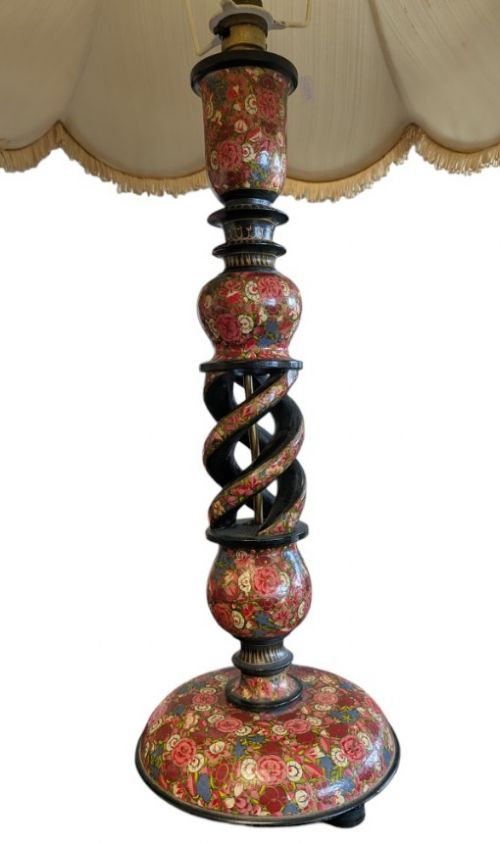
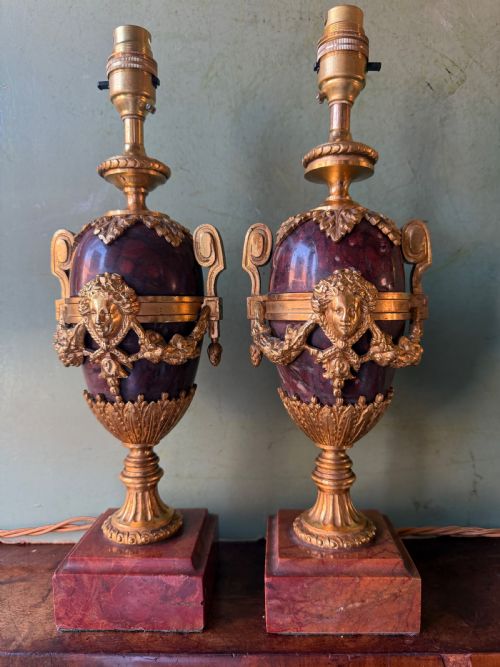
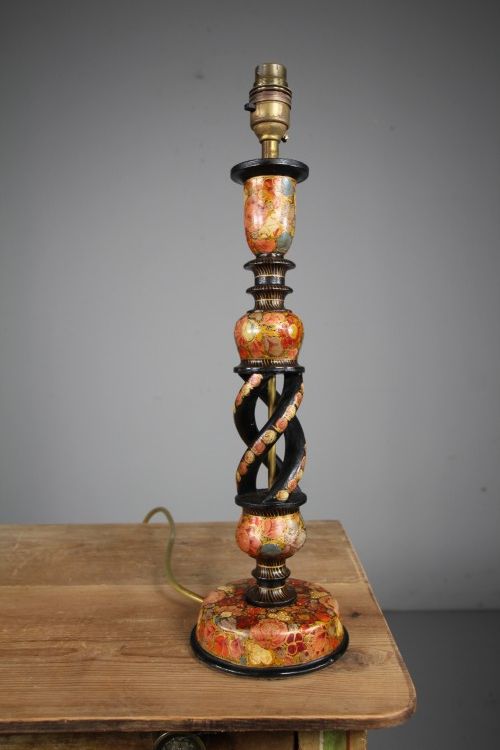
Many examples originate from French workshops styled in the Empire and Louis XVI periods, utilising rouge marble and gilt brass. Alongside these stand Kashmiri table lamps and Japanese Imari or Kutani porcelain vases adapted into bases.
The objects span from the 17th century through the Victorian era and into the Art Deco period, offering diverse forms from simple pressed brass to elaborately mounted figural designs.
How they were made
The pieces combine metals such as brass, gilt bronze, and ormolu with natural elements like oak, wood, and rouge marble. Metalwork involves casting, chasing, and patination, while ceramic and porcelain bodies feature hand-painted glazes.
Wooden furniture forms utilise traditional joinery in oak, while lamp adaptations often mount antique vases and urns onto metal bases. Lacquer and cold-painted finishes provide the striking red and mandarin orange surfaces seen across the selection.
The listings combine 19th-century French ormolu and rouge marble with 1920s Art Deco cold-painted bronze and hand-painted lacquer.
What varies in quality
Quality reveals itself in the crispness of the bronze chasing, the depth of the ormolu gilding, and the hand-painted detail on lacquer and faience surfaces. Finer items display careful integration of marble and metal components.
The distinction lies in whether a piece is an artisan creation with hand-finished bronze work or a simpler pressed brass production. Period harmony and the preservation of original painted surfaces separate standard examples from exceptional ones.
Bruno Zach·Heals
The Antique Red Desk Light Glossary
- Ormolu
- Gilded bronze, widely utilised in French decorative arts to accent marble and wood bases. The technique involves applying a finely ground mercury and gold amalgam to bronze.
- Rouge Marble
- A rich red limestone featuring white and grey veining, frequently deployed for 19th-century lamp bases and columns. It provides substantial weight and a strong colour foundation.
- Tole Peinte
- Painted sheet metal, commonly utilised for decorative lamp bodies and shades during the Victorian period. It allows for vibrant surface colours and hand-painted motifs.
- Imari
- Japanese porcelain decorated in underglaze blue, iron red, and gold, frequently adapted into lamp bases during the 18th and 19th centuries.
- Cold Painted Bronze
- A sculptural technique where bronze figures are painted with oil-based colours rather than fired in a kiln. This method yields vibrant hues found in Art Deco pieces.
Antique Red Desk Light: Frequently Asked Questions
How do I date an antique lamp?
Dating relies upon examining the materials, manufacturing techniques, and stylistic markers consistent with periods like the Victorian era or Art Deco.
Hardware, wiring methods, and base construction also offer clear indications of a piece's age and origin.
Were these lamps originally made for desks?
Many lighting pieces served as table lamps or side lights on writing surfaces, while others began life as vases or candlesticks before later conversion.
Candle screens and small writing tables fulfilled complementary desk functions in period interiors.
How should I care for antique metal and marble?
Dust surfaces gently with a dry microfibre cloth and avoid harsh chemical cleaners that can strip patination from brass, bronze, or gilt surfaces.
Marble benefits from occasional wiping with a damp cloth followed by immediate drying to protect the polished stone.
What is the difference between brass and ormolu?
Brass is an alloy of copper and zinc utilised for structural lamp bodies and cast components. Ormolu specifically denotes gilded bronze, carrying a deeper and richer golden lustre.
Ormolu mounts generally appear on higher-quality 19th-century French decorative items paired with rouge marble.