



Antique Quart Tankard
An antique quart tankard offers a solid grip on social history, bringing generous portions of tavern life directly to the modern table.
Antique Quart Tankard
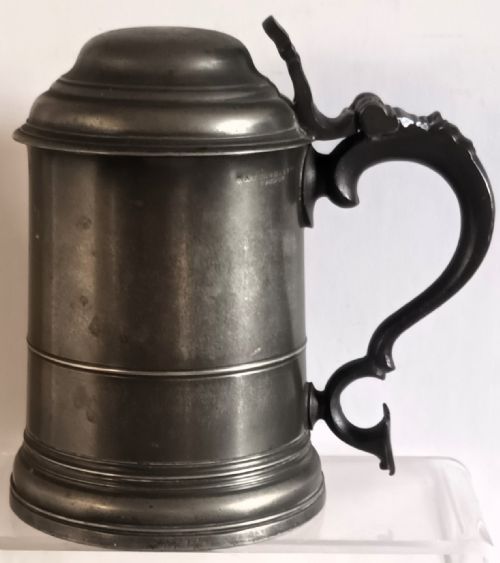
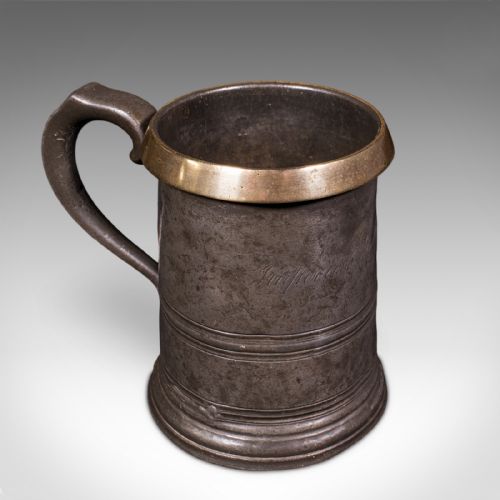
An antique quart tankard represents a substantial drinking vessel designed to hold two full pints of ale or other beverages, serving domestic households and public houses alike. These vessels appear frequently in pewter, Old Sheffield plate, and silver plate, spanning the Georgian and Victorian eras.
The forms range from sturdy lidded flagons to classic open tavern measures, reflecting the practical drinking habits of eighteenth and nineteenth-century Britain. Surviving examples often bear touchmarks or capacity stamps that connect them directly to their original working environments.
Buyers encountering this category will most readily find nineteenth-century pewter tankards alongside eighteenth-century silver-plated vessels. Each piece provides a tangible link to historical hospitality, whether used for display or traditional service.
Materials and Construction
Pewter production relied on casting metal alloys primarily of tin alloyed with copper and lead, shaped in moulds and finished on a lathe to achieve the desired wall thickness and rim profile. Makers soldered handles securely to the bodies, ensuring a sturdy grip for daily tavern use.
Old Sheffield plate and silver plate construction involved fusing a thin layer of silver to a copper base, creating durable vessels that offered the visual appeal of solid silver at a lower cost. Artisans formed these plated sheets into cylindrical or slightly tapered tankard bodies before attaching cast handles and rims.
Antique Quart Tankard Retail Price Guide 2026
Typical asking prices for quart tankard among the pieces listed under this phrase on Sellingantiques today, from the lower quarter to the upper quarter. They describe what is for sale here now, not the wider market.
An eighteenth-century lidded flagon from Guernsey reminds us that historical thirsts required substantial metal architecture to keep the ale secure.
Factors of Quality
Quality rests heavily on the crispness of the casting and the preservation of original makers' marks, touches, or capacity verification stamps. Heavy gauge metal ensures the vessel maintains its structural integrity without excessive thinning from centuries of polishing.
In plated examples, the survival of the silver layer across prominent surfaces and high-wear areas such as handle joints dictates the overall desirability. Pieces retaining sharp lines and unaltered proportions demonstrate superior craftsmanship compared to heavily restored or dented counterparts.
Watts & Harton·John De St Croix
The Antique Quart Tankard Glossary
- Quart tankard
- A large drinking vessel with a capacity of two pints. These pieces were standard in public houses and large households for serving ale.
- Pewterware
- Objects formed from a malleable metal alloy consisting mainly of tin. This material was widely utilised for utilitarian and decorative vessels throughout the Georgian and Victorian periods.
- Old Sheffield plate
- A composite material made by fusing a thin sheet of silver to a thicker copper base. It predates electroplating and appears on finer eighteenth-century drinking vessels.
- Flagons and pitchers
- Large pouring vessels often fitted with lids and handles. They served to transport and pour liquids into smaller drinking cups.
- Touchmark
- A stamp or hallmark applied by a pewterer or guild to identify the maker and guarantee the quality of the metal. These marks are crucial for dating and attributing pewter pieces.
Antique Quart Tankard: Frequently Asked Questions
How were quart tankards used?
These vessels were utilised for serving and consuming large quantities of ale, beer, or cider during meals and social gatherings.
Their robust construction allowed them to withstand the rigorous daily demands of busy taverns and inns.
How do I date an old tankard?
Dating relies on identifying maker marks, touchmarks, material composition, and stylistic changes in the handle and body shape.
Georgian examples often feature different proportions and manufacturing techniques compared to later Victorian pieces.
Can I use these tankards today?
Many pewter and plated tankards remain physically robust enough for modern use, though historical pieces require careful hand washing.
Consider the metal composition and the presence of any historic repairs before deciding to use them for actual service.