




Antique Princess Portrait
These antique princess portrait pieces bring royal presence into a room through historic depictions rendered across various media.
Antique Princess Portrait
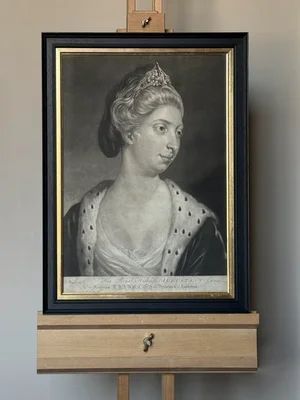
When you search for an antique princess portrait, you encounter a range of historic representations depicting royal figures from past centuries. The selection spans from the seventeenth century through to the mid-twentieth century, capturing princesses and princes in diverse artistic forms.
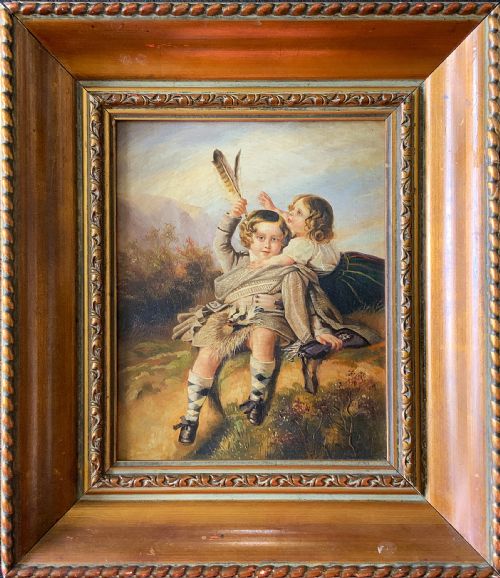
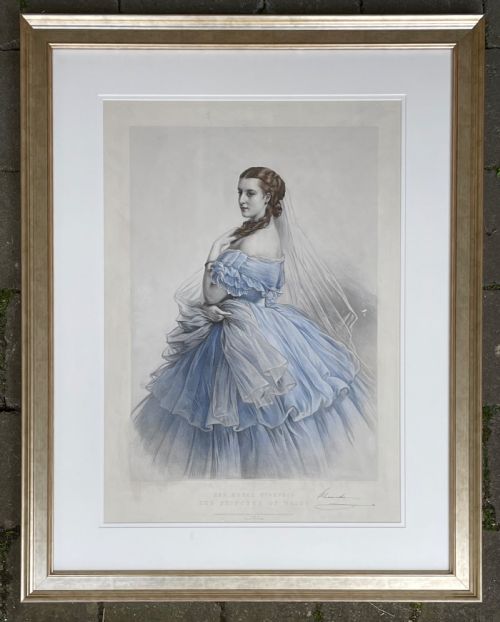
You meet framed prints, oil paintings, and portrait miniatures alongside ceramic figurines and parian busts. Eighteenth-century mezzotints and Georgian reverse glass prints appear alongside Victorian Staffordshire pottery figures and mid-century oil paintings.
The subjects include notable historical royals such as Princess Caroline, Princess Augusta, and Princess Alexandra. These works connect you directly to the portraiture traditions of the Georgian, Victorian, and Regency eras.
How they were made
Makers utilised oil paint, ink, and hand-coloured mezzotint techniques on paper or glass to capture likenesses. Enamel and gold leaf frequently enhance finer portrait miniatures and prints from the eighteenth and nineteenth centuries.
Ceramic figures and busts employ earthenware and parian materials, shaped into Staffordshire pottery and moulded portrait sculptures. Wood frames support many of the wall art pieces and prints listed across these periods.
Antique Princess Portrait Retail Price Guide 2026
Typical asking prices for princess portrait among the pieces listed under this phrase on Sellingantiques today, from the lower quarter to the upper quarter. They describe what is for sale here now, not the wider market.
Staffordshire potters once sent royal princes and princesses riding out on identical ceramic goats.
What varies in quality
The refinement of the facial likeness and the crispness of the printing or brushwork dictate the standing of a piece. Delicate hand-colouring on mezzotints and detailed enamel work demonstrate superior execution by the maker.
The preservation of the glass, the framing, and the ceramic glaze influences the overall integrity of the object. Pieces with clear provenance and named subjects often reflect greater historical documentation.
John Smith·G Kneller·Purcell·Reynolds·Henry Pierce Bone
The Antique Princess Portrait Glossary
- Mezzotint
- A printmaking process of the intaglio family where the plate is roughened to achieve tones and dark shades. It allows for subtle gradations in portraiture.
- Reverse glass print
- An image applied to the back of a piece of glass and viewed from the front. This technique produces a distinct glossy surface finish.
- Parian
- A type of fine biscuit porcelain resembling marble, developed in the nineteenth century. It was frequently utilised for portrait busts and sculptural figures.
- Staffordshire pottery
- Earthenware figures produced in the Staffordshire potteries during the Victorian era. These decorative pieces often commemorated royal figures.
- Portrait miniature
- A small, highly detailed painting or print capturing a person's likeness. These works often incorporate enamel or gold leaf.
Antique Princess Portrait: Frequently Asked Questions
What periods do these portraits cover?
The pieces span from the seventeenth century through the Georgian, Regency, and Victorian eras up to nineteen-fifty. Each period brings distinct materials and artistic techniques to the representation of royal figures.
Early works include reverse glass prints and mezzotints, while later periods introduce Staffordshire pottery figures and mid-century oil paintings.
How were ceramic figures displayed?
Staffordshire pottery royal figures and parian busts served as mantelpiece ornaments in nineteenth-century homes. They allowed the public to display loyalty and connect with the monarchy.
Pairs often depicted matching princes and princesses, balanced for aesthetic symmetry on domestic surfaces.
What is a reverse glass print?
A reverse glass print involves applying an image to the rear side of a glass panel. Viewers look through the glass to see the finished composition.
This method creates a smooth, reflective surface that protects the pigments underneath from direct environmental exposure.
How do I care for framed paper prints?
Framed prints and mezzotints require placement away from direct sunlight to prevent fading of the paper and ink. Stable humidity levels protect both the paper support and any historic wood frames.
Handling should remain minimal, supporting the piece from the back and frame edges during any movement.