

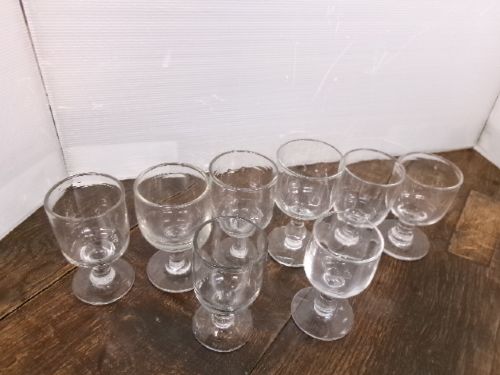

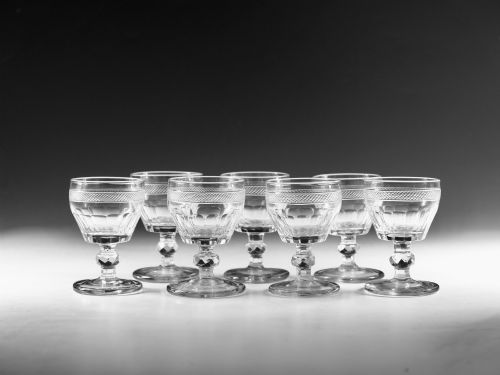


Antique Port Glass
These antique port glass pieces are drinking vessels and vessels for serving fortified wine, offering tactile history for your table.
Antique Port Glass
When you search for an antique port glass, you encounter small-scale drinking vessels and associated decanters spanning the Georgian, Regency, and Victorian periods. The selection on this page includes coloured and clear glass wine glasses, rummers, and decanters.
Most examples hail from the nineteenth century, including specific dates such as eighteen-fifty and eighteen-seventy, alongside Edwardian pieces. Forms range from simple hand-blown glasses to matched sets with cut decoration and matching stoppers.
Materials and construction methods
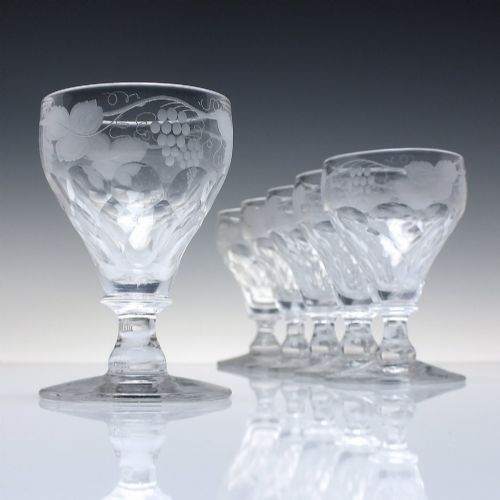
These items are produced from lead crystal, clear glass, and coloured glass, occasionally incorporating sterling silver and brass fittings. Makers utilised traditional glassblowing techniques to shape the vessels before applying hand-cutting or etching.
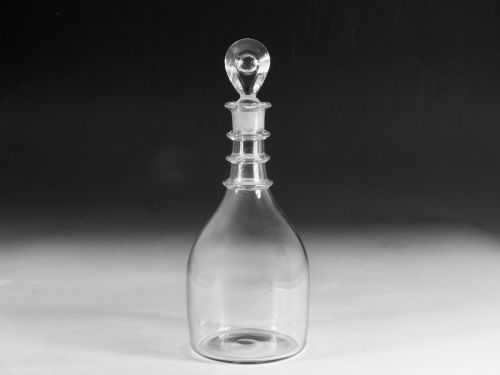
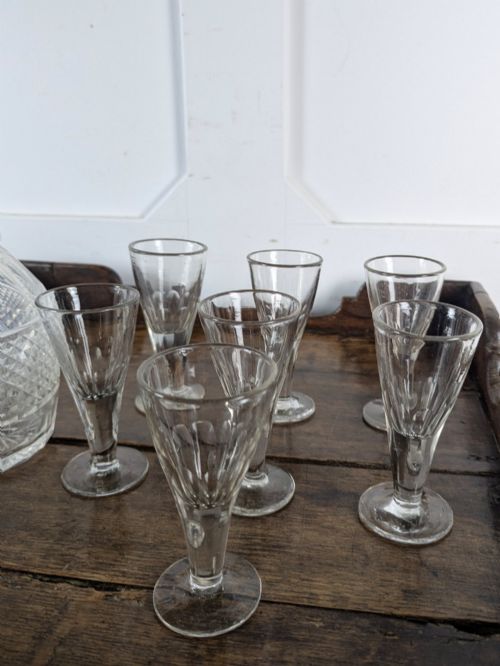
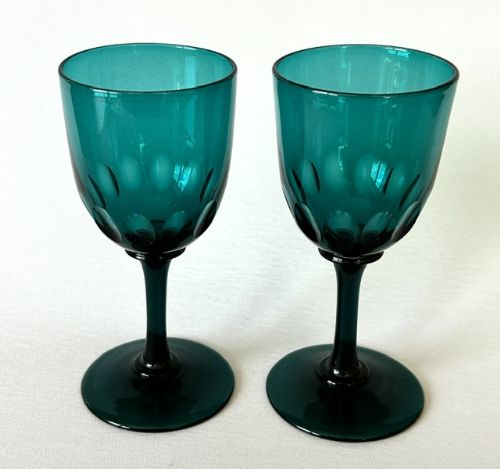
Decanters often feature applied rings and distinct stoppers, whilst drinking glasses display smooth bowls or thumb-cut details. The evidence shows both plain glass and rich hues like green and aqua.
Antique Port Glass Retail Price Guide 2026
Typical asking prices for port glass among the pieces listed under this phrase on Sellingantiques today, from the lower quarter to the upper quarter. They describe what is for sale here now, not the wider market.
Listings span the nineteenth century, Regency, Victorian, and Edwardian periods, utilising materials including cut glass, lead crystal, sterling silver, and green glass.
Assessing quality in antique glassware
Quality reveals itself in the weight of the lead crystal, the crispness of the cutting, and the symmetry of the hand-blown form. Heavier vessels with well-defined facets and clear, unclouded metal stand apart from simpler pieces.
The consistency of sets, the precision of applied rings on decanters, and the depth of colour in tinted examples distinguish finer specimens from standard utilitarian items.
The Antique Port Glass Glossary
- Lead crystal
- A type of glass containing lead oxide, which increases brilliance, weight, and workability for cutting. It produces a clear ringing sound when struck gently.
- Rummer
- A large, sturdy drinking glass popular in the eighteenth and nineteenth centuries, often used for ale, wine, or punch. These typically have short stems and deep bowls.
- Prussian decanter
- A style of decanter featuring horizontal rings around the neck and a conical body designed to prevent tipping at sea. They are frequently found in Regency and Georgian contexts.
- Thumb-cut
- A decorative pattern of shallow, concave depressions resembling thumbprints, ground into the surface of the glass. This technique provides both visual texture and a secure grip.
- Decanter stopper
- A glass or sometimes metal plug fitted to the neck of a decanter to seal the contents. Matching original stoppers significantly affect the integrity of the piece.
Antique Port Glass: Frequently Asked Questions
What is an antique port glass?
An antique port glass is a small drinking vessel designed specifically for enjoying fortified wine during the Georgian, Victorian, or Edwardian eras. These glasses are scaled appropriately for smaller, stronger servings.
They appear alongside decanters and spirit bottles from the same periods, forming part of traditional dining and entertaining equipment.
How do I date an antique glass decanter?
Dating relies on stylistic clues such as the number of neck rings, the shape of the body, and the manufacturing technique. Regency and Georgian examples often show distinct onion or Prussian profiles.
Pontil marks on the base and the presence of hand-cut facets further indicate nineteenth-century production methods.
Were coloured port glasses common?
Coloured glass gained significant popularity during the Victorian period, with green and aqua hues appearing frequently in dessert wine and liquor glasses. These added visual richness to the formal dining table.
Clear lead crystal remained standard, but tinted glass offers a distinct aesthetic tied to nineteenth-century tastes.
How should I care for antique glassware?
Wash antique glasses and decanters strictly by hand using warm water and mild detergent, avoiding sudden temperature changes that can crack old glass. Dry them carefully with a lint-free cloth.
Store them upright on stable surfaces away from direct edges to protect delicate rims and hand-cut surfaces.