




Antique Pointer Statue
An antique pointer statue is a faithful rendering of the sporting hound in metal, porcelain or stone, prized for its dynamic poise and decorative presence.
Antique Pointer Statue
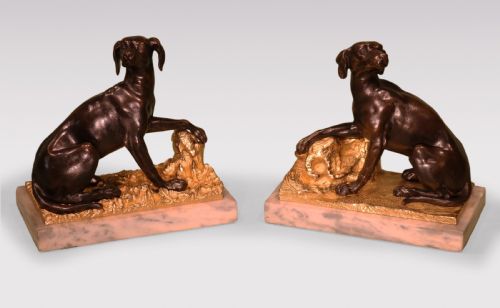
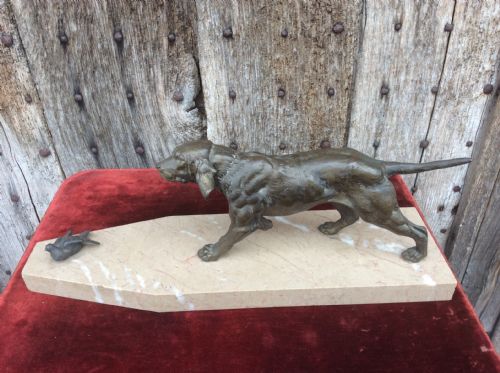
An antique pointer statue captures the intense focus and athletic build of the hunting dog, manifested across several distinct forms. Buyers searching for an antique pointer statue encounter works ranging from small tabletop decorative figurines to substantial sculptures and functional lighting.
The pieces on this page span the Victorian and Edwardian eras through to the Art Deco and Art Nouveau movements. French animalier bronzes dominate the selection, alongside works in spelter, cast iron, porcelain, marble and brass.
Makers and subjects frequently overlap with gundogs, resting hounds, and hunting spaniels engaged with game such as pheasants. These sculptures reflect a nineteenth and early twentieth century fascination with naturalistic animal anatomy and sporting pursuits.
How they were made
Sculptors utilised traditional casting methods to capture musculature and texture, pouring molten bronze or spelter into intricate moulds. Many metal figures are mounted on fitted marble bases or plinths to provide stability and visual weight.
Makers combined materials such as bronze and ormolu, or paired cast metal figures with marble and brass for lighting and decorative bases. Porcelain figures like those from Royal Dux required careful glazing and firing to achieve their finished appearance.
Antique Pointer Statue Retail Price Guide 2026
Typical asking prices for pointer statue among the pieces listed under this phrase on Sellingantiques today, from the lower quarter to the upper quarter. They describe what is for sale here now, not the wider market.
Several of these bronze hounds have spent over a century guarding living room firesides without ever actually catching a pheasant.
What varies in quality
The finesse of the casting and the crispness of the chiselling separate finer sculptures from simpler productions. Superior patination and the careful rendering of fur, muscle and expression demonstrate the hand of a skilled artisan.
The quality of associated materials, such as a heavy veined marble plinth or integrated ormolu mounts, elevates the overall presence of the piece. Signed works by established animalier sculptors command greater attention for their documented artistic authorship.
Delabrierre·C Masson·Auguste Nicholas Cain·Dubucand·Royal Dux
The Antique Pointer Statue Glossary
- Animalier
- A nineteenth century artistic movement focused on the realistic portrayal of animals, particularly wild beasts and sporting dogs.
- Spelter
- A zinc alloy frequently utilised as an economical alternative to bronze during the late nineteenth and early twentieth centuries.
- Patina
- The surface sheen and coloration developed on metal over time through oxidation, handling and age.
- Ormolu
- Gilt bronze ornamentation applied to furniture, bases and decorative objects to provide a rich golden contrast.
- Plinth
- The heavy base or block upon which a statue or sculpture is elevated and displayed.
Antique Pointer Statue: Frequently Asked Questions
What is an animalier bronze?
An animalier bronze is a nineteenth century sculpture focusing on realistic depictions of animals, particularly horses, lions and hunting dogs.
These pieces were typically cast in workshops across France and Britain using the lost wax method to ensure anatomical precision.
How do I care for a bronze statue?
Bronze statues require minimal intervention, needing only occasional dusting with a soft dry cloth to prevent grime accumulation.
Avoid using abrasive cleaners or polishes that can strip the historical patina from the metal surface.
Are spelter and bronze the same?
Spelter and bronze are entirely different metals, with spelter being a softer and lighter zinc alloy used as a cheaper alternative.
Spelter statues are often painted or bronzed to imitate the heavier, more durable copper alloy.
Why are some dogs mounted on marble?
Marble bases were added to provide structural stability and a formal plinth for the metal sculpture to rest upon.
The contrasting weight and colour of the stone enhanced the decorative display of the hunting scene.