






Antique Plant Stand Etagere
An antique plant stand etagere brings tiered display and botanical charm into living spaces, offering multi-level platforms for greenery and objects.
Antique Plant Stand Etagere
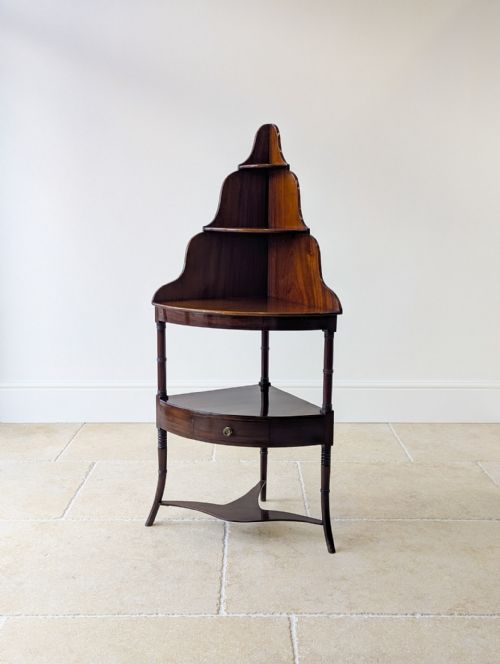
An antique plant stand etagere combines open multi-tiered shelving with botanical display functions, serving as a versatile stage for plants and decorative items. These pieces appear across various forms including corner stands, occasional tables, and multi-tiered plant holders.
The selections available here span periods from the Georgian era through to the Victorian, Edwardian, and early twentieth century. Buyers will frequently encounter wooden iterations alongside metal variations designed for both indoor and sheltered garden use.
Materials and construction methods
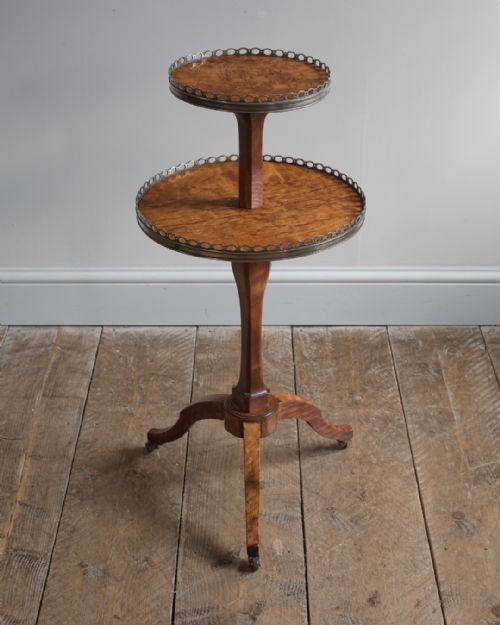
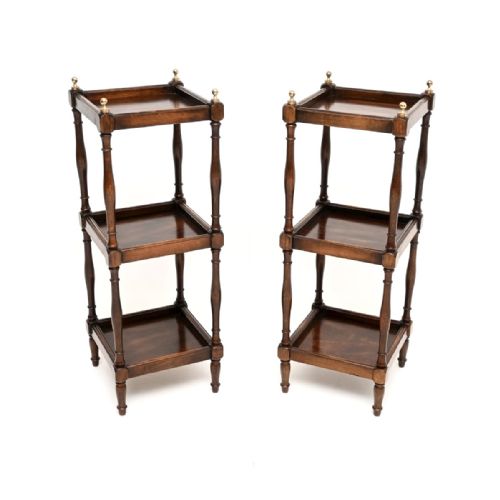
Construction relies heavily on traditional timber working, utilising dense hardwoods such as mahogany, walnut, and oak. Cabinetmakers employed techniques like marquetry inlay, turned legs, and galleried edges to finish these multi-level pieces.
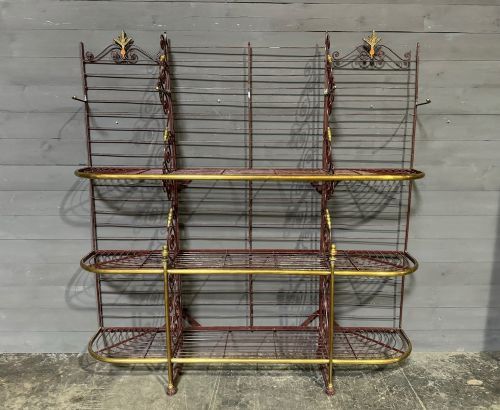
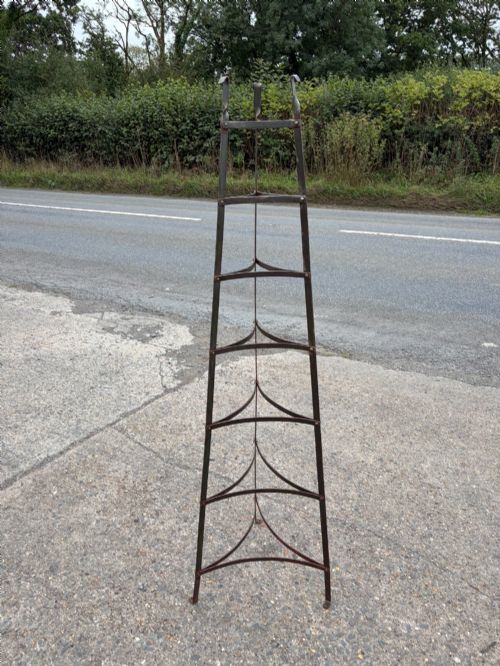
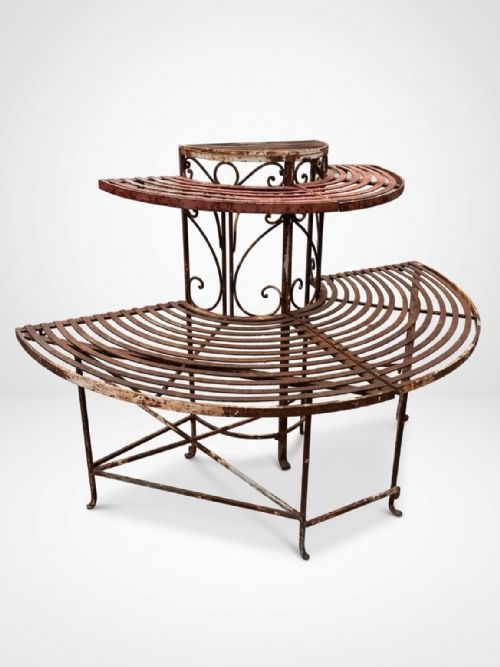
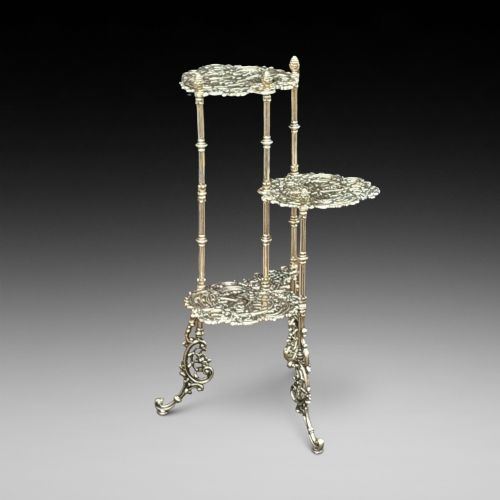
Metal variations incorporate cast iron, wrought iron, brass mounts, and wirework. These structural elements often feature painted finishes, riveted joints, or scrolled ironwork designed to bear weight while maintaining an open silhouette.
Antique Plant Stand Etagere Retail Price Guide 2026
Typical asking prices for plant stand etagere among the pieces listed under this phrase on Sellingantiques today, from the lower quarter to the upper quarter. They describe what is for sale here now, not the wider market.
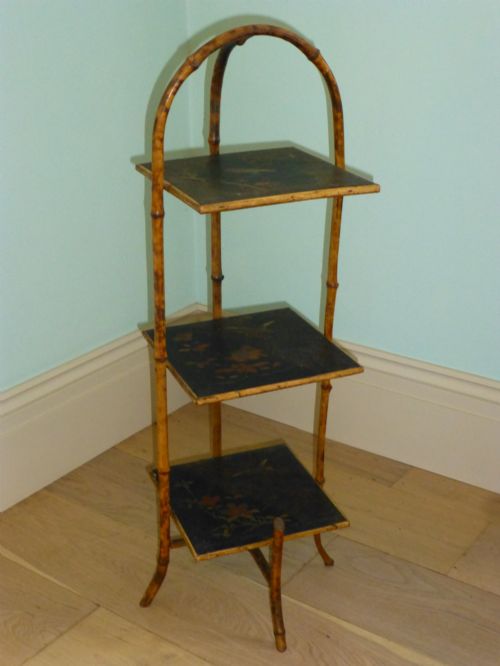
Listings feature woods like mahogany and walnut alongside bamboo, alongside metals including brass, cast iron, and wrought iron.
Judging quality in tiered stands
Quality reveals itself in the rigidity of the tier supports and the precision of joinery across multiple shelves. Superior examples maintain balance and structural integrity without excessive wobble across the upper tiers.
Material selection and decorative detailing elevate certain pieces above standard utility items. Marquetry inlay, fine brass mountings, and choice timber grains distinguish finer examples from plain workshop constructions.
The Antique Plant Stand Etagere Glossary
- Etagere
- A piece of furniture consisting of a set of open shelves for displaying small objects or plants. These stands typically feature two or more tiers.
- Whatnot
- A nineteenth-century multi-tiered shelving unit used for displaying ornaments and curiosities. It shares a similar form to the etagere.
- Marquetry
- Decorative veneer work in which thin slices of wood or other materials are applied to a structure to form geometric or pictorial designs. This technique frequently appears on French walnut and mahogany surfaces.
- Galleried
- A raised edge or miniature rail surrounding the perimeter of a shelf or tabletop. This feature prevents displayed items from sliding off upper tiers.
Antique Plant Stand Etagere: Frequently Asked Questions
How are antique plant stand etageres used?
These tiered pieces serve primarily as elevated platforms for potted plants, trailing greenery, and decorative ceramics. Their multi-level design allows multiple plants to occupy a compact footprint.
In modern interiors, they function equally well as display surfaces for books and small collections in living areas or conservatories.
What materials were used for these stands?
Timbers such as mahogany, walnut, oak, and bamboo form the basis of many traditional indoor designs. Marquetry inlays and brass mountings often enhance the woodwork.
Outdoor and utilitarian versions utilise cast iron, wrought iron, and wirework, frequently finished with paint.
How do I date an antique etagere?
Dating relies on identifying the prevailing style, construction techniques, and materials characteristic of specific periods like the Victorian or Regency eras. Turned legs, joint types, and surface finishes provide primary clues.
Makers often employed distinct decorative motifs, such as Aesthetic Movement bamboo or French Rococo revival curves, which align with specific decades.
Can iron plant stands go outside?
Many iron and wirework plant stands were originally intended for conservatories or sheltered garden areas where they could handle humidity. Weathered cast iron and painted wrought iron tolerate protected outdoor settings well.
Exposing antique iron to prolonged damp weather requires monitoring to prevent active corrosion on historic surfaces.