



Antique Pink Commode
An antique pink commode brings a distinct wash of colour to a room, offering both decorative surface space and deep storage drawers.
Antique Pink Commode
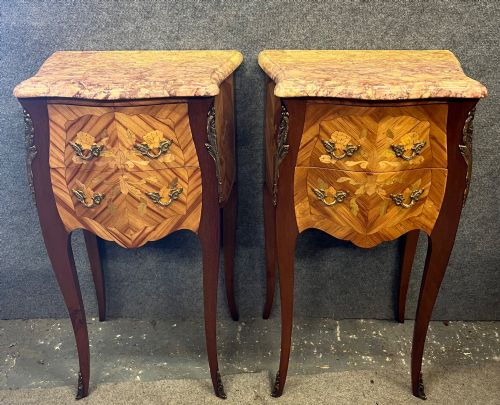
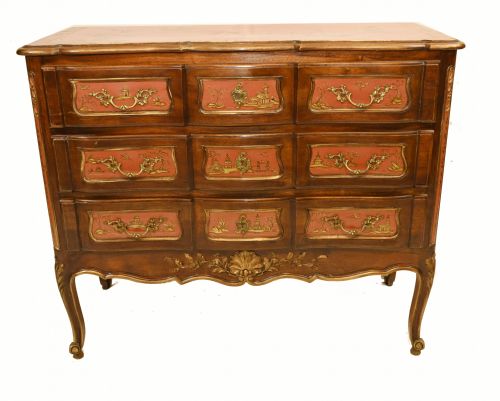
An antique pink commode combines low drawer storage with a decorative painted or lacquered surface, often topped with marble. Buyers searching this phrase encounter nineteenth-century pieces alongside early twentieth-century revivals.
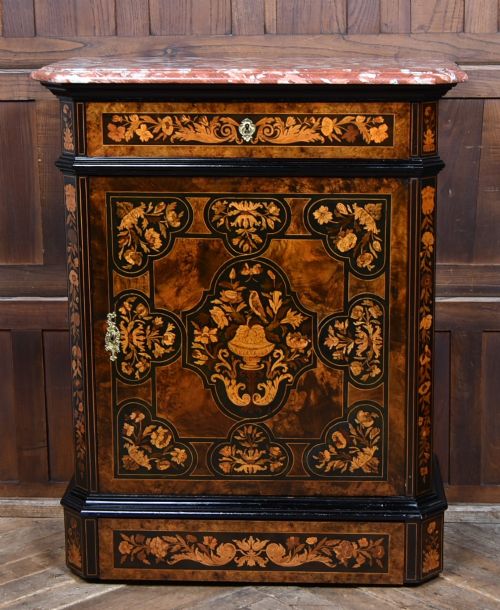
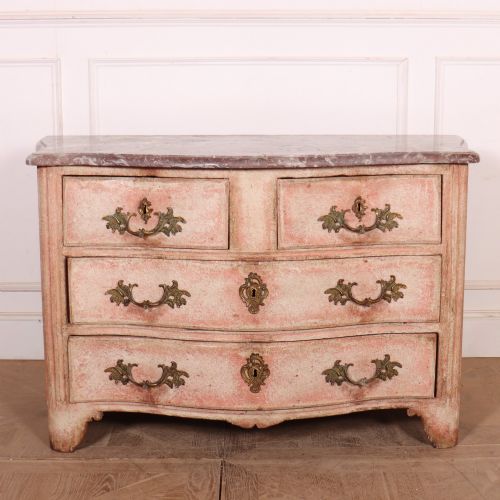
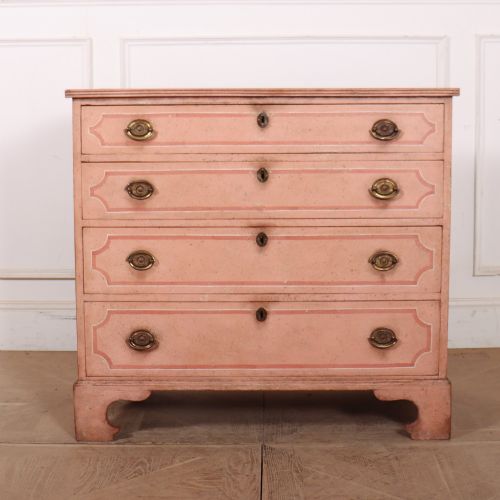
The forms range from compact bedside cabinets and lamp tables to serpentine front chests and sideboards. Walnut, pine, fruitwood, and burr walnut form the carcases beneath the painted finishes.
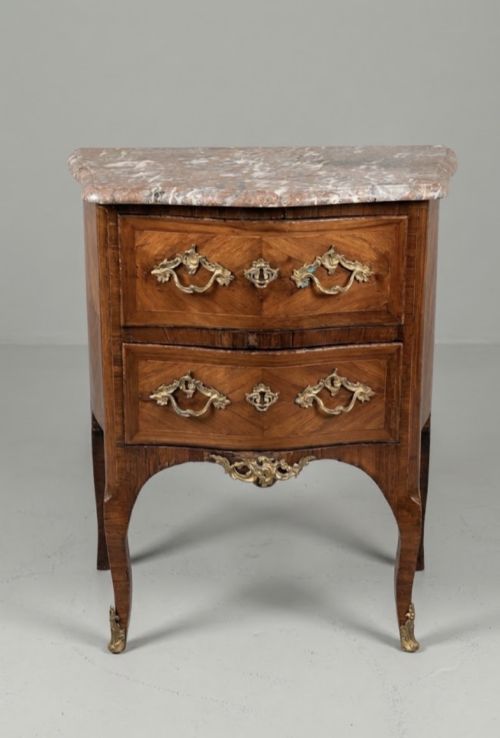
Stylistic influences lean heavily towards French Louis XV and XVI revivals, Italian rococo, and English country traditions. These pieces often feature brass, bronze, or ormolu mounts alongside marquetry inlay.
How they were made
Carpenters constructed the primary carcases using traditional timbers such as walnut, pine, and fruitwood, often applying burr walnut or rosewood veneers to visible surfaces. Marquetry inlay work added intricate geometric or floral patterns into the wood.
Porous stone slabs, particularly marble, were shaped and polished to fit precisely onto the top surfaces of the commodes. Cast brass, bronze, and ormolu mounts were secured to drawers and corners to accentuate the revival styling.
Antique Pink Commode Retail Price Guide 2026
Typical asking prices for pink commode among the pieces listed under this phrase on Sellingantiques today, from the lower quarter to the upper quarter. They describe what is for sale here now, not the wider market.
Listings span from the Victorian era through the early twentieth century, incorporating walnut, marble, and painted wood.
What varies in quality
The refinement of the surface decoration and the handling of the painted or lacquered finish dictate the visual strength of a commode. Pieces featuring finely chased ormolu mounts and substantial marble tops sit at the higher end of craftsmanship.
Joinery execution within the drawer construction and the integration of marquetry details reveal the maker's hand. Heavier woods and balanced proportions separate ambitious revival pieces from simpler utility chests.
Epstein
The Antique Pink Commode Glossary
- Commode
- A low chest of drawers or cabinet, typically standing on legs and dating from the eighteenth century onwards. It serves as both a functional storage piece and a decorative focal point.
- Ormolu
- Gilded bronze used for decorative mounts and furniture hardware. It provides a bright metallic contrast against dark wood or painted surfaces.
- Marquetry
- The art of applying pieces of veneer to a structure to form decorative patterns and pictures. Craftsmen utilise various coloured woods to create depth and contrast.
- Serpentine front
- A furniture front characterised by a undulating shape, curving convexly in the centre and concavely at the sides. This technique demands precise carpentry to follow the flowing lines.
- Chinoiserie
- European decorative art inspired by Chinese and East Asian artistic traditions. It frequently appears as hand-painted motifs on lacquered furniture carcases.
Antique Pink Commode: Frequently Asked Questions
What is an antique pink commode used for?
These pieces serve as bedside tables, lamp stands, or principal drawer storage within a bedroom or living space. The flat top surface accommodates lighting and decorative objects while the lower drawers conceal personal items.
The surface finish introduces a deliberate splash of colour to neutral interior schemes, functioning simultaneously as furniture and decorative art.
How do I clean a marble top?
Marble requires gentle cleaning with warm water and a soft cloth to avoid scratching the polished stone surface. Acidic substances can etch the marble and should be wiped away immediately.
Applying a specialist stone wax periodically helps protect the top from staining while maintaining its subtle sheen.
Are these commodes French or English?
The inventory includes examples influenced by French Louis revival styles alongside English country interpretations and Italian rococo pieces. Many nineteenth-century English and continental makers adopted French aesthetic models for their luxury cabinet work.
Construction methods and timber choices often reveal the regional origin of the workshop that produced the commode.
How do I date a painted commode?
Dating relies on examining the underlying construction timber, the style of the hardware mounts, and the wear patterns within the drawer linings. Nineteenth-century examples often display hand-cut dovetailing and heavy timber carcases.
Revival pieces from the early twentieth century frequently combine historical styles with machine-assisted joinery techniques while retaining hand-finished painted surfaces.