




Antique Pine Pedestal Drawers
Antique pine pedestal drawers offer sturdy workspace and ample storage, grounding a room with honest timber character.
Antique Pine Pedestal Drawers
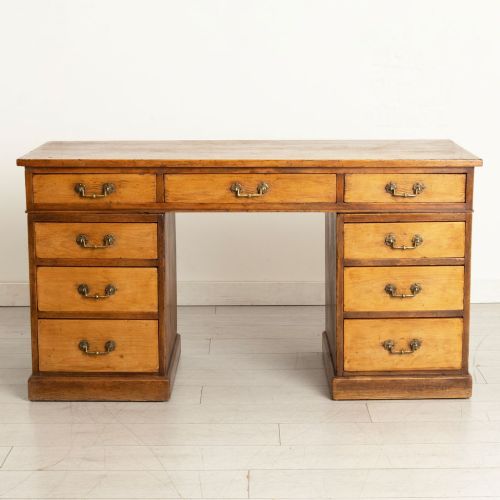
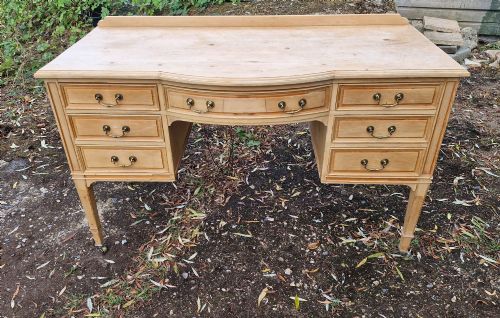
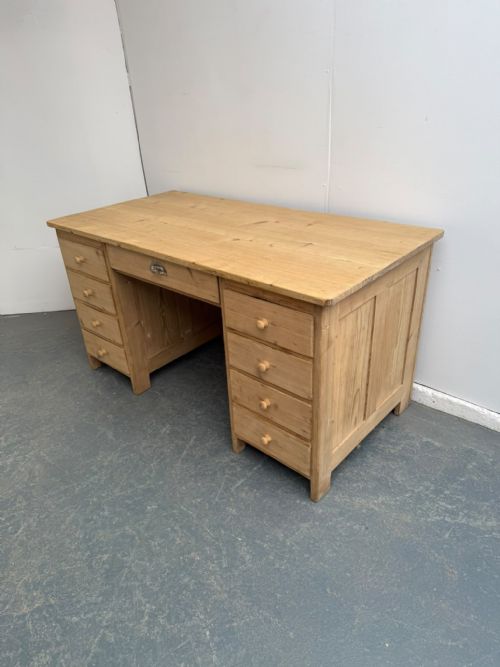
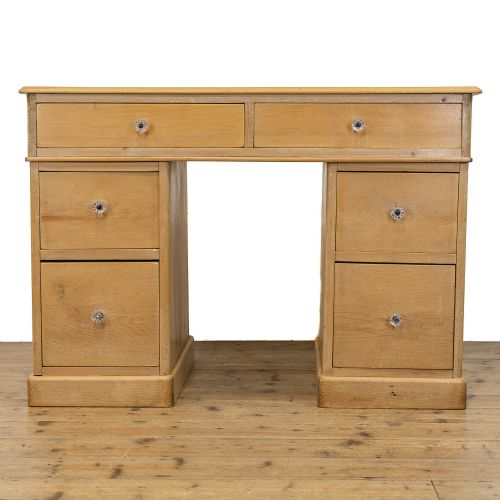
When searching for antique pine pedestal drawers, you are looking at substantial functional furniture designed for writing or storage. The pieces meeting this description span the Victorian and Edwardian eras, appearing in forms such as kneehole writing tables, large desks, and side cabinets.
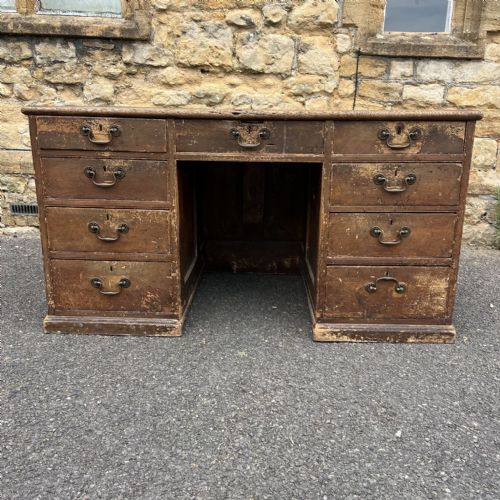
The versions most commonly met on this page are heavy pedestal desks constructed from pine or pitch pine, often featuring banks of drawers flanking a central recess. These items reflect the utilitarian needs of nineteenth and early twentieth century English country houses and estates.
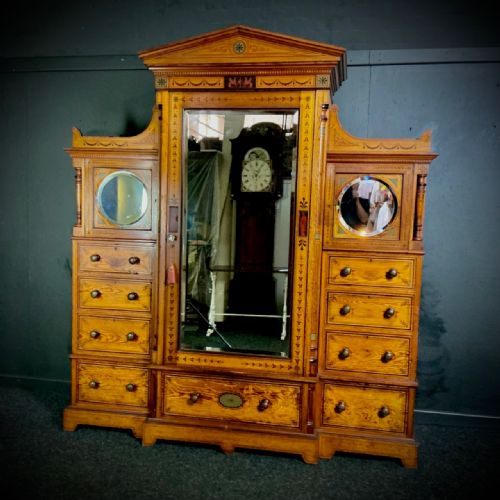
Originating predominantly from the nineteenth century, these objects combine practical utility with straightforward timber construction. They range from simple painted sideboards and wardrobes to elaborate nine-drawer writing tables fitted with brass or glass hardware.
Construction and materials
Construction relies heavily on solid pine and pitch pine, occasionally incorporating secondary woods such as oak for internal framing or structural support. Surfaces are left to natural wax finishes or treated with painted finishes depending on the intended domestic setting.
Hardware details involve functional elements made from brass, glass, and iron, securing drawers and doors built for daily utility. Joinery reflects traditional workshop methods of the period, prioritising durability and strength over ornate decoration.
Some estate desks still carry the faint, sweet scent of aged resin locked deep inside their dense pitch pine timbers.
Assessing quality
Quality in these pieces is determined by the selection of dense pitch pine versus standard softer pine, along with the weight and substance of the overall frame. Heavy construction and thoughtful proportions separate robust utilitarian pieces from lighter domestic furniture.
The integrity of the original hardware, including brass pulls and glass handles, contributes significantly to the character and desirability of a desk or cabinet. Surviving painted surfaces or well-maintained waxed finishes also distinguish superior examples from plain utility pieces.
The Antique Pine Pedestal Drawers Glossary
- Pitch pine
- A dense, resinous variety of pine known for its prominent grain pattern and heavy weight. It was frequently selected for robust Victorian furniture subject to hard daily use.
- Kneehole
- A configuration of a desk or dressing table featuring a central recessed space for the user's legs, flanked by pedestals of drawers. This layout became standard for nineteenth-century writing furniture.
- Pedestal
- A structural support column containing a vertical stack of drawers, used to hold up the ends of a large desk or dressing table. Two such pedestals form the base of a kneehole desk.
- Estate desk
- A large, utilitarian writing table produced for administrative tasks in country houses or estate offices. These pieces emphasise functional capacity and sturdy timber construction over delicate ornamentation.
Antique Pine Pedestal Drawers: Frequently Asked Questions
What is a kneehole desk?
A kneehole desk is a form of writing furniture featuring a central open space for the user's legs, flanked by two vertical stacks of drawers. This design provides ample storage while allowing comfortable seating at the table.
Such configurations appear frequently in nineteenth-century pine and pitch pine furniture designed for studies or estate offices.
How do I distinguish pitch pine from standard pine?
Pitch pine displays a noticeably denser grain pattern, a heavier physical weight, and a higher resin content than standard softwood pine. It yields a darker, more prominent figuring across large surfaces.
Cabinetmakers utilised this durable timber for heavy Victorian pedestal desks requiring extra structural strength.
How were these desks used originally?
These pieces served as practical workspaces for correspondence, household accounts, and estate management in nineteenth-century homes. The banks of drawers kept writing materials, ledgers, and documents organised close at hand.
Larger nine-drawer variants provided substantial storage for busy administrative environments.
Are these pieces suitable for modern daily use?
Their solid timber construction and functional drawer arrangements make them practical as computer desks or writing tables in contemporary settings. The generous proportions offer reliable workspace.
Placing them in a study or home office allows you to integrate period character with everyday utility.