



Antique Pigeonhole Desk
An antique pigeonhole desk organises correspondence and papers with classic compartmented style.
Antique Pigeonhole Desk
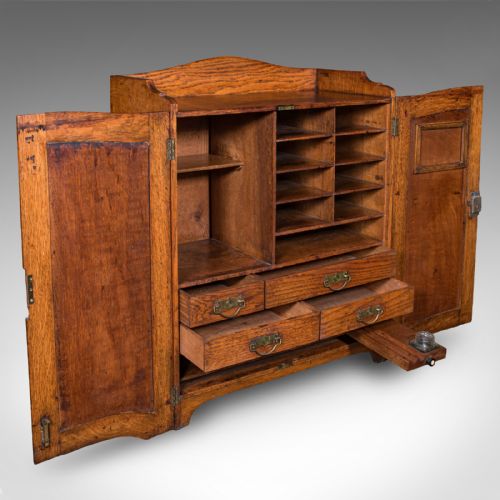
An antique pigeonhole desk provides dedicated compartments for letters, documents and writing tools. These pieces range from compact tabletop writing boxes to substantial bureau cabinets and pedestal desks.
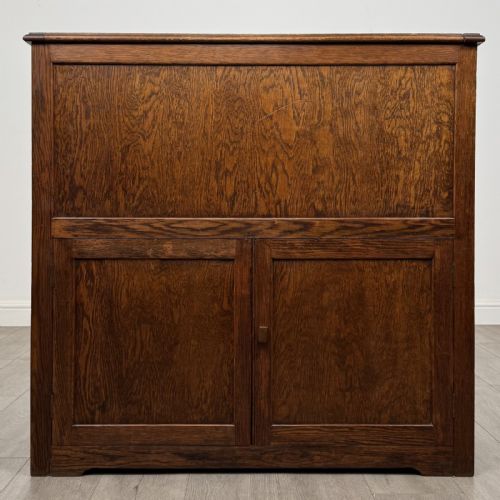
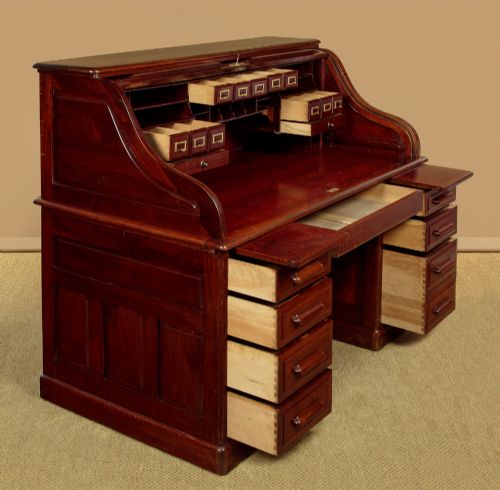
The versions most commonly met on this page include Victorian and Edwardian examples in oak and mahogany. Many feature internal pigeonholes concealed behind fall-fronts or roll tops, alongside supporting drawers and shelves.
Materials and construction
Cabinet makers utilised dense hardwoods such as mahogany, walnut and oak to build durable frames and dovetailed drawers. Secondary timbers like pine appear in internal partitions and drawer linings.
Writing surfaces frequently integrate inset panels of leather or baize, while brass hardware provides functional handles, escutcheons and hinges across the various period styles.
Some nineteenth-century gamekeeper and estate cabinets hide secret compartments beneath the pigeonholes for confidential ledgers.
Factors of quality
Superior quality shows in the selection of figured timber veneers and the precision of the joinery, particularly in the layout of the internal pigeonholes. Hand-cut dovetails and well-fitted drawer linings indicate careful workshop production.
The integrity of the original hardware and the smooth operation of fall-fronts, roll tops or tambour doors distinguish better examples from more basic utilitarian pieces.
The Antique Pigeonhole Desk Glossary
- Pigeonhole
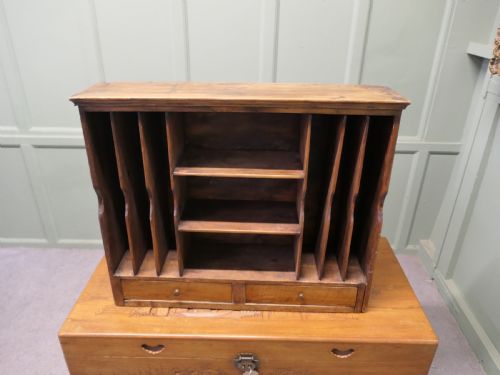
- A small compartment intended for sorting letters and documents. These tiers sit above the writing surface or inside a cabinet.
- Bureau
- A desk featuring a sloping hinged flap that opens to reveal a writing surface and interior pigeonholes. Early examples often rest on a frame or chest of drawers.
- Secretaire
- A piece of furniture containing a built-in writing drawer or compartment. The fitted fall-front conceals small drawers and pigeonholes.
- Bonheur Du Jour
- A light lady writing desk featuring an enclosed superstructure with shelves and pigeonholes. This style gained popularity during the nineteenth century.
- Roll Top Desk
- A desk featuring a flexible tambour shutter made of narrow strips of wood. Sliding this shutter upward reveals the internal pigeonholes and workspace.
Antique Pigeonhole Desk: Frequently Asked Questions
What is a pigeonhole desk?
A pigeonhole desk is a piece of writing furniture equipped with small open compartments designed to organise letters and paperwork.
These compartments sit above the writing surface or within an enclosed cabinet structure.
How do I date a desk?
Dating relies on observing timber choices, construction techniques and stylistic details such as brass hardware or leg forms.
Georgian pieces often feature mahogany and fine dovetailing, while later Victorian and Edwardian examples introduce alternative woods and mechanical roll tops.
Where were these desks used?
These desks served in private studies, estate offices and administrative rooms for daily correspondence and record keeping.
Compact versions suited parlour writing, whereas large pedestal and roll top variants managed busy office work.
How do I care for the leather?
Leather writing surfaces require gentle cleaning with a slightly damp cloth followed by suitable leather dressings to prevent drying.
Avoiding direct sunlight helps preserve the colour and suppleness of the inset material.