
Antique Pierced Silver
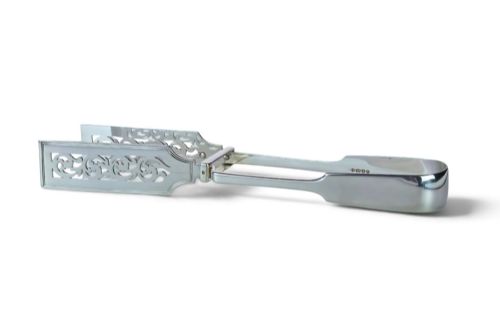
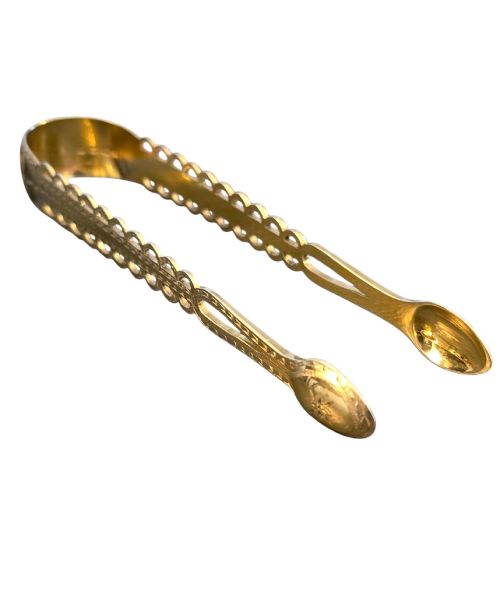
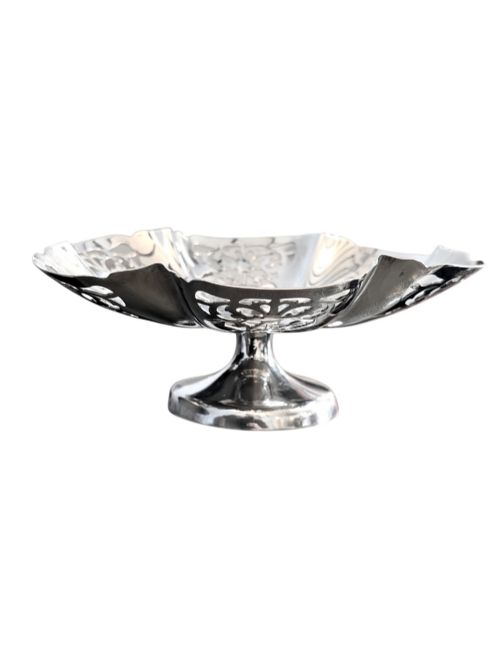
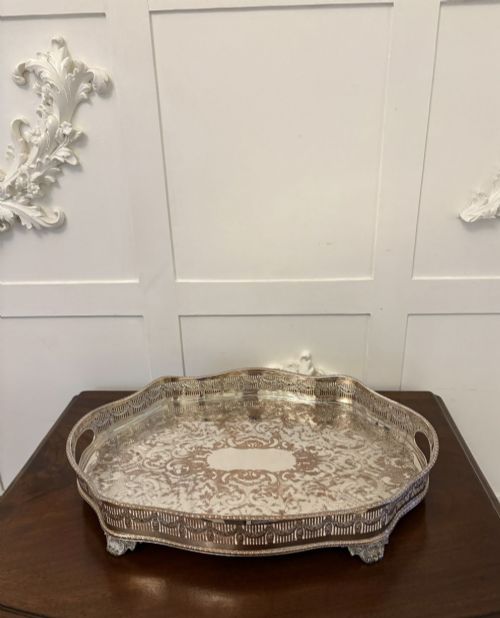
Antique pierced silver brings together intricate fretwork and precious metal across sugar baskets, trays and mustard pots for the dining table.
Antique Pierced Silver
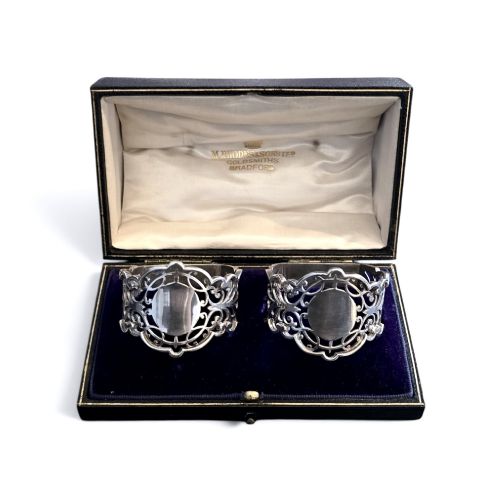
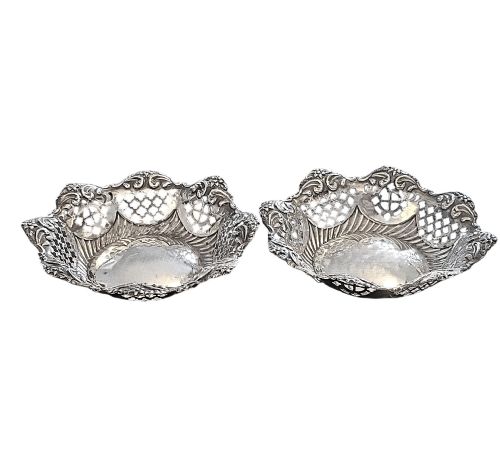
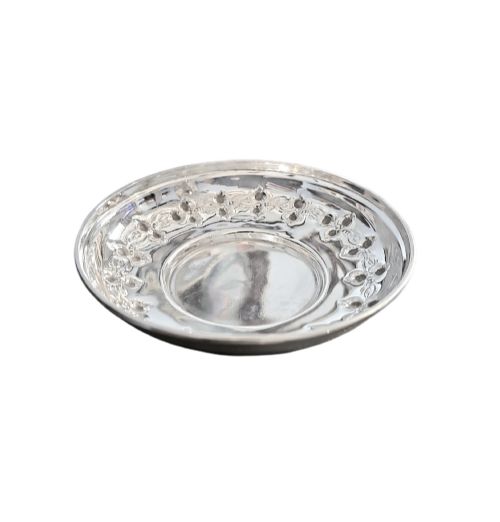
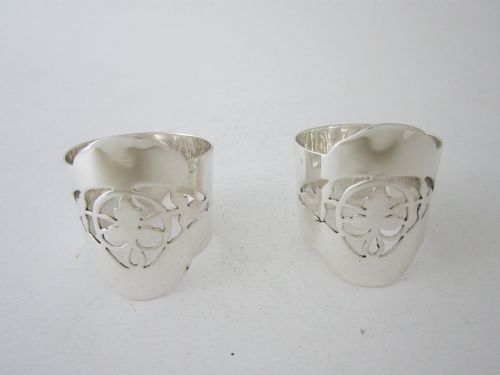
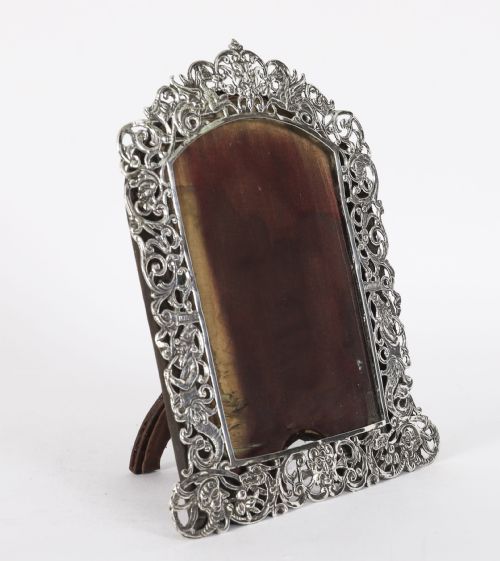
When buyers search for antique pierced silver, they find tableware and small decorative items shaped by cutting intricate patterns through the metal sheet. The pieces appearing most frequently span the Victorian and Edwardian periods, stretching from late nineteenth-century sugar boxes and bonbon dishes to early twentieth-century baskets and napkin rings.
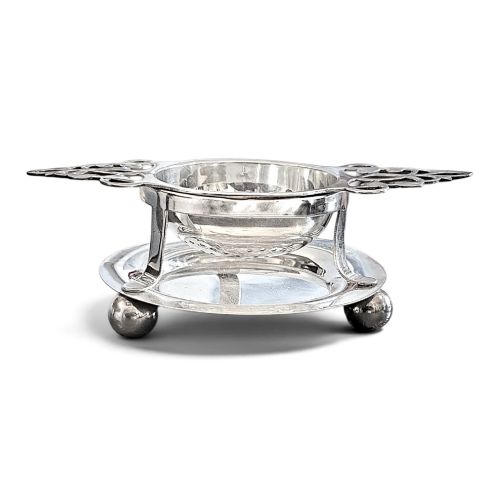
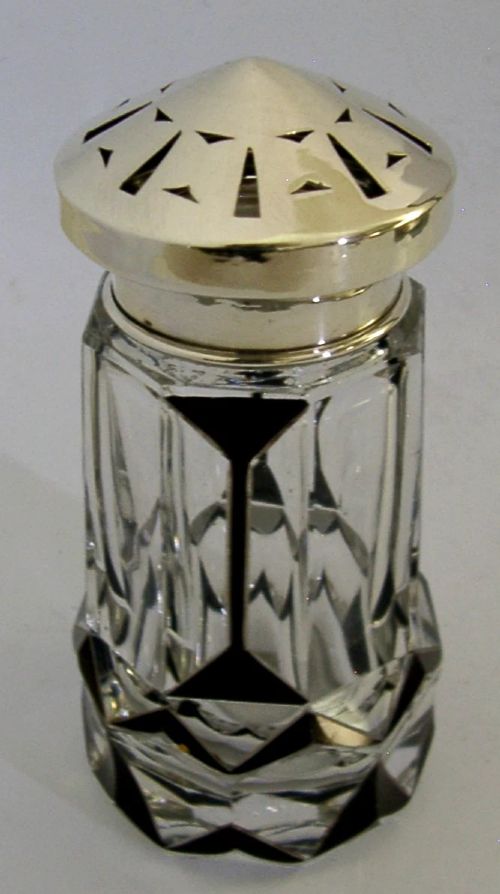
Makers adapted this openwork technique for functional vessels that required lightness or ventilation, such as mustard pots lined with blue or cranberry glass, and tea strainers. Alongside British sterling silver stamped with provincial and city assay marks, the selection includes silver plate and occasional Chinese export works.
Materials and Technique
Smiths executed pierced silver by marking patterns onto sterling silver or silver-plated sheets before cutting the motifs out with a fine jeweller's saw or punching them with shaped steel dies. Artisans then refined the edges by hand, often adding crisp surface engraving to accentuate the openwork design.
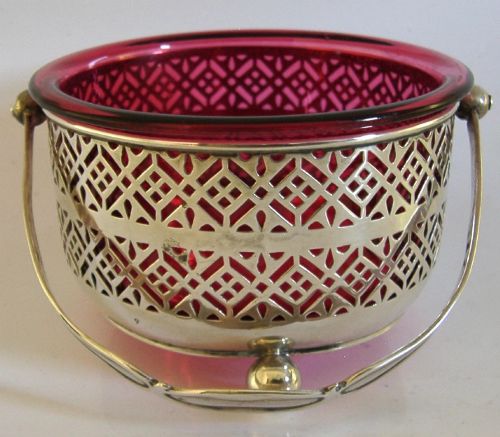
Many hollow vessels incorporate contrasting inserts, pairing sterling silver frames with cobalt or cranberry glass liners, and occasionally adding textiles like velvet or materials such as agate and granite.
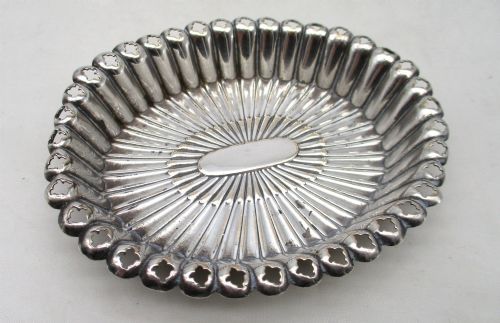
Listings span sterling silver and silver plate, featuring Victorian and Edwardian bonbon dishes, sugar baskets, and mustard pots.
Assessing Quality
Quality in pierced silver rests on the crispness of the cut-outs and the precision of the remaining metal framework. Superior examples display clean, sharply defined apertures without distortion to the surrounding walls, whereas lesser work shows rounded corners and uneven spacing where dies or saws wandered.
The weight of the metal relative to the size of the object dictates durability, as heavily pierced items rely on substantial gauge silver to prevent flexing during daily use. Maker marks from established silversmiths also separate standard commercial production from finer workshop output.
Martin Hall & Co·George William Adams·Mitchell Bosley & Co·Hammond Turner & Sons·Thomas Bradbury & Sons·Rosenthal Jacob & Co·James Deakin·Mappin & Webb·Elkington·Nathan & Hayes·Aldridge & Green
The Antique Pierced Silver Glossary
- Pierced work
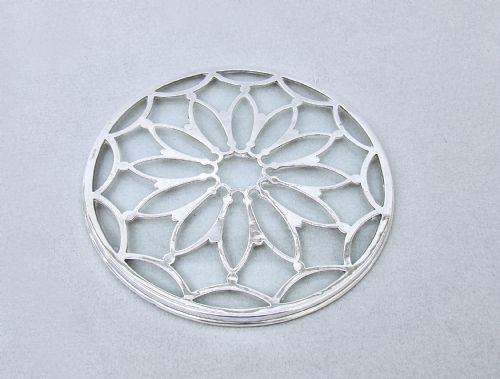
- Metalwork decorated by cutting holes or patterns through the solid sheet. This technique reduces weight and creates delicate lattice designs.
- Silver-plate
- A base metal, such as copper or Britannia metal, coated with a thin layer of silver. This method offered an accessible alternative to solid sterling.
- Assay mark
- A stamp indicating the purity of the metal, the town of testing, and the date letter. British pieces carry distinct symbols for cities like Sheffield, Birmingham and London.
- Vinaigrette
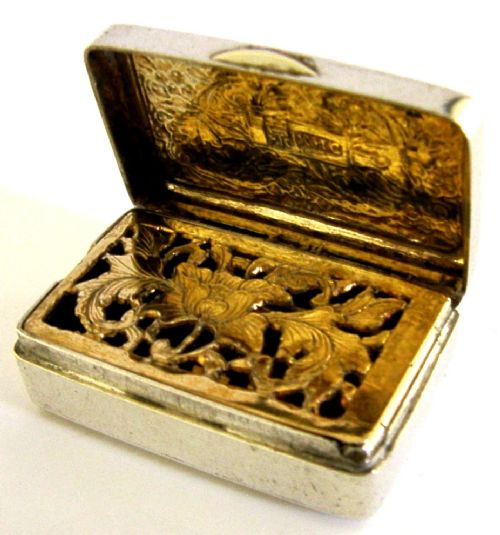
- A small ornamental box containing a sponge soaked in aromatic vinegar. These containers feature heavily pierced internal grilles to release scent.
- Cruet set
- A matched group of bottles or pots for holding condiments at the table. They frequently sit within pierced silver frames or stands.
Antique Pierced Silver: Frequently Asked Questions
How do I clean pierced silver?
Cleaning pierced silver requires a soft brush to prevent polish from lodging within the small cut-out apertures.
Avoid harsh dips, especially on pieces with glass liners or velvet components, using a gentle cream and a microfiber cloth instead.
Did they use glass liners?
Many pierced vessels, such as mustard pots and baskets, require glass liners to hold items securely.
These liners often come in coloured glass like cobalt or cranberry, which shows vividly through the openwork metal pattern.
How do I date pierced silver?
Dating British pierced silver involves reading the hallmarks stamped onto the metal surface.
These official marks supply the assay office symbol, the standard mark, and a specific date letter corresponding to the year of manufacture.