


Antique Pier Glass Set
An antique pier glass set brings together a matched console table and wall mirror to anchor a room with period proportion.
Antique Pier Glass Set
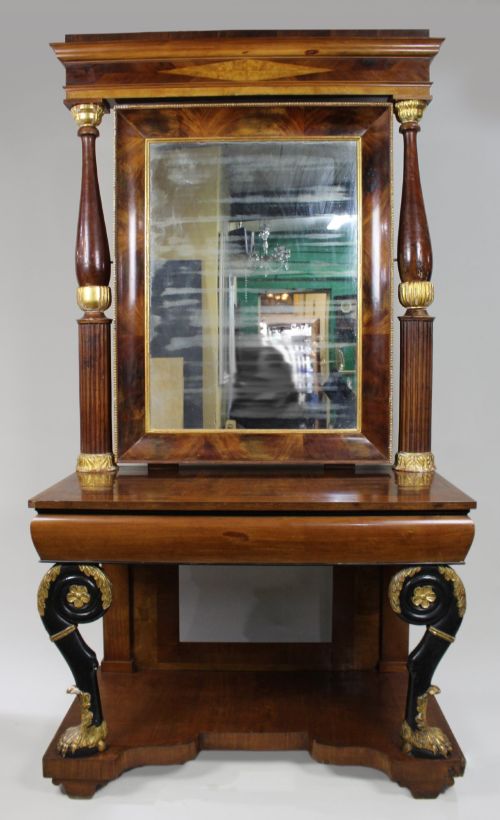
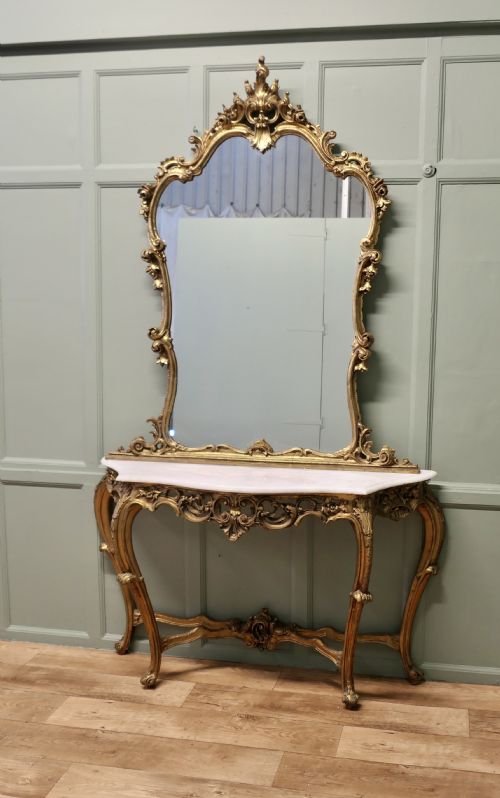
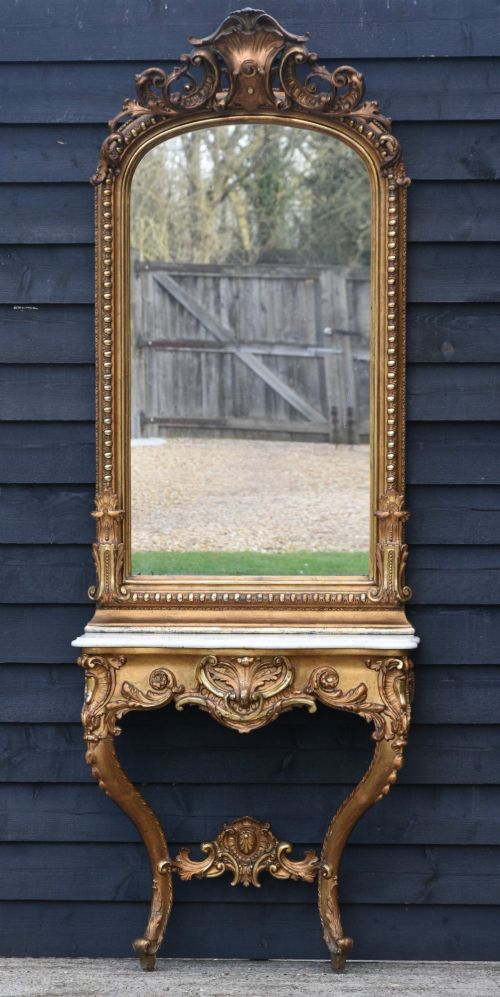
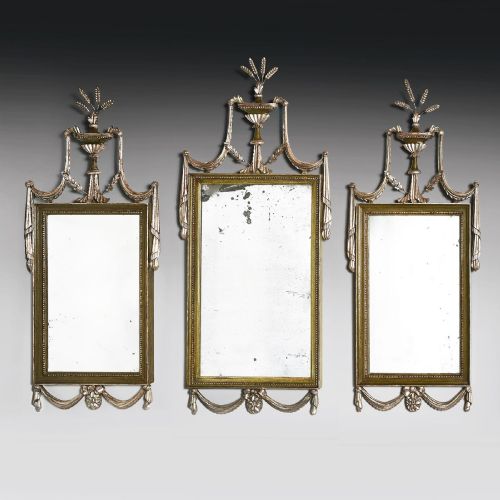
An antique pier glass set combines a console table with a tall mirror designed to hang in the wall space between windows. The examples found here span the nineteenth century and the early twentieth century, taking forms such as French Rococo Revival, Neoclassical, and Biedermeier.
Most pieces pair a marble-topped or wooden console table with a matching wall-hanging mirror, occasionally incorporating a shelf under or trumeau styling. Materials range from giltwood and gesso to walnut and silver leaf, reflecting diverse European workshops from Sweden to Italy.
How they were made
Carvers shaped frames from timber such as walnut and softwood before applying layers of gesso to build up intricate scrollwork and relief. Guilders then laid gold or silver leaf over the prepared surfaces to catch the candlelight of period interiors.
Makers fitted heavy marble slabs onto the console tables to provide a durable and decorative surface beneath the tall mirror glass. Silvered glass plates were hand-cast and framed to complete the matched ensemble.
Materials recorded across the current selection include marble, walnut, gesso, and silver leaf.
What varies in quality
The depth and crispness of the hand-carved detail separate ordinary frames from superior examples produced by skilled makers. Better pieces display meticulous gilding application and heavier, well-figured marble tops that sit true within the console base.
Proportion and harmony between the table and mirror dictate the visual success of the set. Original matching components maintain a cohesive style, whereas assembled pairs often reveal subtle discrepancies in the timber and finish.
Gillows Of Lancaster
The Antique Pier Glass Set Glossary
- Pier glass
- A tall mirror designed specifically for the wall space between two windows. It frequently stands directly above a matching console table.
- Giltwood
- Timber that has been coated with a thin layer of gold leaf. This finish creates a bright, reflective surface characteristic of formal period furniture.
- Gesso
- A plaster mixture applied to wood frames to provide a smooth base for gilding. It allows carvers to achieve sharp, detailed relief work.
- Console table
- A table supported against a wall by brackets or legs. These tables often feature marble tops and coordinate directly with the pier glass above them.
Antique Pier Glass Set: Frequently Asked Questions
Where should a pier glass set be placed?
These sets are traditionally positioned on the wall space between two windows, known as the pier. This placement maximises available light in a formal room.
They also function effectively in hallways or reception rooms where a console table and matching mirror create a strong focal point.
How do I identify a nineteenth century set?
Nineteenth century sets often exhibit revival styles such as Rococo, Neoclassical, or Biedermeier. Look at the construction methods and materials used on the reverse of the frames.
The use of hand-applied gesso, silver leaf, and heavy marble tops commonly points to this period of production.
Are the table and mirror always original to each other?
Most entries feature matching console tables and mirrors designed as a single commission. Stylistic consistency in the carving and gilding indicates a unified set.
Occasionally, pieces reflect revival periods like George I, constructed later while retaining historical design motifs.
What woods are used beneath the gilding?
Frames are typically built from solid timber such as walnut or softer woods suitable for intricate carving. Gesso is then applied over the wood base to prepare for leafing.
Walnut also appears unpainted in specific regional styles like Biedermeier and Swedish pieces.