

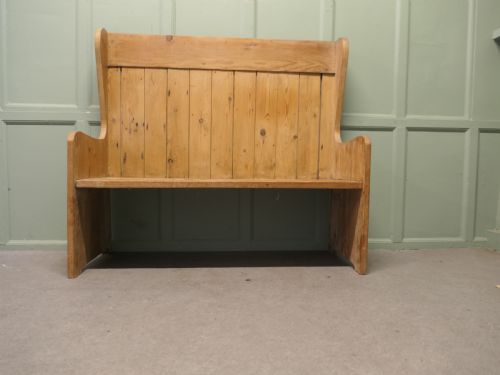
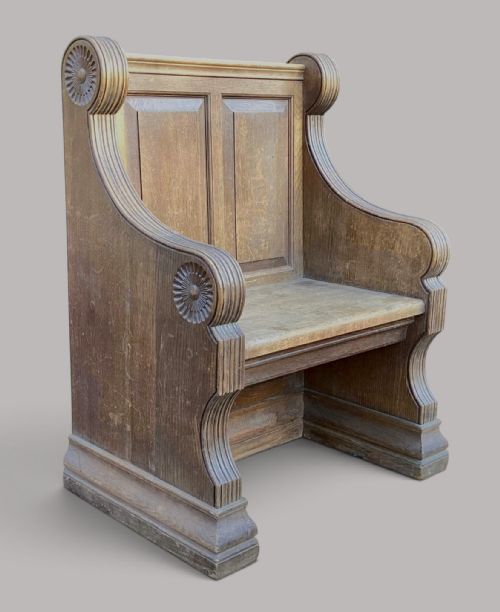
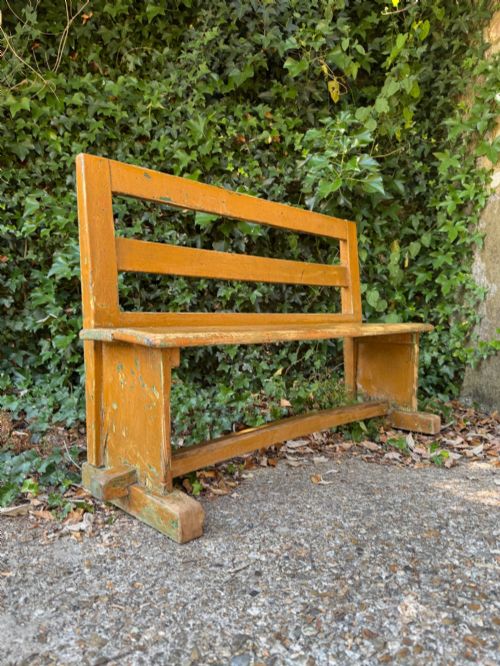
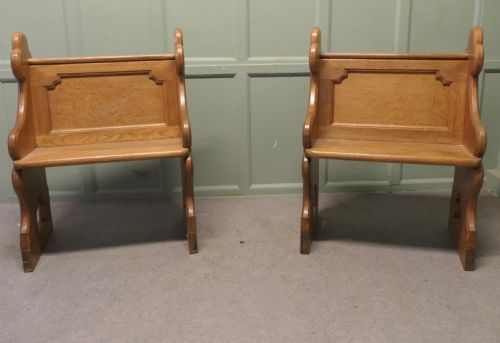



Antique Pew Chairs
Antique pew chairs bring vernacular seating into domestic spaces, offering solid timber construction and historic character.
Antique Pew Chairs
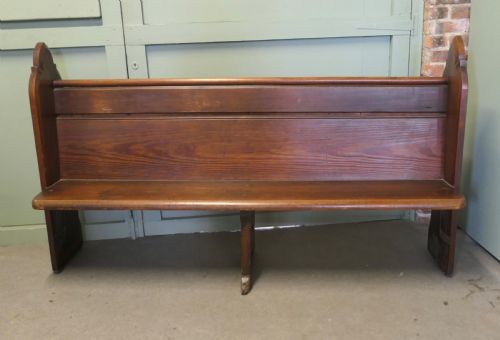
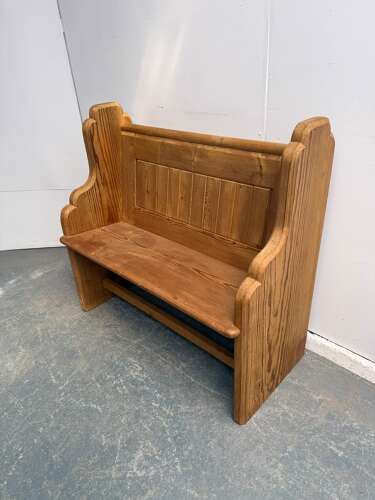
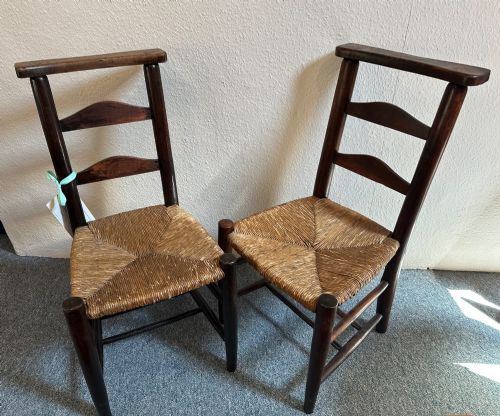
When you search for antique pew chairs, you encounter a selection of solid timber seating originating from churches, public houses, and country homes. These pieces range from single-seater church pews and box settles to architectural hall seats and Arts and Crafts library chairs.
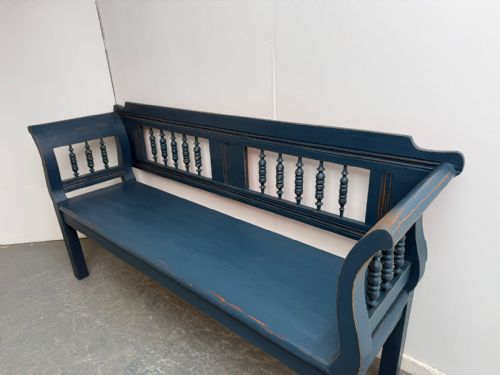
The versions most frequently met on this page date from the nineteenth century into the Edwardian period, constructed in materials such as pine, oak, elm, and pitch pine. Styles span from rustic farmhouse and Gothic Revival to Victorian ecclesiastical and Hungarian folk art.
Many examples retain original surface treatments, including wax, paint, or natural timber grain. Their forms vary from high-backed fireside benches with storage compartments to paired hall benches and architectural seating marked by institutional provenance.
How they were made
Construction relies upon heavy solid timbers, notably oak, elm, pine, and pitch pine, selected for structural durability and daily utility in ecclesiastical or domestic settings. Joinery techniques prioritise robust framing to support high backs, box storage compartments, and architectural forms.
Surface finishes involve traditional applications of wax, applied paint, or exposed grain treatments that protect the wood while recording decades of handling. Specific pieces display carved detailing or architectural elements aligned with Victorian Gothic Revival and Arts and Crafts movements.
Antique Pew Chairs Retail Price Guide 2026
Typical asking prices for pew chairs among the pieces listed under this phrase on Sellingantiques today, from the lower quarter to the upper quarter. They describe what is for sale here now, not the wider market.
The inventory includes institutional seating marked by its original provenance, alongside painted Hungarian benches and rustic country settles.
What varies in quality
Quality in these pieces rests upon the integrity of the timber selection and the purity of the original form, distinguishing utilitarian workshop output from architecturally designed commissions. Examples marked by specific institutional provenance or identifiable stylistic movements demonstrate superior design ambition.
The preservation of original surface treatments, whether early blue paint, traditional wax, or carved structural detailing, separates standard utilitarian seating from pieces retaining distinct historical character and regional vernacular craftsmanship.
The Antique Pew Chairs Glossary
- Settle
- A wooden bench with a high back, solid arms, and frequently a enclosed box base used for storage. This form kept draughts away from the sitter in domestic and tavern interiors.
- Gothic Revival
- An architectural and design style drawing inspiration from medieval forms, featuring pointed arches, tracery, and vertical emphasis. It appears frequently in nineteenth-century ecclesiastical seating.
- Pitch Pine
- A dense, resinous softwood utilised for nineteenth-century church pews and institutional furniture. It provides strong structural framing and a pronounced grain pattern.
- Arts and Crafts
- A design movement valuing traditional craftsmanship, honest construction, and vernacular materials. Pieces in this style often display simpler lines and exposed structural joinery.
Antique Pew Chairs: Frequently Asked Questions
What is an antique pew chair?
Antique pew chairs are robust wooden seats adapted from church pews, hall benches, or institutional seating. They combine the narrow, upright profile of ecclesiastical furniture with domestic utility.
These pieces often feature high backs and solid timber construction in pine, oak, or elm. They serve well in hallways, kitchens, or dining spaces where space is at a premium.
How were box settles used?
Box settles served as dual-purpose furniture in historical homes, public houses, and farms. The high back protected occupants from draughts, while the enclosed seat base stored household items or fuel.
Positioned near firesides, they offered sheltered seating before central heating existed. The storage compartment kept daily essentials secure and out of sight.
How do I date an antique bench?
Dating relies upon examining the timber species, construction techniques, and stylistic markers present in the piece. Nineteenth-century examples often display machine-sawn elements alongside hand-finished joints.
Stylistic details such as Gothic Revival tracery, Arts and Crafts simplicity, or Victorian proportions help narrow the decade of production. Original surface finishes and institutional markings also provide chronological evidence.
Where should I place a pew chair?
Pew chairs and hall benches suit narrow spaces like hallways, entryways, and corridors due to their shallow depth. Their straight backs allow them to sit flush against walls.
They also function effectively in farmhouse kitchens or dining areas alongside tables. Their sturdy timber construction withstands heavy daily use in high-traffic areas.