
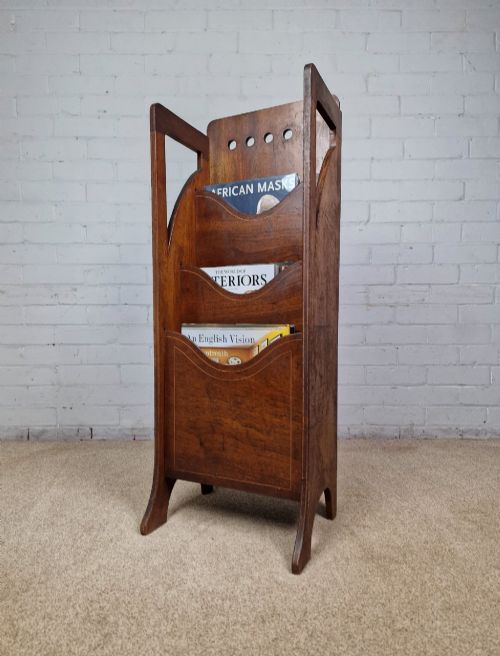


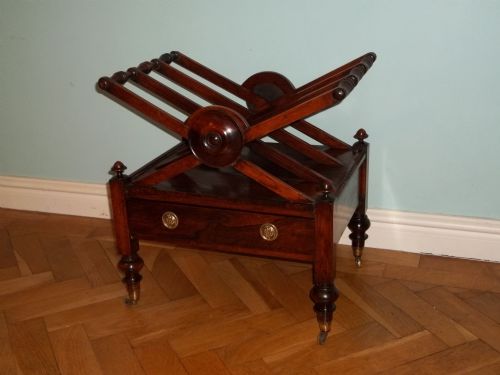


Antique Periodical Holder
An antique periodical holder keeps your daily papers and weekly journals tidy with genuine period character.
Antique Periodical Holder
When you search for an antique periodical holder, you encounter a range of traditional furnishings designed to store newspapers, magazines, and books within easy reach of a chair or sofa. These pieces span several distinct eras, stretching from the Regency period through to the 1930s.
The versions you are most likely to meet on this page take the form of traditional canterburys, standing racks, and revolving stands. Cabinetmakers constructed these items to serve domestic sitting rooms, libraries, and drawing rooms across Britain.
Makers of these items utilised timber frames alongside metal components to create functional storage solutions that doubled as decorative furniture. The category includes straightforward oak racks alongside more formal rosewood and mahogany canterburys adorned with inlay.
How they were made
Cabinetmakers relied heavily on timbers such as mahogany, oak, rosewood, and walnut for the structural frames and slatted dividers of these stands. Workshops often incorporated boxwood inlay and satinwood details to embellish the exterior surfaces of Edwardian and Victorian pieces.
What varies in quality
The standard of timber selection and cabinetmaking distinguishes ordinary examples from superior pieces. Workshops that employed finely figured rosewood or dense mahogany achieved a richer surface depth than those using simpler utility woods.
Refinement in decorative detail separates the ranges further. Carved wooden motifs, precise boxwood inlay, and heavy cast brass elements indicate a higher grade of manufacture than plain functional frames.
Finnigans·Howard and Sons
The Antique Periodical Holder Glossary
- Canterbury
- A low wooden stand featuring upright dividers, originally designed to hold sheet music, books, and periodicals near a seating area.
- Inlay
- A decorative technique where contrasting woods such as boxwood or satinwood are inserted into recesses within the primary timber surface.
- Revolving stand
- A furniture form mounted on a central pivot that allows the rack or bookcase to turn freely for easy access from multiple angles.
- Turned spindle
- A cylindrical wooden or metal rod shaped on a lathe to form decorative vertical supports within the rack framework.
Antique Periodical Holder: Frequently Asked Questions
What is a canterbury?
A canterbury is a low stand featuring slatted partitions designed to hold reading materials or music sheets beside a chair. Originating in the late eighteenth century, the form remained popular through the Victorian and Edwardian eras.
Cabinetmakers built these pieces with carrying handles and low legs, sometimes adding small drawers beneath the main rack for smaller items. They served as both functional storage and decorative furniture in sitting rooms.
How do I date an oak rack?
Dating an oak rack involves examining the timber grain, construction joints, and any metal hardware present on the frame. Pieces from the Arts and Crafts period often display simple, sturdy joinery without excessive ornamentation.
Later stands from the 1930s typically feature simpler commercial production methods compared to hand-finished Edwardian or Victorian examples. Comparing the style of the feet and handles provides further clues to the decade of manufacture.
Where were revolving stands used?
Revolving stands were placed beside armchairs, desks, or in libraries to keep reference books and current periodicals within arm's reach. The rotating mechanism allowed users to access different compartments without moving the heavy wooden base.
These stands combined mahogany or oak frames with tubular brass structures to support multiple tiers of books or papers. Their practical design made them staple items in formal studies and drawing rooms.
How do I care for rosewood?
Caring for rosewood requires keeping the timber away from direct sunlight and extreme temperature fluctuations to prevent drying and fading. Regular dusting with a soft, dry cloth maintains the natural lustre of the polished surface.
Applying a traditional beeswax polish occasionally helps nourish the wood and protect the grain. Avoiding harsh chemical cleaners preserves the original finish and patina built up over decades.