



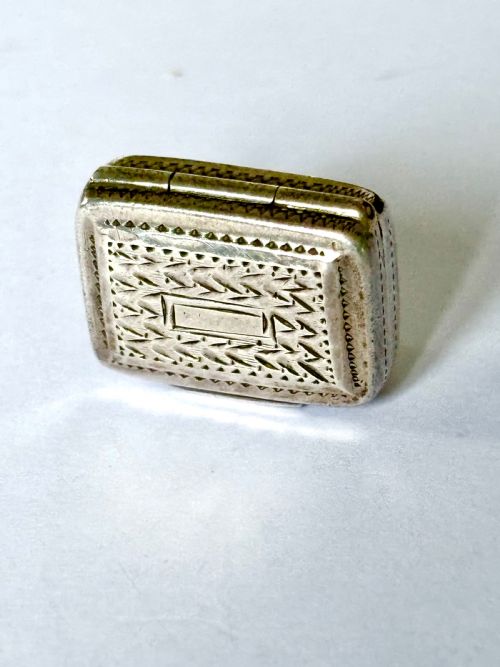

Antique Perfumed Box
These antique perfumed boxes and scent holders house personal fragrances in materials like rosewood, silver, and horn across Georgian and Victorian periods.
Antique Perfumed Box
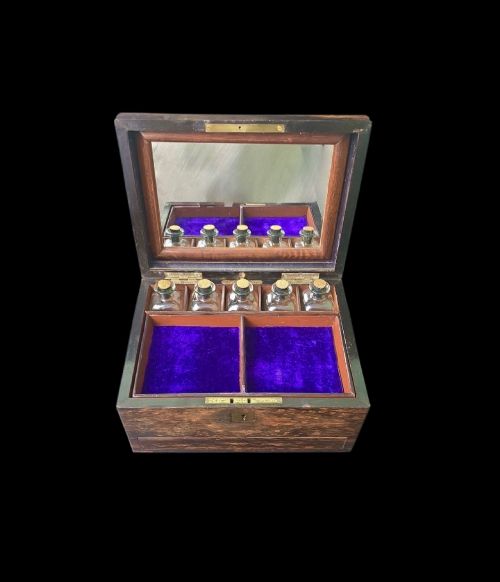
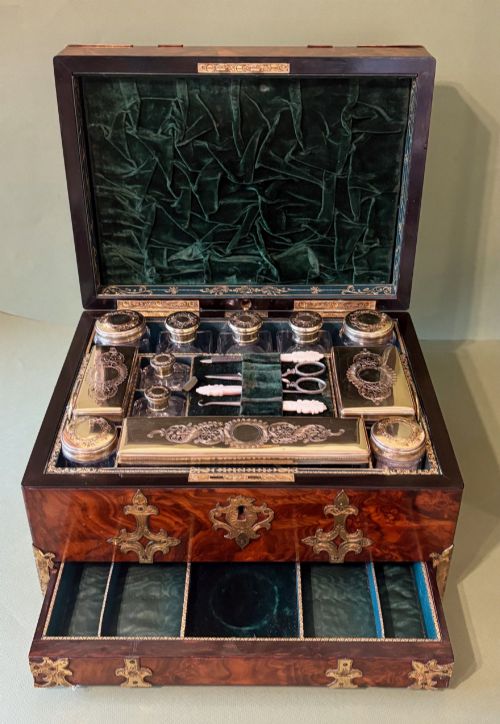
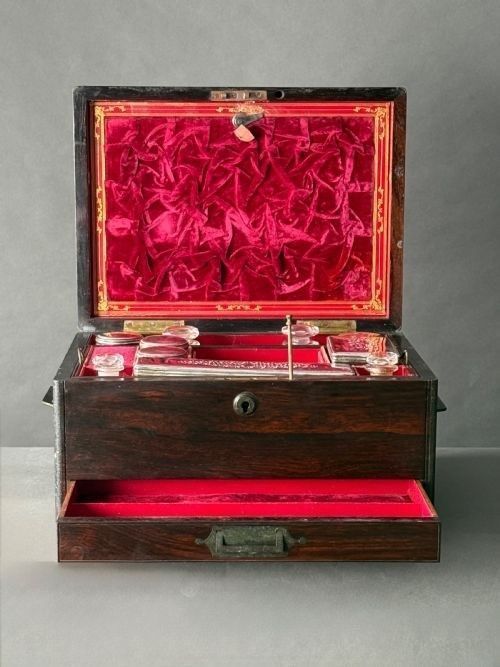
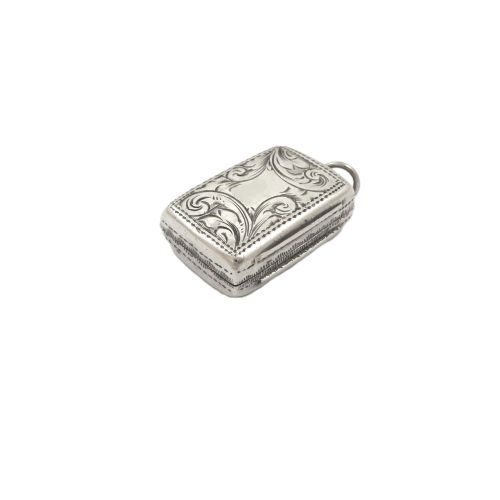
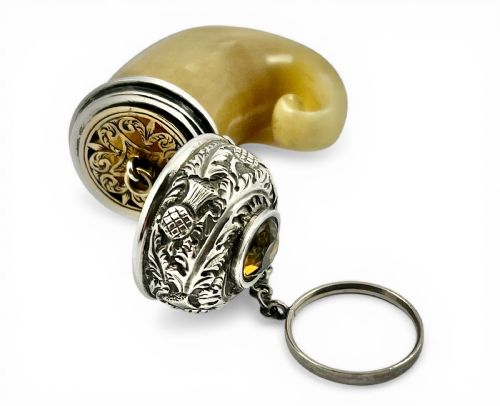
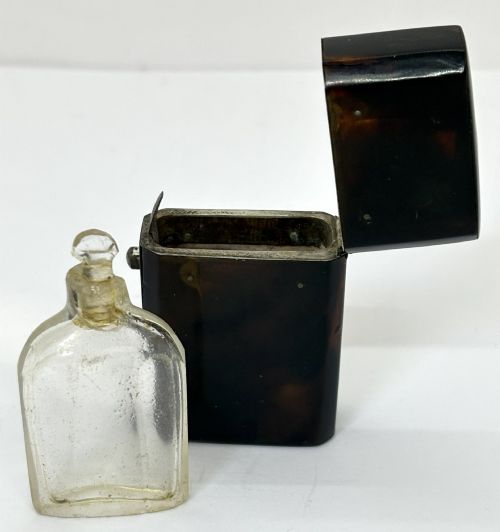
When someone searches for an antique perfumed box, they encounter a range of intimate containers designed to hold scents, balms, and volatile salts. These pieces span Georgian, Victorian, and later periods, taking forms from pocket-sized vinaigrettes to substantial travelling dressing cases.
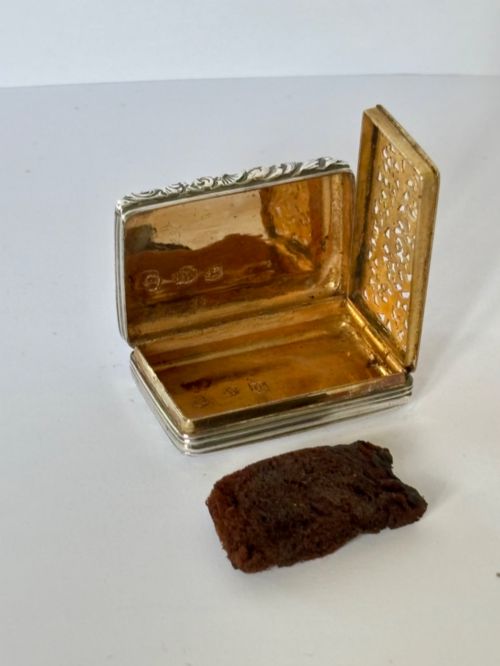
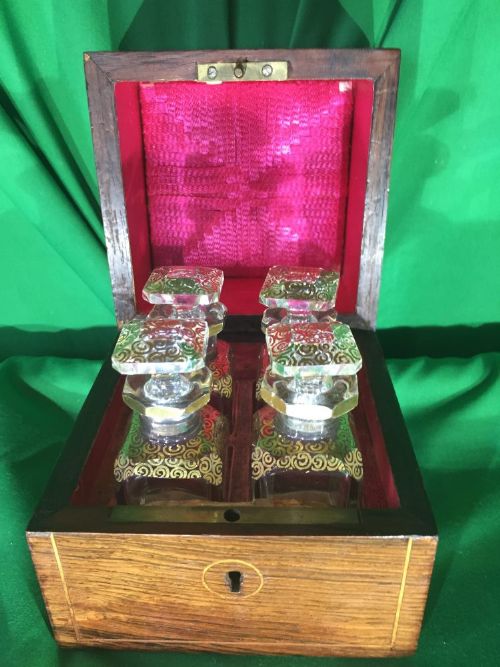
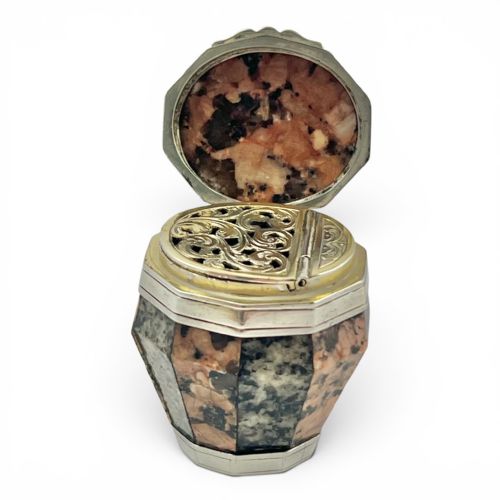
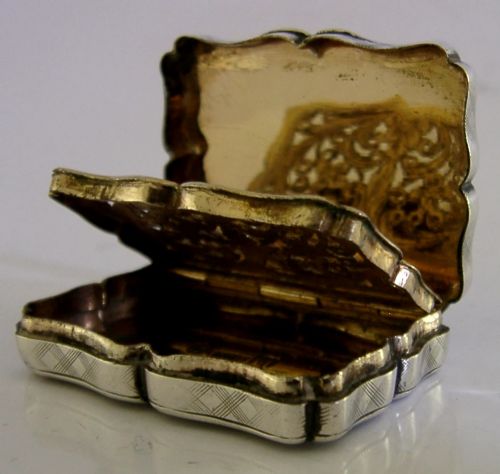
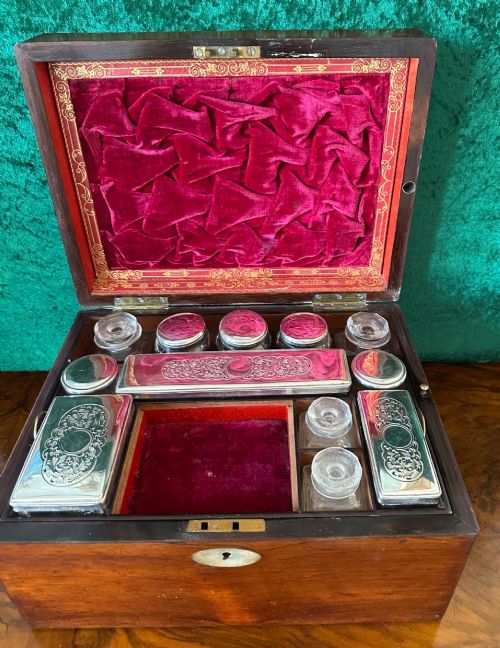
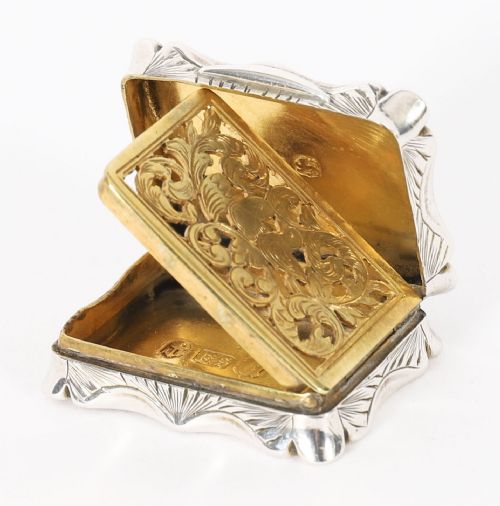
The most frequent examples on this page are small silver vinaigrettes with internal pierced grilles and wooden scent bottle caskets lined for multiple glass bottles. Form follows function closely, moving from tabletop vanity boxes to miniature silver containers made for a pocket or reticule.
How they were made
Cabinet makers utilised dense hardwoods like rosewood and coromandel, often framing them with brass mounts, strapwork, and bound corners to endure travel. Interiors received linings of silk, velvet, or leather fitted precisely to hold glass scent bottles or crystal jars.
Silversmiths and goldsmiths worked precious metals through casting, chasing, and gilding, piercing internal grilles for vinaigrettes by hand. Glassmakers blew and cut crystal vessels, pairing them with silver-gilt lids and hinged mounts.
Antique Perfumed Box Retail Price Guide 2026
Typical asking prices for perfumed box among the pieces listed under this phrase on Sellingantiques today, from the lower quarter to the upper quarter. They describe what is for sale here now, not the wider market.
Listings feature materials spanning brass, glass, velvet, silver, sterling silver, leather, silk, and rosewood.
What varies in quality
The distinction between standard items and superior examples lies in the integrity of the materials and the precision of the internal fit. Finer boxes employ solid exotic timbers, substantial gauge silver, and heavy hand-cut crystal rather than thin veneers or pressed glass.
Execution of detail defines the upper tier, seen in crisp chasing on silver boxes, original silk linings intact within wooden caskets, and fully functional locking mechanisms with matching keys. Maker attribution and documented provenance elevate pieces further.
Nathaniel Mills·Edward Smith·Giles Loyer·John Bettridge·Rene Lalique
The Antique Perfumed Box Glossary
- Vinaigrette
- A small metal box containing a sponge soaked in aromatic vinegar or smelling salts behind a pierced internal grille. These pocket containers date predominantly from the Georgian and Victorian eras.
- Coromandel
- A dense, heavy timber with dark brown and black grain patterns imported from Asia, utilised extensively for luxury nineteenth-century boxes and writing slopes.
- Guilloche
- A decorative mechanical engraving technique producing precise, intricate geometric patterns beneath translucent enamel on silver or gold items.
- Unguentarium
- A small ancient glass or ceramic flask designed to hold scented oils or unguents, frequently associated with archaeological contexts.
- Tantalus
- A locking wooden frame holding decanters or scent bottles so the stoppers cannot be removed while the case remains secured.
Antique Perfumed Box: Frequently Asked Questions
How do I date a wooden scent box?
Dating relies on timber choice, construction methods, and hardware styles. Rosewood and coromandel become common in nineteenth-century pieces, while earlier Georgian examples often use mahogany or tortoiseshell.
Examine the interior linings, hinges, and lock plates, as machine-screw fixings and brass quadrants point toward specific decades of the Victorian era.
Were these boxes meant for travel?
Many examples are travelling dressing cases or fitted caskets designed to secure glass bottles during transit. They feature heavy brass mounts, secure locks, and internal partitions.
Smaller silver vinaigrettes and scent holders were intended for personal pocket use during social calls and journeys.
How do I care for antique wood and silver?
Keep wooden boxes away from direct sunlight and dramatic humidity changes to prevent timber splitting and veneer lifting. Dust rosewood and coromandel gently with a dry cloth without applying modern polishes.
Silver components benefit from minimal intervention, avoiding harsh dips that strip the character and remove original gilding from vinaigrette interiors.