
Antique Pendant Medallion
An antique pendant medallion brings together personal devotion, portraiture and miniature art in gold, silver and enamel.
Antique Pendant Medallion
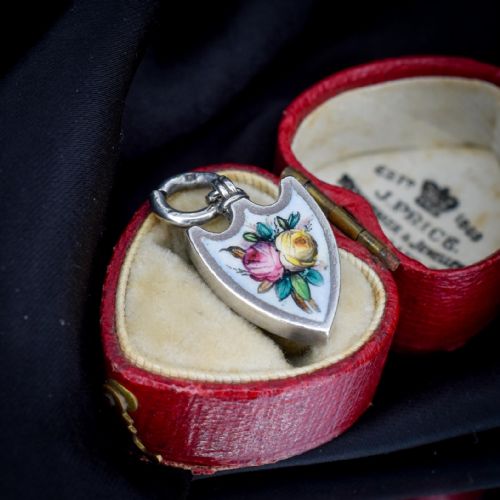
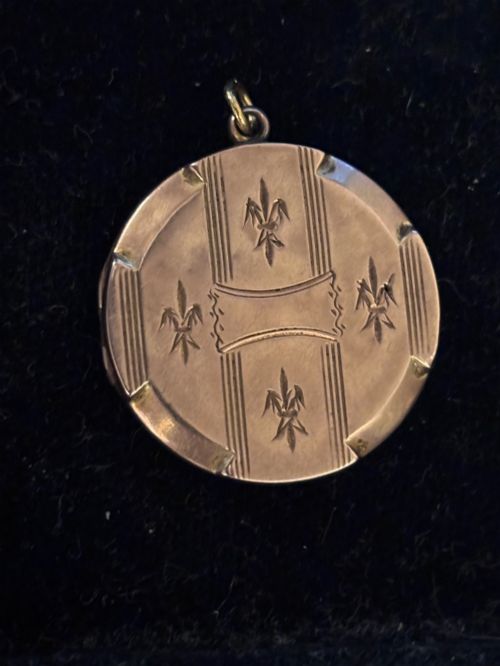
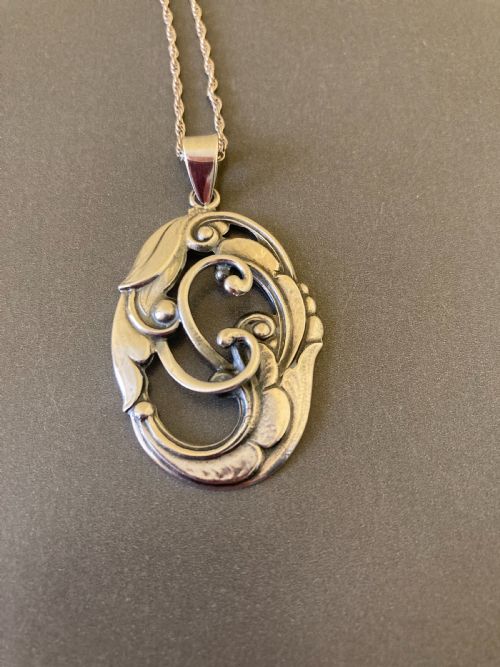
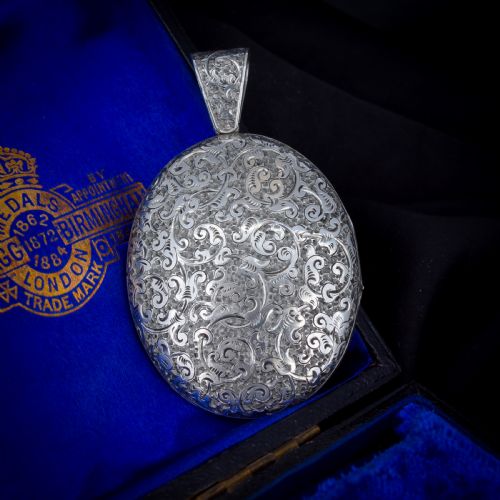
When you search for an antique pendant medallion, you encounter wearable works of art that span the Victorian, Edwardian, Art Nouveau and Art Deco periods. These pieces serve as lockets, religious medals, charm pendants and decorative shields designed to be suspended from chains or ribbons.
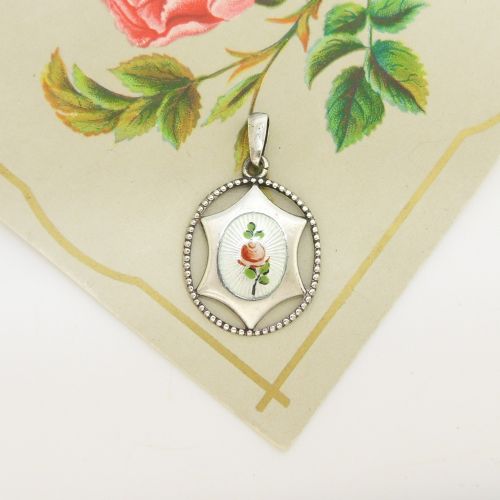
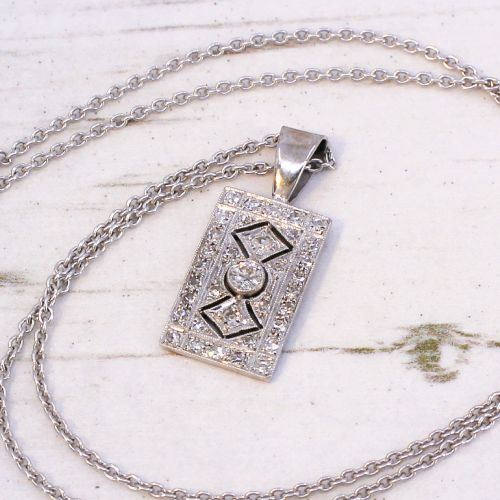
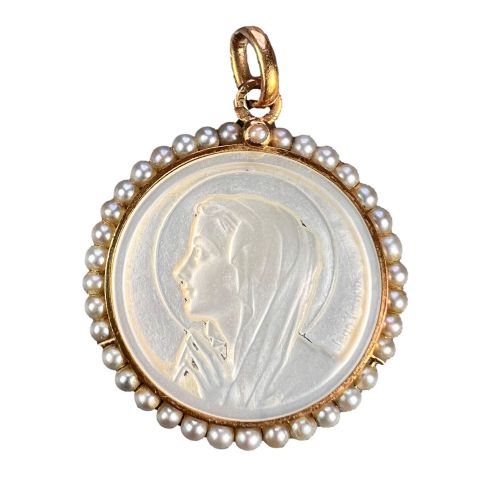
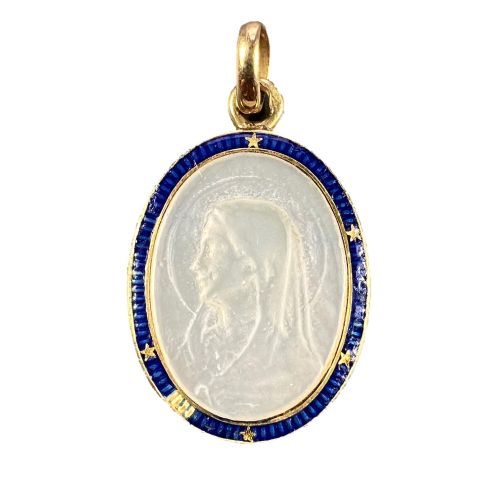
The most common examples on this page are French religious medals cast in 18K yellow gold, often featuring the Virgin Mary, Madonna and Child or the Sacred Heart. Alongside these devotional items sit Scandinavian silver enamel pieces, Georgian and Victorian lockets, and intricate paste or diamond jewels.
Makers and workshops across Britain, France, Austria and Scandinavia produced these objects in gold, silver, pearl and enamel. Forms range from simple engraved photo lockets to elaborate Plique-a-Jour enamel works signed by named artists.
Materials and methods of construction
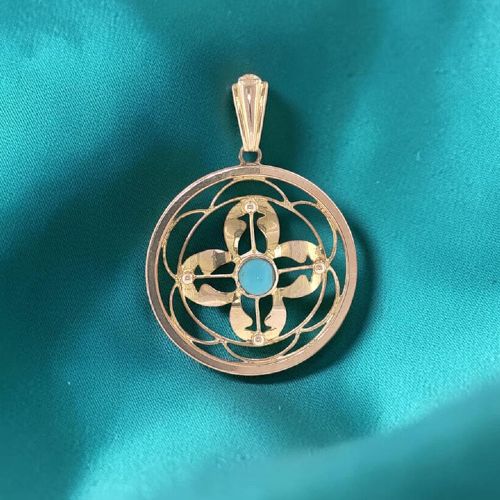
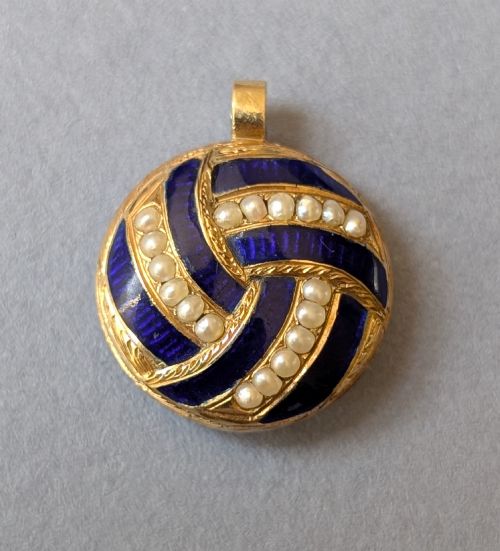
Goldsmiths and silversmiths utilised 18K yellow gold, 15ct gold, 9ct gold and sterling silver to form the structure of each antique pendant medallion. Stones such as turquoise, peridot, jadeite and old cut diamonds are flush-set or claw-set into the precious metal frames.
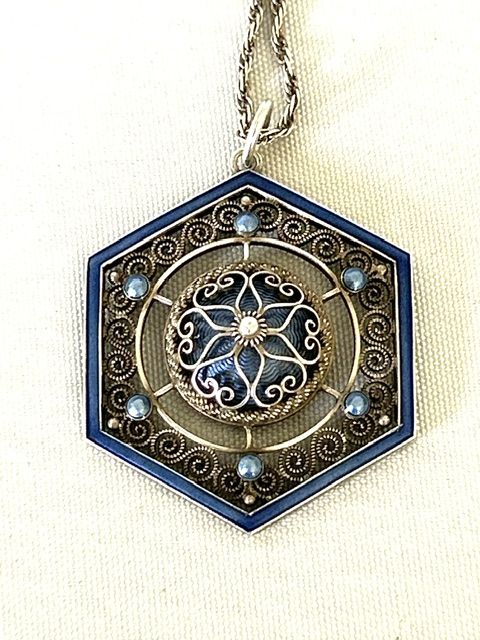
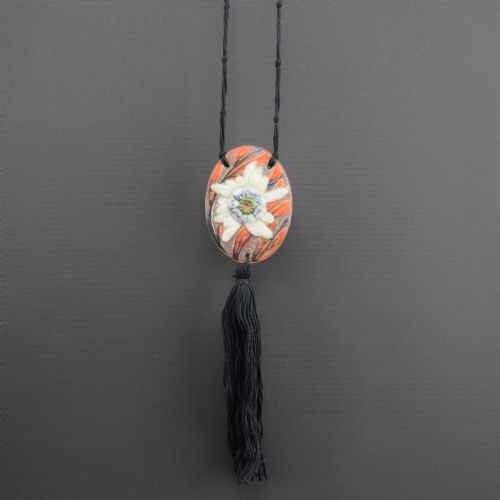
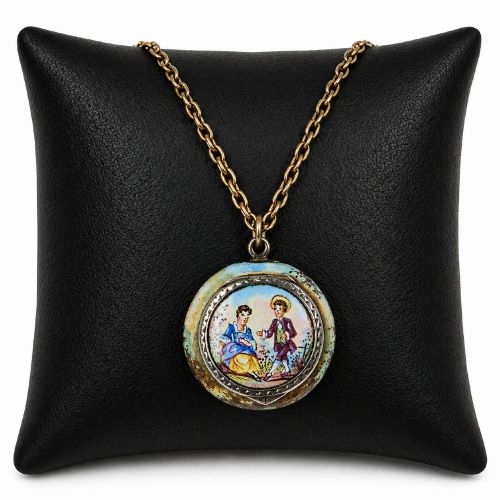
Enamelling techniques define many of the finest pieces, including translucent guilloche enamel, opaque painted miniature work and delicate Plique-a-Jour where enamel hangs in open metal cells like stained glass. Artisans also carved mother of pearl, moulded pate de verre glass and engraved intricate floral wreaths, monograms and religious figures directly into the metal.
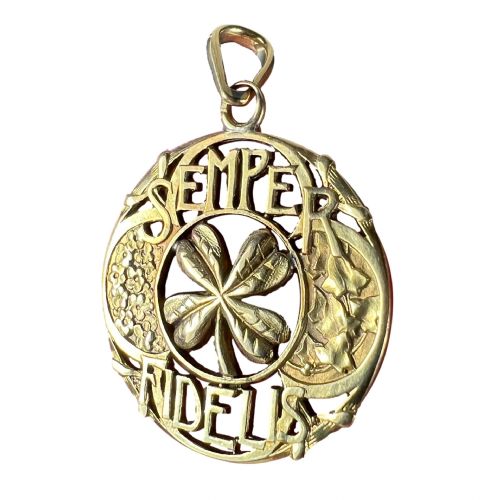
Deer hunting horns and lucky clovers occasionally share medal space with solemn saints.
Distinctions in quality and execution
The calibre of an antique pendant medallion rests upon the precision of its metalwork and the artistry of its surface decoration. Hand-engraved details with deep, sharp lines and finely modelled relief figures on French medals show superior handwork compared to mass-produced stamped alternatives.
In enamelled pieces, the clarity of the colour, the absence of firing cracks in Plique-a-Jour cells, and the subtlety of shading across guilloche patterns mark out the work of skilled ateliers and master medallists.
Marius Hammer·Argy Rousseau·Emile Monier·Paul Brandt·Mazzoni·Pageli Perriat·Guilbert·Vernon·Emile Dropsy·Sellier·Rasumny
The Antique Pendant Medallion Glossary
- Plique-a-Jour
- An enamelling technique where enamel is applied to open cells without a backing, allowing light to shine through the transparent colour much like a miniature stained glass window.
- Guilloche
- A decorative mechanical technique where a precise repeating pattern or design is engraved into a metal surface beneath translucent enamel.
- Pate de verre
- A glass-casting method involving crushed glass packed into a mould and fused in a kiln, producing a dense coloured object with a distinctive matte texture.
- Watch Fob
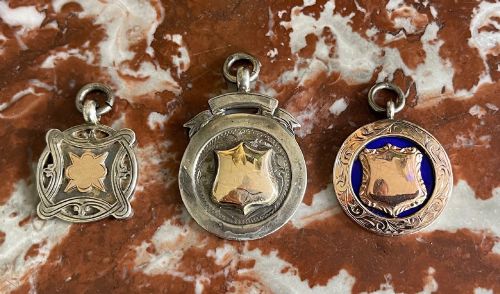
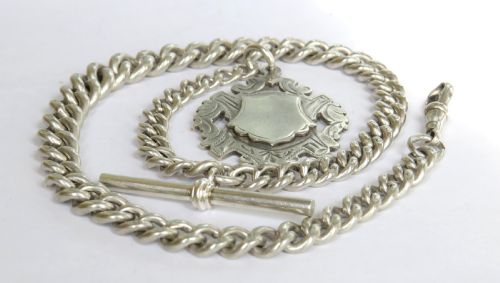
- A small ornamental medallion or seal attached to a pocket watch chain, frequently repurposed as a pendant.
- Locket
- A hinged pendant designed to open and enclose a miniature portrait, lock of hair or small photograph.
Antique Pendant Medallion: Frequently Asked Questions
What is an antique pendant medallion?
An antique pendant medallion is a small decorative or devotional object worn around the neck, encompassing gold lockets, silver charms, and detailed religious medals.
These pieces were produced from precious metals and enamels during the nineteenth and early twentieth centuries by makers across Europe.
How do I identify the period?
Periods are identified through stylistic cues such as the flowing organic lines of Art Nouveau, the geometric symmetry of Art Deco, and the heavier sentimental motifs of the Victorian era.
Hallmarks, maker signatures and material choices also provide clear indicators of whether a piece dates to the nineteenth century or the mid-twentieth century.
Were these medals worn daily?
Religious medals and devotional charms were frequently worn close to the heart on chains, pocket watch fobs or ribbons as personal expressions of faith.
Many show the gentle softening of high-relief details that comes from decades of continuous wear against clothing.
Can I put a photo inside?
Lockets and double-sided medallions specifically constructed with hinged compartments or glass panels were designed to hold photographs, miniatures or hair mementoes.
Solid cast medals and single-layer enamel pendants, however, are solid pieces without internal storage.