


Antique Pearl Heart Charm
An antique pearl heart charm holds the romantic sentiment of past eras, offering a delicate expression of affection crafted in gold and gemstones.
Antique Pearl Heart Charm
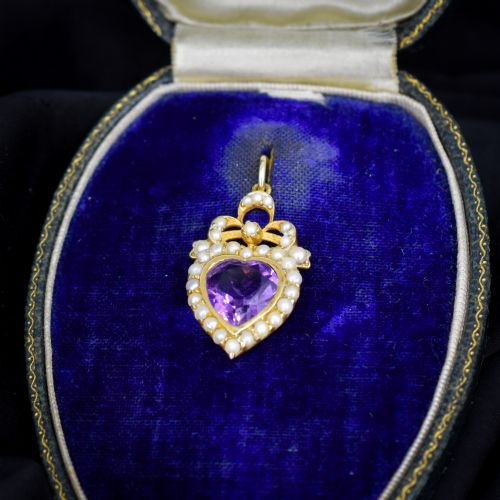
An antique pearl heart charm embodies the sentimental jewellery of the Victorian and Edwardian periods, taking the form of pendants, lockets, and bracelet elements. These pieces frequently combine seed pearls with yellow gold, rose gold, or enamel to create enduring symbols of devotion.
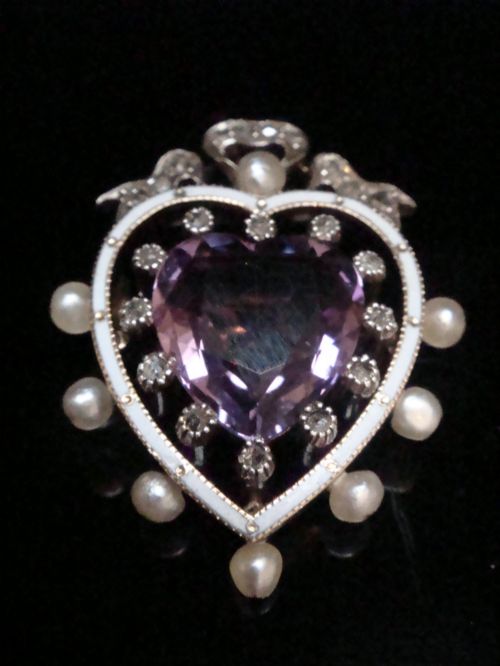
Buyers searching for an antique pearl heart charm will most commonly encounter Edwardian and Victorian examples on this page. These range from simple puffed gold hearts set with seed pearls to complex gemstone clusters incorporating amethysts, sapphires, rubies, and diamonds.
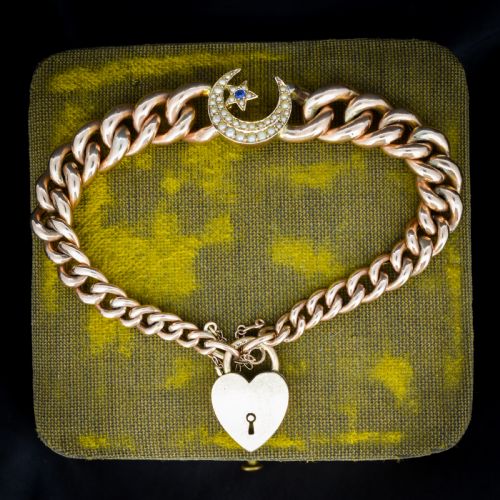
Many of these heart motifs also function as padlocks on curb link bracelets or as drop pendants designed to be worn on fine chains. The variety spans from delicate solid gold forms to intricate locket compartments meant for holding mementos.
How they were made
Goldsmiths of the Victorian and Edwardian eras utilised varying purities of gold, ranging from nine carat and fifteen carat up to eighteen carat and high carat weights. Construction techniques included hollow puff forms, solid castings, and detailed curb link assemblies.
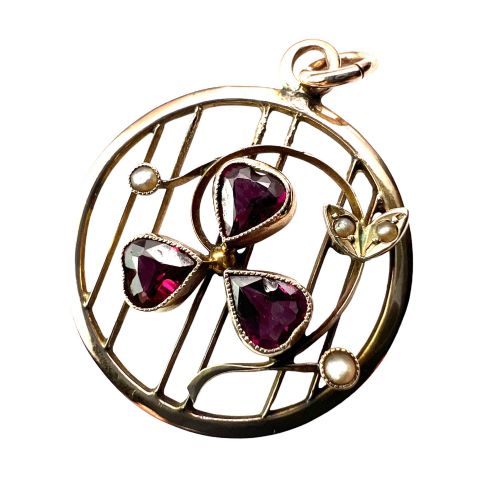
Seed pearls were meticulously set by hand into gold mounts, often accompanied by guilloche enamel or precious stones such as amethyst, sapphire, garnet, and turquoise. Surface finishes included matt gold detailing and intricate knotwork to enhance the central heart motif.
What varies in quality
The distinction between standard and superior pieces rests upon the choice of materials and the complexity of the design. Examples incorporating high carat gold, brilliant enamel work, or supplementary gemstones like diamonds and emeralds represent finer tiers of craftsmanship.
The intricacy of the seed pearl setting and the structural integrity of puffed forms or locket mechanisms dictate the refinement of the piece. Superior items display meticulous attention to detail in the gold wirework, knot motifs, and integrated fittings.
The Antique Pearl Heart Charm Glossary
- Seed pearl
- A very small, naturally formed or cultured pearl used extensively in clusters and floral motifs during the nineteenth and early twentieth centuries. These tiny pearls provide delicate texture and luminosity to gold settings.
- Guilloche enamel
- A decorative technique involving precise engine-turned patterns beneath a translucent layer of coloured enamel. This method creates a luminous, patterned background frequently seen on Edwardian pendants.
- Witches heart
- A specific heart motif featuring a twisted or curved tail, historically symbolising falling head over heels in love. These distinctive pendants are highly sought after by collectors of antique sentiment jewellery.
- Puff pendant
- A hollow gold pendant formed from two convex plates joined together to create a rounded, three-dimensional heart shape without excessive weight. This technique allowed makers to achieve substantial visual presence efficiently.
- Padlock
- A functional clasp shaped like a padlock, commonly attached to antique curb link bracelets and frequently designed in the form of a heart. They served both a secure fastening purpose and a decorative role.
Antique Pearl Heart Charm: Frequently Asked Questions
What periods do these charms come from?
The pieces seen here originate primarily from the Victorian and Edwardian eras, alongside related designs from around eighteen ninety. These periods are defined by distinct aesthetic movements and gold standards.
Craftsmen during these times favoured romantic symbolism, utilising seed pearls and coloured gemstones to create enduring tokens of affection.
How were these charms worn originally?
These items served multiple purposes, functioning as standalone pendants on fine gold chains or as charms and padlocks attached to heavy curb link bracelets. Some designs also incorporated internal locket compartments for holding personal mementos.
Their versatile sizing allowed them to transition easily between neckwear and wristwear depending on the fashion of the day.
What materials are typically used?
Gold forms the primary structural material, appearing in nine carat, fifteen carat, eighteen carat, and high carat formulations in both yellow and rose hues. Seed pearls provide the defining textural element across nearly all pieces.
Additional materials frequently include amethysts, sapphires, rubies, garnets, turquoise, diamonds, and coloured enamel.
How do I distinguish Victorian from Edwardian styles?
Victorian pieces often feature heavier gold weights, fifteen carat standards, and robust padlock or locket constructions with sentimental hair compartments. They lean towards rich, deep gemstone combinations and solid construction.
Edwardian designs typically embrace lighter nine carat or eighteen carat gold, delicate guilloche enamel, airier seed pearl clusters, and bright stones like aquamarines, amethysts, and diamonds.
Are these pieces solid gold?
Construction methods vary between solid gold forms and hollow puffed configurations designed to offer visual impact while remaining comfortable to wear. Specific variations include solid front panels paired with hollow backs.
Descriptions consistently record the specific gold carat, such as nine carat or fifteen carat, indicating the precise alloy purity used by the maker.