



Antique Pearl Floral Pendant
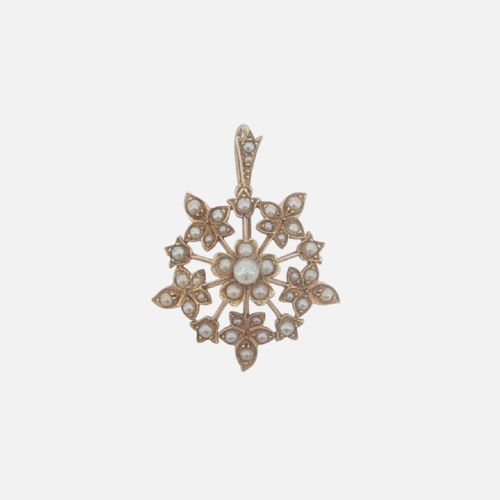
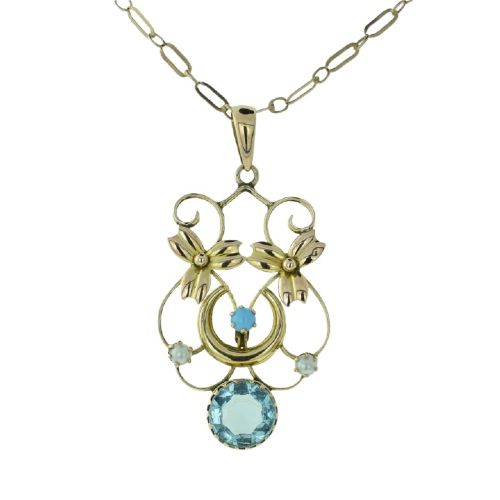
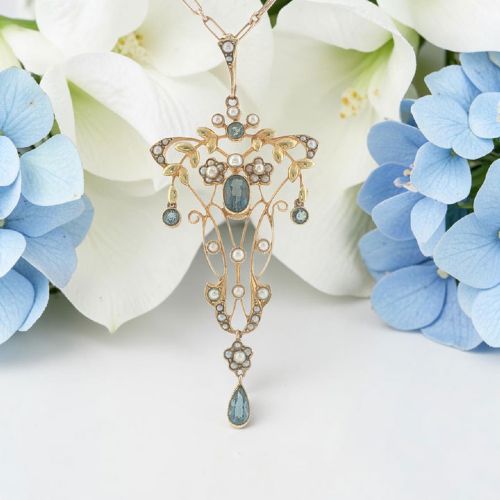
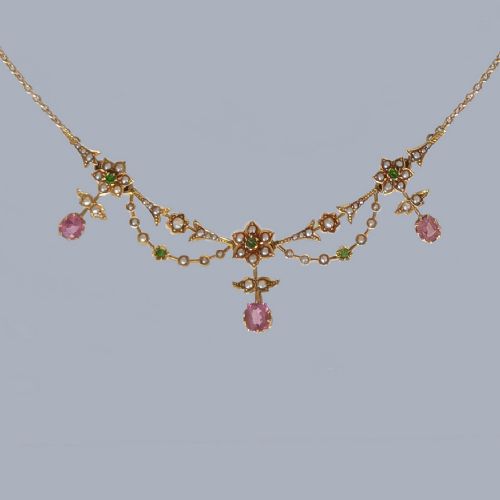
An antique pearl floral pendant brings botanical grace to the neckline, uniting delicate gems with enduring precious metal.
Antique Pearl Floral Pendant
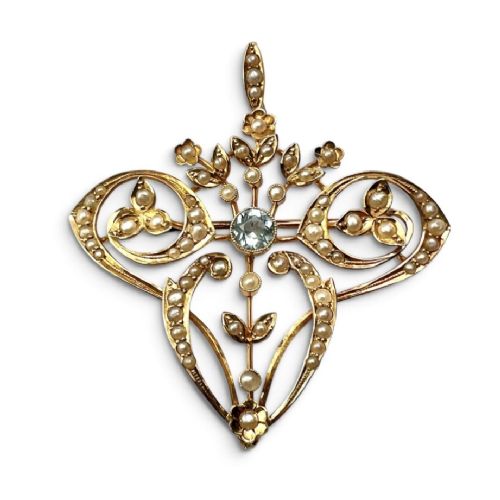
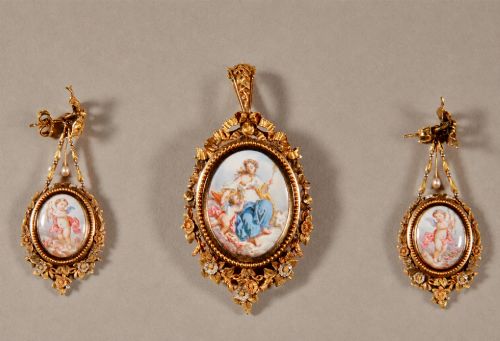
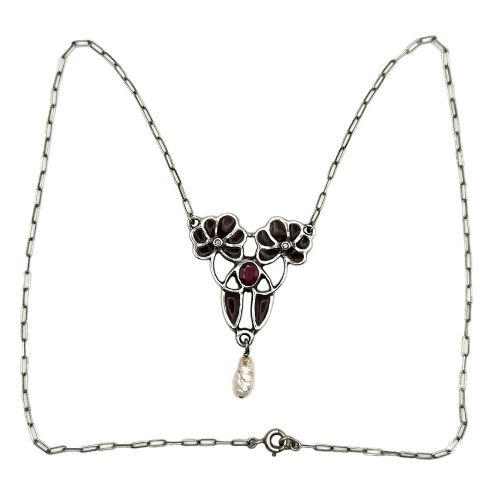
An antique pearl floral pendant draws upon natural forms, often taking the shape of blossoms, wreaths, or foliage. When searching for an antique pearl floral pendant, buyers encounter pieces originating predominantly from the Victorian and Edwardian eras, alongside later mid-century examples.
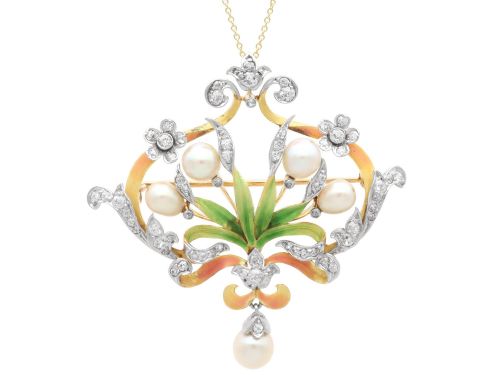
The objects span varied configurations, functioning as pendants, necklaces, convertible brooch pendants, and lockets. Seed pearls frequently form the petals of these botanical motifs, paired with yellow gold, rose gold, or platinum.
Makers set these pearls alongside coloured gems including amethyst, aquamarine, peridot, ruby, sapphire, and diamond. The resulting designs capture the curvilinear grace of Art Nouveau alongside the structured symmetry of late nineteenth and early twentieth century styles.
How they were made
Goldsmiths utilised nine carat, fifteen carat, and eighteen carat gold, as well as platinum, to construct the intricate frames of these botanical ornaments. Metal was drawn into fine wires, cast, or hand-pierced to support the delicate arrangement of petals and leaves.
Seed pearls were meticulously drilled and secured onto fine pins or threaded onto silk within the gold settings. Master jewellers combined these luminous pearls with bezel-set or claw-set gemstones, incorporating enamelling in select French and British workshops.
Antique Pearl Floral Pendant Retail Price Guide 2026
Typical asking prices for pearl floral pendant among the pieces listed under this phrase on Sellingantiques today, from the lower quarter to the upper quarter. They describe what is for sale here now, not the wider market.
Listings feature nine carat, fifteen carat, and eighteen carat gold, alongside platinum and seed pearls.
What varies in quality
The distinction between tiers rests upon the complexity of the botanical modelling and the integrity of the surviving pearl work. Pieces demonstrating superior craftsmanship feature articulated drop sections, secure grain-setting, and uniform pearl lustre across every floral cluster.
Construction weight and the selection of accompanying coloured gemstones also define the hierarchy. Higher grade examples utilise higher carat gold or platinum alongside well-matched aquamarines, peridots, or diamonds, maintaining structural rigidity without sacrificing the lightness required of a floral pendant.
S. Blanckensee & Son
The Antique Pearl Floral Pendant Glossary
- Seed pearl
- A very small natural or cultured pearl, typically under two millimetres in diameter. These tiny gems form the clustered petals in floral jewellery.
- Edwardian
- A period of jewellery design spanning from the late nineteenth century through the death of King Edward VII in 1910. This era is characterised by platinum work, garlands, and light, feminine motifs.
- Art Nouveau
- An international style of art and jewellery prominent between 1890 and 1910. It emphasises organic, asymmetrical lines, floral silhouettes, and enamelling.
- Collet
- A small metal band or collar used to hold a gemstone securely within its setting. Hand-formed collets are typical of earlier handmade pieces.
- Brooch pendant
- A dual-purpose piece of jewellery fitted with both a folding bail for suspension on a chain and a pin mechanism for wear as a brooch.
Antique Pearl Floral Pendant: Frequently Asked Questions
How do I date an antique pearl floral pendant?
Dating relies upon stylistic markers such as the flowing asymmetry of Art Nouveau or the symmetrical garland motifs of the Edwardian era. Hallmarks stamped on the reverse of the metal provide further chronological clues regarding assay offices and metal fineness.
Changes in clasp types and pin mechanisms also assist in determining whether a piece originates from the Victorian period or later twentieth century production.
Were these pieces worn as necklaces or brooches?
Many examples were manufactured with dual functionality, incorporating both a concealed loop for a chain and a secure pin on the reverse. This allowed the wearer to transition the floral ornament from a pendant to a lapel brooch.
Fixed pendants appear alongside convertible pieces, reflecting the versatile jewellery habits of the late nineteenth and early twentieth centuries.
How should I care for seed pearl jewellery?
Seed pearls are sensitive to moisture, chemicals, and cosmetics, requiring gentle cleaning with a soft, dry cloth after wear. Submerging antique pearl jewellery in water can weaken the historic adhesive or silk threads holding the pearls in place.
Storage should involve separate compartments away from harder gemstones to prevent surface scratching on the delicate pearl nacre.
What gold carats appear in these pendants?
British pieces from the Victorian and Edwardian periods frequently utilise nine carat and fifteen carat gold, alongside eighteen carat variations in French designs. Platinum emerges in later Edwardian work to provide a strong, silvery setting for diamonds and pearls.
Rose gold and yellow gold dominate the earlier Victorian examples, offering warm backgrounds for seed pearl floral clusters.