



Antique Parquetry Sideboard
An antique parquetry sideboard brings geometric timber work and heavy marble tops together, offering robust storage with distinct Continental presence.
Antique Parquetry Sideboard
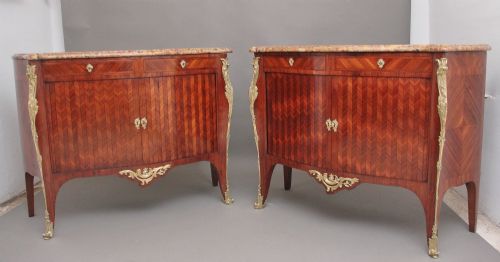
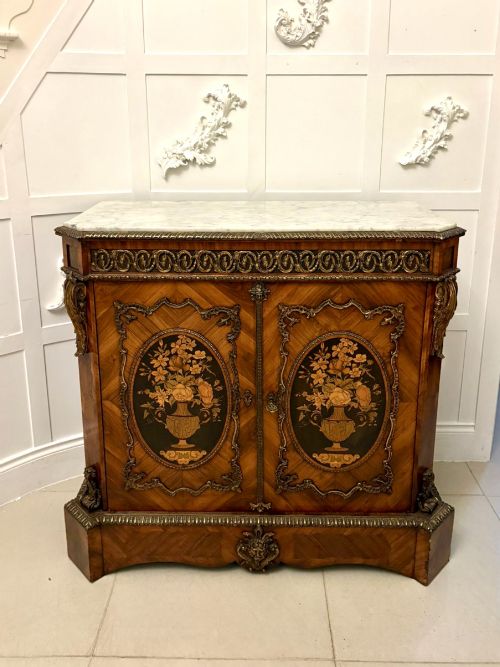
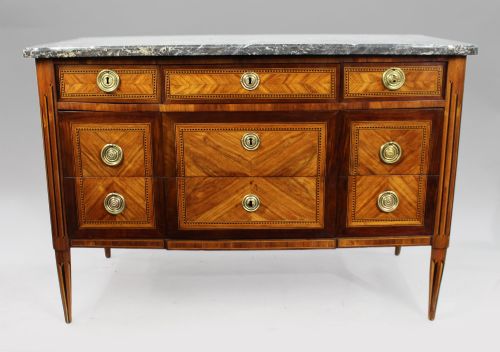
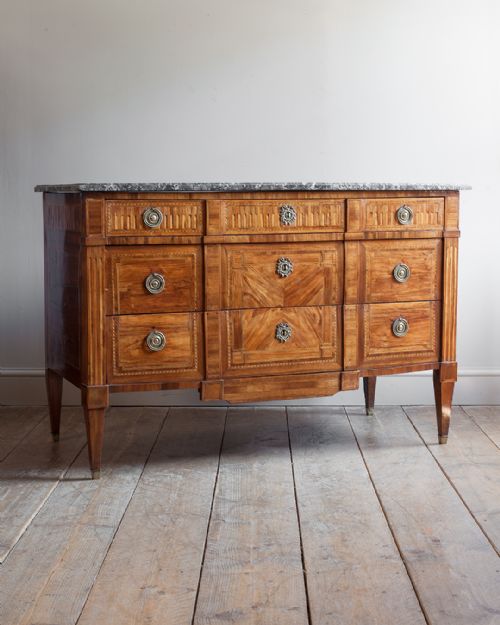
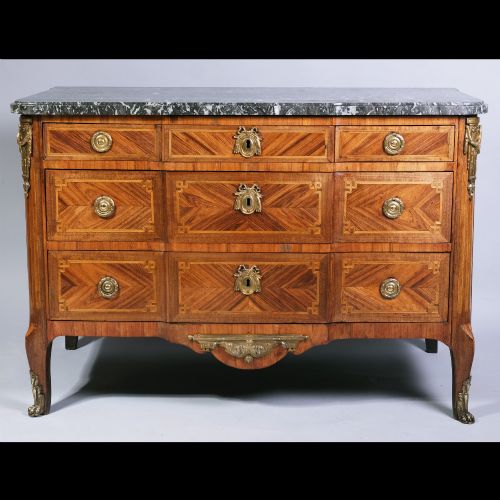
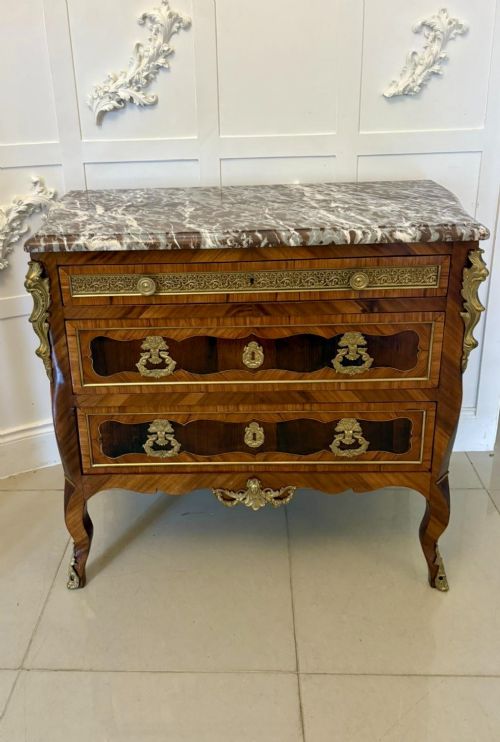
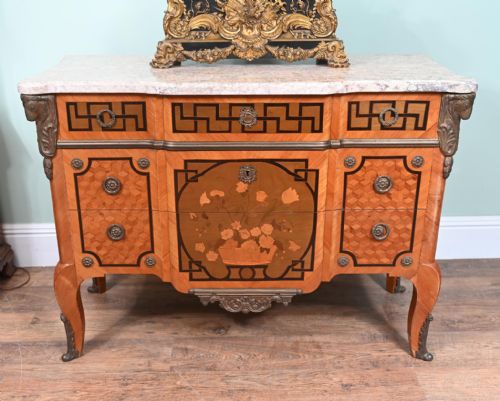
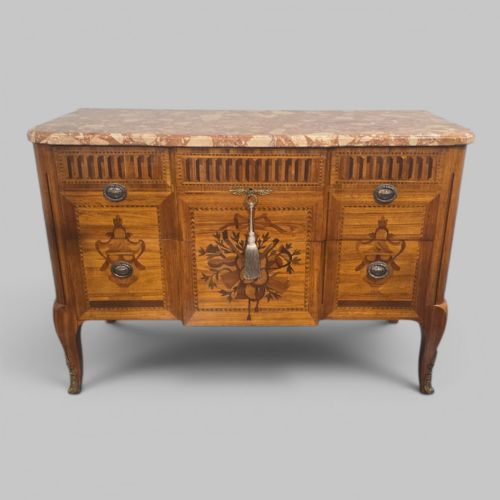
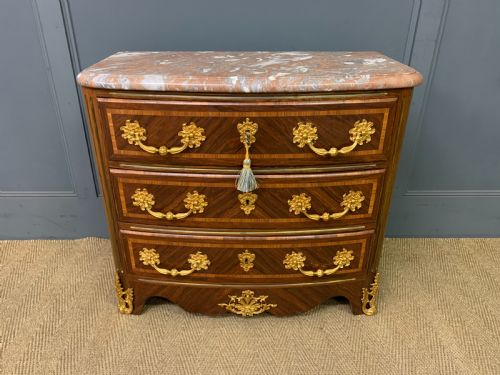
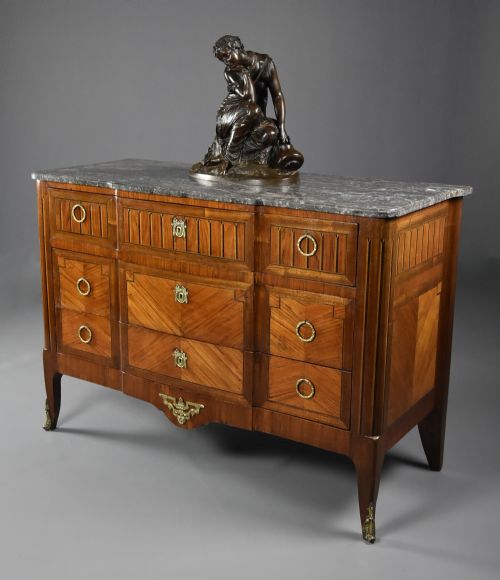
An antique parquetry sideboard encompasses commodes, credenzas, and side cabinets spanning the eighteenth century through the early twentieth century. The primary version met here is the French commode or side cabinet, frequently rendered in Louis XVI or Louis XV style with geometric wood veneers.
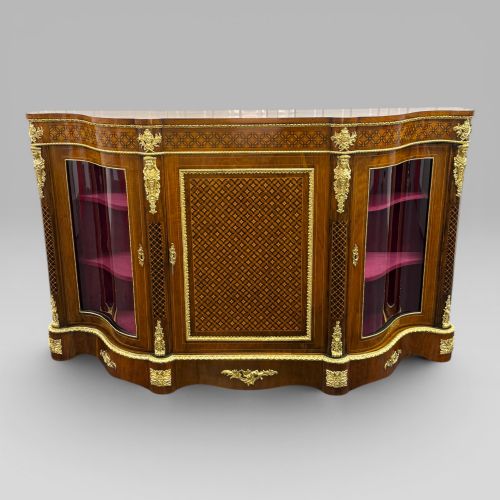
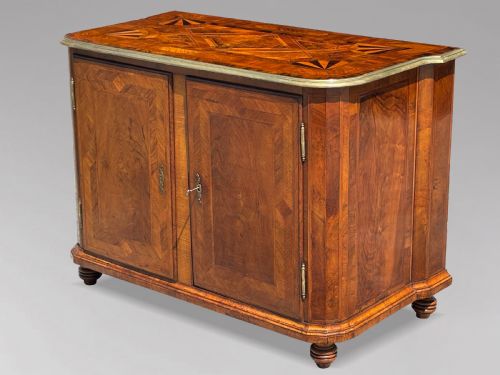
Maltese, Austrian, and Italian examples appear alongside French pieces, shifting from bombé profiles to breakfront shapes. These items serve as functional storage units featuring marble tops and multiple drawers or doors.
Materials and Construction
Carpenters build carcases from walnut, mahogany, kingwood, tulipwood, and oak, applying precision veneer slices to form geometric parquetry patterns. Surfaces often integrate marquetry alongside the wood mosaics.
Heavy marble slabs sit on top of many cabinets, while cast or gilt bronze and ormolu mounts dress the corners, feet, and key escutcheons. Brass details and glass elements complete the structural hardware.
Certain commodes hide secret locking drawers beneath the marble surface, engineered to guard family valuables from sticky-fingered house staff.
Evaluating Craftsmanship
Quality rests in the precision of the timber geometry and the thickness of the applied veneers. Crisp alignment across doors and drawer fronts distinguishes finer work.
The weight and finish of the cast ormolu mounts dictate the tier of the piece. Thick marble slabs with clean bevelling and original locks elevate the construction standard.
Maison Gagneau·Paul Sormani
The Antique Parquetry Sideboard Glossary
- Parquetry
- Geometric wood mosaic work assembled from small veneer pieces to form patterns on furniture surfaces. This technique defines the main decorative surface of the cabinets.
- Ormolu
- Gilded bronze mounts applied to furniture for decorative enrichment and corner protection. The metalwork is cast and chased by hand.
- Bombé
- A swelling, outward-curved contour found on the sides and fronts of certain eighteenth-century furniture. This shape requires advanced veneer bending skills.
- Marquetry
- Pictorial veneer work using various woods to create floral or figurative designs. It differs from geometric parquetry through its curved motifs.
Antique Parquetry Sideboard: Frequently Asked Questions
What is an antique parquetry sideboard?
An antique parquetry sideboard is a large storage cabinet or commode decorated with geometric wood veneer patterns. These pieces date from the eighteenth to the early twentieth century and frequently include marble tops.
Most items originate from French workshops, though examples from Austria, Italy, and Malta appear. They function as decorative credenzas or commodes in dining rooms and halls.
How do I identify a Louis XVI style piece?
Louis XVI style cabinets display straight lines, fluted legs, and symmetrical geometric parquetry. They contrast with the curved, flowing shapes of earlier Louis XV designs.
Ormolu mounts on these cabinets usually feature classical motifs such as wreaths and ribbons. The marble tops often match the rectilinear proportions of the carcase.
Are marble tops original to these sideboards?
Many sideboards and commodes retain their heavy original marble tops, which were bedded onto the wooden carcase during manufacture. These slabs come in various colours, including white and scagliola varieties.
Replacements do occur due to accidental breakage over the centuries. Examining the underside and the fit against the wood helps determine originality.
How should I care for parquetry surfaces?
Parquetry surfaces require gentle dusting with a dry, soft cloth to protect the thin veneer layers. Wax polish applied sparingly preserves the timber without building up excess residue.
Keep the cabinets away from direct heat sources and strong sunlight to prevent veneer shrinkage. Marble tops benefit from prompt wiping to avoid staining from liquids.