




Antique Parlor Suite
An antique parlor suite brings matching elegance into a room, offering coordinated seating designed for entertaining.
Antique Parlor Suite
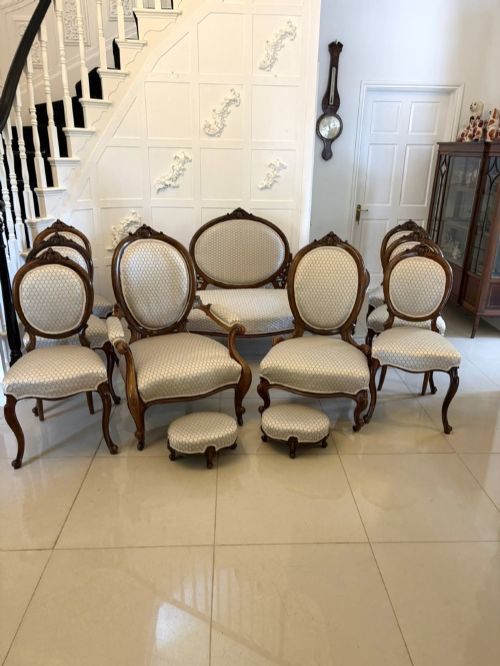
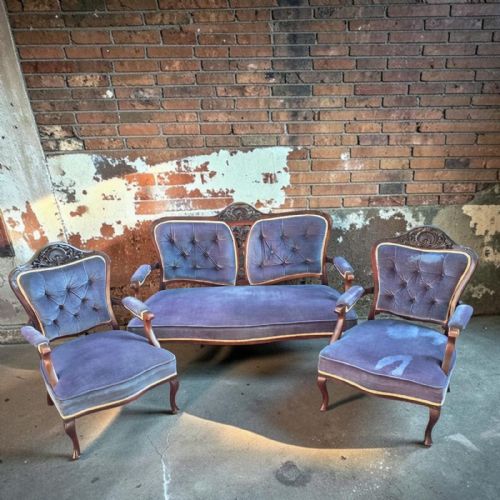
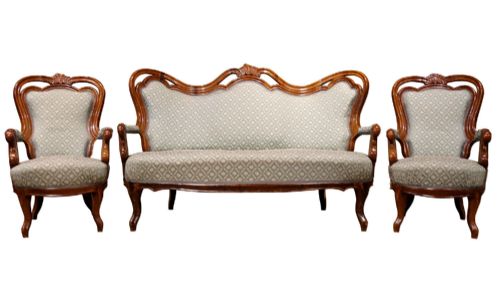
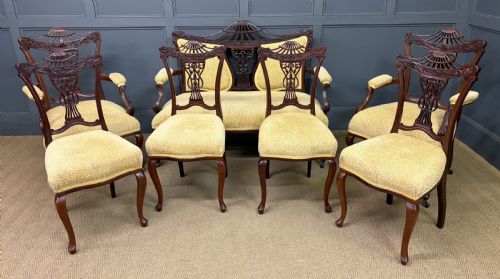
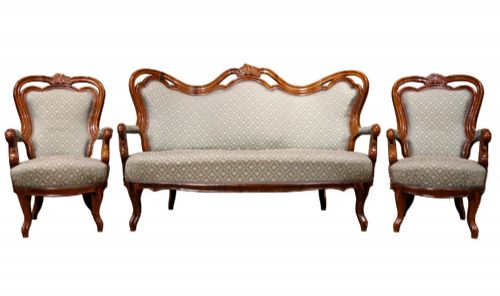
An antique parlor suite comprises a matched set of seating furniture, typically including a settee paired with armchairs and side chairs designed for formal rooms. When searching for an antique parlor suite, buyers encounter coordinated groupings ranging from three pieces to expansive sets of eleven pieces.
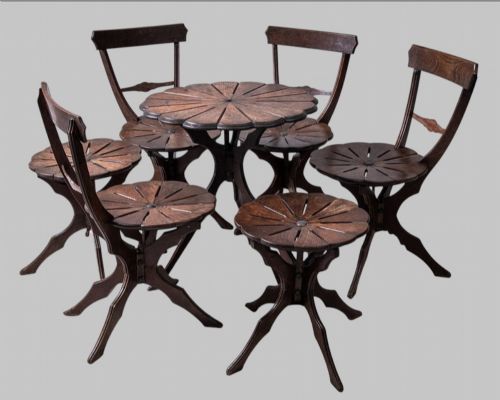
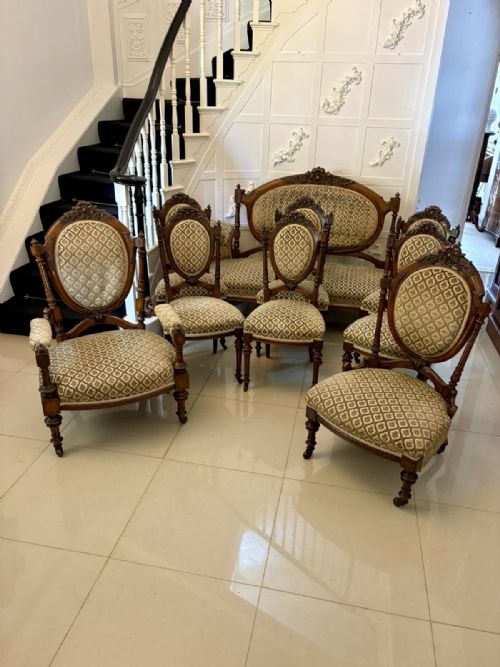
The selections span the Victorian, Edwardian, and Arts and Crafts eras, appearing in woods like mahogany, walnut, oak, and rosewood. Configurations often include matching footstools, double spoon back settees, and chaise longues.
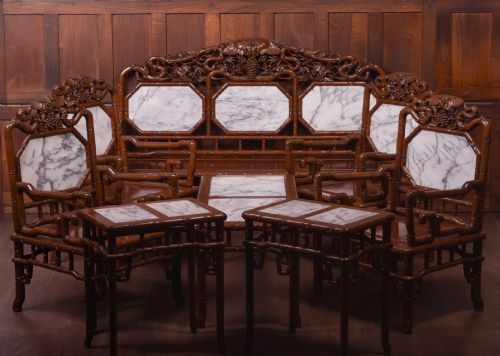
Originating from British, continental European, and Chinese export traditions, these suites reflect diverse regional craftsmanship from the nineteenth and early twentieth centuries.
Materials and construction
Cabinetmakers utilised dense timbers such as walnut, mahogany, and oak to form the sturdy structural frames of each set. Carving, inlay work, and bentwood techniques shaped the distinctive silhouettes seen across the different periods.
Upholstery completed the seating, utilising traditional textiles including velvet, damask, fabric, and button-backed padding supported by internal webbing and springs.
Some sets even include matching footstools, ensuring every guest has a place to rest their toes in matching style.
Distinctions in craftsmanship
The standard of carving and the precision of inlaid woodwork separate exceptional suites from simpler iterations. Hand-carved detail on walnut or mahogany frames indicates a higher level of artisan skill.
Cohesion within the suite, such as matching wood grain and uniform ageing across all matching chairs and settees, dictates the overall integrity of the grouping.
James Shoolbred
The Antique Parlor Suite Glossary
- Salon suite
- An alternative term for a parlor suite, denoting a matched set of seating for a formal drawing room or salon.
- Settee
- A medium-sized upholstered bench with a back and armrests, designed to seat two or more people within the suite.
- Cameo back
- A chair or settee back shaped like a medallion or cameo, frequently found on mid-nineteenth-century Victorian walnut frames.
- Button back
- An upholstery technique where buttons are pulled deep into the padding to create a diamond pattern.
- Inlay
- A decorative technique where contrasting pieces of wood or shell are inserted into the primary timber surface.
Antique Parlor Suite: Frequently Asked Questions
What pieces belong in a suite?
A standard suite includes a settee paired with matching armchairs and side chairs. Larger groupings may incorporate footstools, chaise longues, or additional occasional chairs.
All items share identical wood types, carvings, and upholstery fabrics to create a unified aesthetic for the room.
How do I date these suites?
Dating relies on stylistic clues, such as heavy carved walnut characteristic of the mid-nineteenth century versus lighter inlaid mahogany typical of the Edwardian era. Wood selection and upholstery styles also offer chronological markers.
Examining the construction methods beneath the upholstery reveals further evidence of the period of manufacture.
Are these seats comfortable?
Comfort varies depending on the original padding and the condition of the internal springs or webbing. Many pieces from the Victorian and Edwardian periods were built for upright formal sitting rather than lounging.
Some suites may require professional reupholstery to restore proper support and seating comfort for daily use.
How do I care for the wood?
Protect the timber frames by keeping them out of direct sunlight and away from sudden temperature changes. Regular dusting with a soft, dry cloth preserves the polished finish of mahogany and walnut.
Avoid commercial silicone sprays and consult a specialist for advice on treating older polished surfaces.