
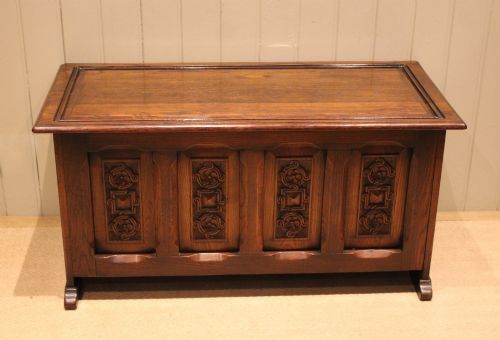
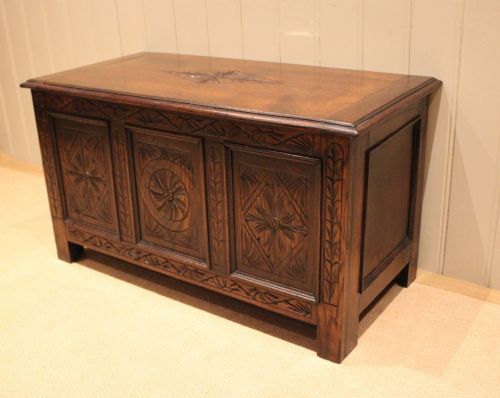
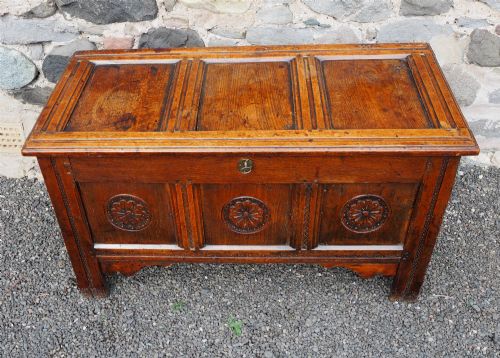
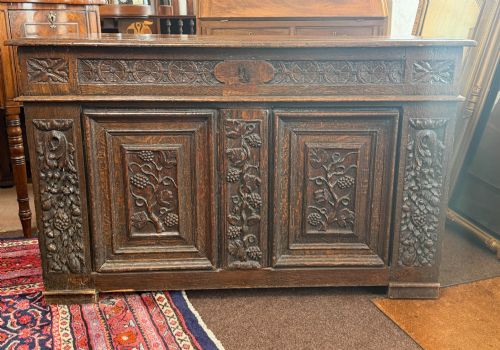
Antique Paneled Coffer
An antique paneled coffer is a sturdy wooden storage chest built to hold domestic valuables, offering centuries of traditional craftsmanship for daily interior use.
Antique Paneled Coffer
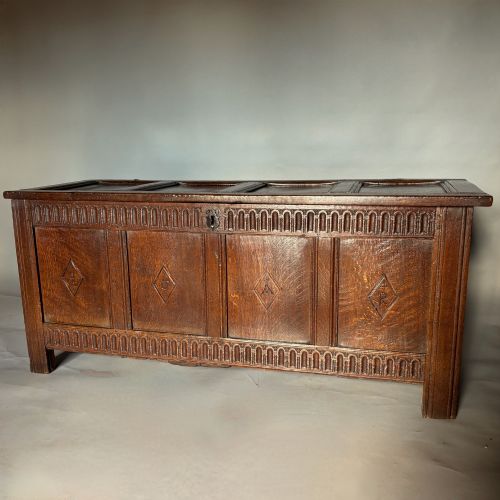
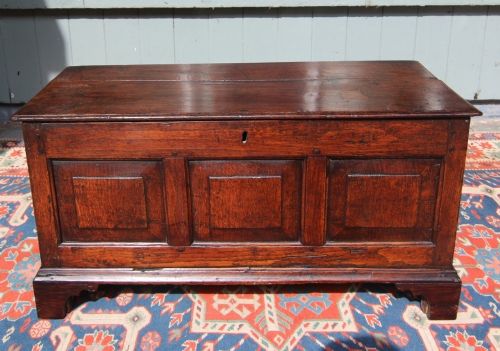
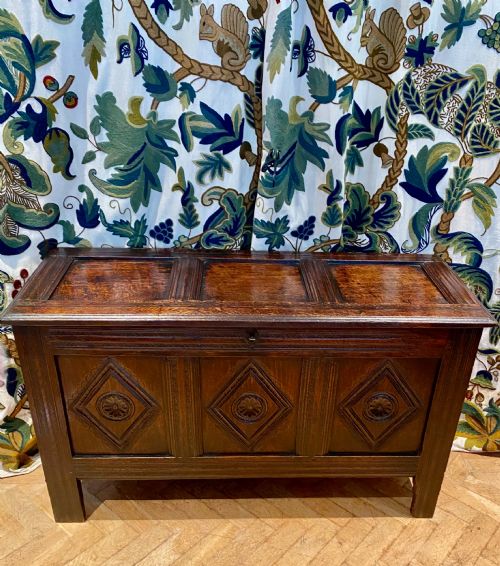
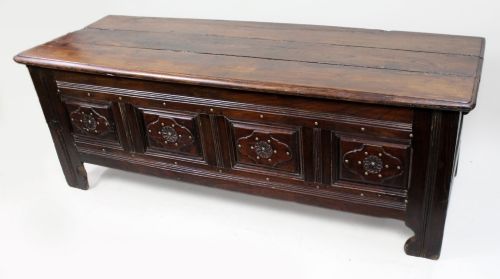
The antique paneled coffer emerges primarily in forms constructed from timber, often designed with distinct paneled sections across the front and sides. These storage chests appear predominantly in seventeenth and eighteenth-century periods, alongside later Victorian and Edwardian interpretations.
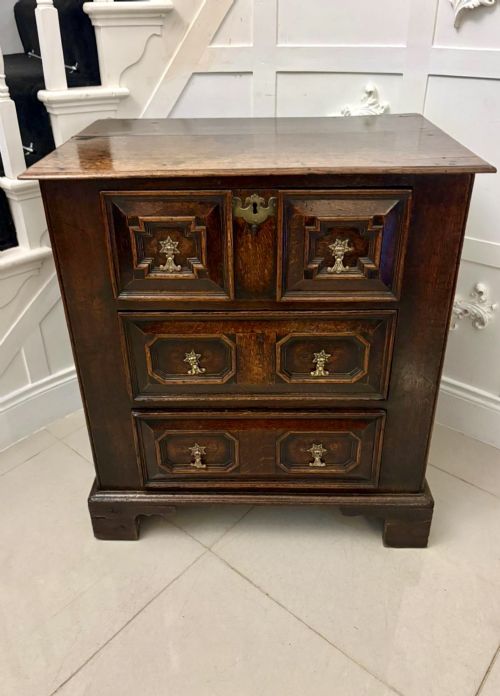
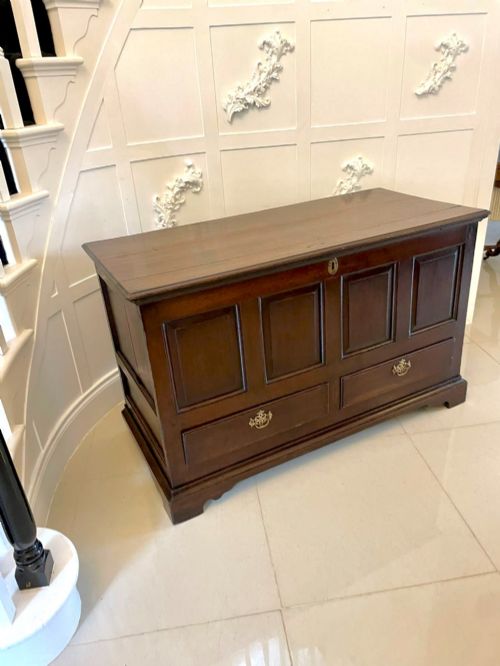
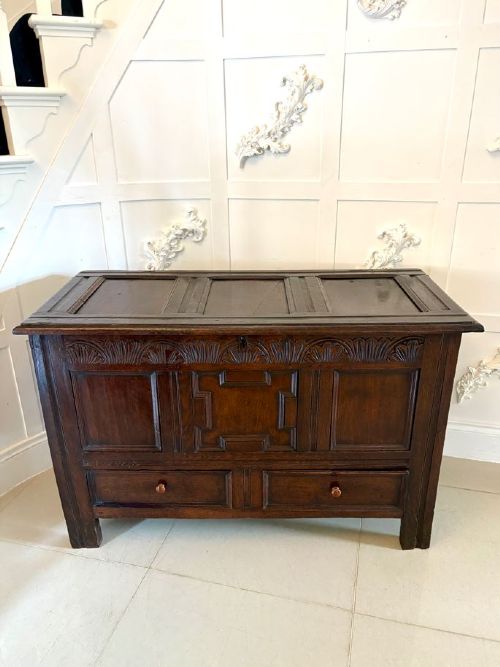
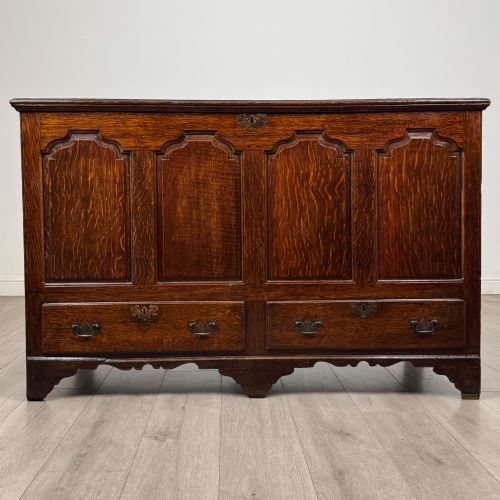
Buyers will encounter various formats including mule chests featuring lower drawers, compact coffer bach examples, and robust joined boxes. Oak serves as the principal material across these regional English, Welsh, and continental European pieces.
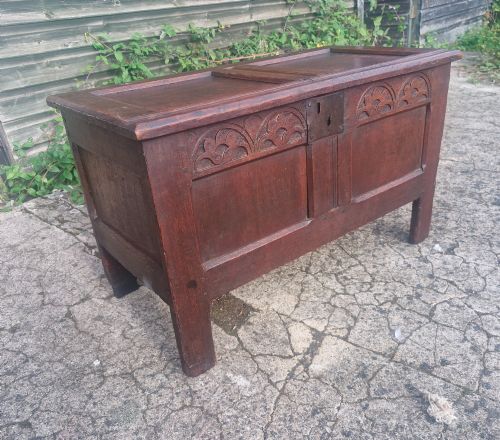
Makers shaped these utilitarian objects for domestic storage, ranging from country house box settles to small seventeenth-century blanket boxes. Surviving examples demonstrate structural joinery typical of early vernacular furniture traditions.
What varies in quality
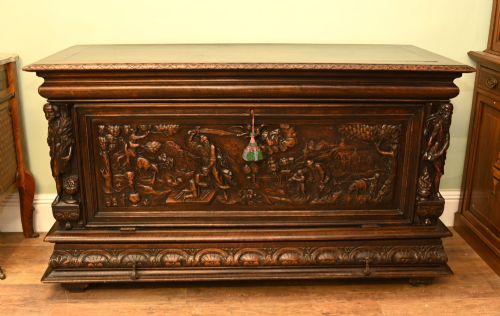
Quality depends upon the crispness of the hand carving and the integrity of the original timber frame. Pieces retaining deep patination and early joined construction hold greater material authenticity.
Proportion and scale dictate the desirability of domestic boxes, with smaller proportions and dated inscriptions marking exceptional regional examples.
Listings feature oak, walnut, iron, and brass materials spanning periods from the sixteenth century through to the Edwardian era.
The Antique Paneled Coffer Glossary
- Coffer
- A heavy wooden storage chest with a hinged lid, traditionally utilised for securing household valuables and textiles. These objects form the primary focus of early joined furniture.
- Mule chest
- A storage chest featuring one or more drawers built beneath the main coffer compartment. This form bridges the transition between simple blanket boxes and chest of drawers designs.
- Linenfold
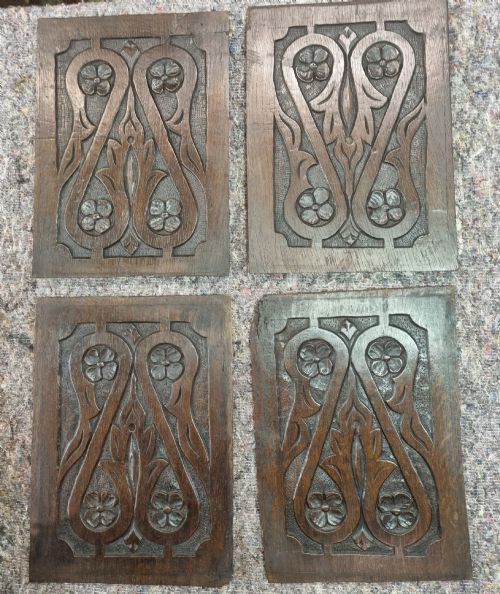
- A style of carved wooden panel relief imitating folded fabric drapery. This ornamentation appears frequently on sixteenth and seventeenth-century English woodwork.
- Joined oak
- Furniture constructed using mortise and tenon joints secured with wooden pegs rather than modern fasteners. This method provides the robust structural skeleton for early chests.
- Coffer bach
- A small regional coffer originating from Wales, translating literally from Welsh as little coffer. These compact vernacular pieces often display distinct local carving characteristics.
Antique Paneled Coffer: Frequently Asked Questions
What is an antique paneled coffer used for?
These historical chests function as practical storage furniture for blankets, linens, and household goods within modern living spaces. Their flat wooden lids also allow them to serve as occasional surface tables or window benches.
Historically, they secured valuable domestic possessions before fitted wardrobes and drawer units became common household fixtures. Their sturdy construction permits continued daily use in hallways, bedrooms, and living rooms.
How do I identify seventeenth-century oak coffers?
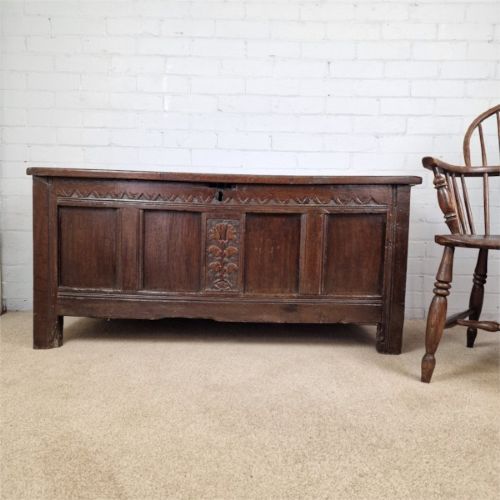
Seventeenth-century examples rely on heavy joined oak framework, hand-carved geometric panels, and pegged mortise and tenon construction. Iron strap hinges and visible tool marks often indicate early handcrafting methods.
Later Victorian or twentieth-century revivals frequently exhibit machine-cut components, different timber coloration, or applied decorative mouldings rather than structural frame-and-panel building techniques.
What is the difference between a coffer and a mule chest?
A standard coffer consists solely of a deep upper storage compartment accessed exclusively through the hinged lid on top. This traditional box design represents the earliest form of domestic trunk.
A mule chest incorporates one or more functional drawers built into the base beneath the main chest cavity. This hybrid form offers easier access to smaller stored items without opening the heavy top lid.
Where were these wooden chests manufactured?
Surviving examples originate primarily from English, Welsh, and continental European workshops utilising locally sourced regional timbers. English and Welsh oak pieces dominate the available vernacular furniture marketplace.
Certain regional pieces display distinct local characteristics, such as the carved panels associated with the Gower Peninsula or French provincial workshops.