


Antique Painting with Cattle
These antique painting with cattle works capture quiet pastoral scenes in oil and watercolour, offering a glimpse into nineteenth-century rural life.
Antique Painting with Cattle
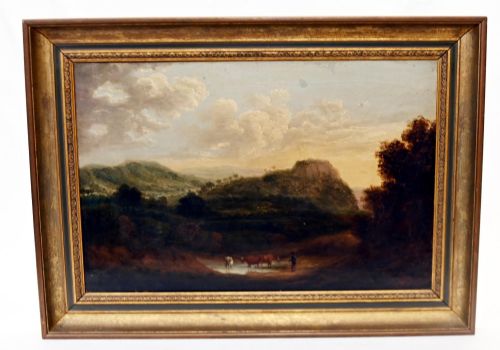
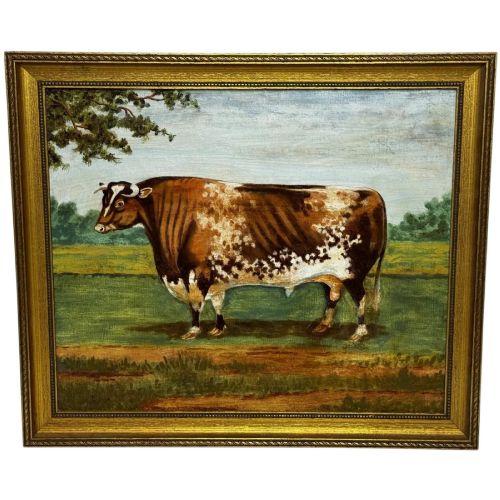
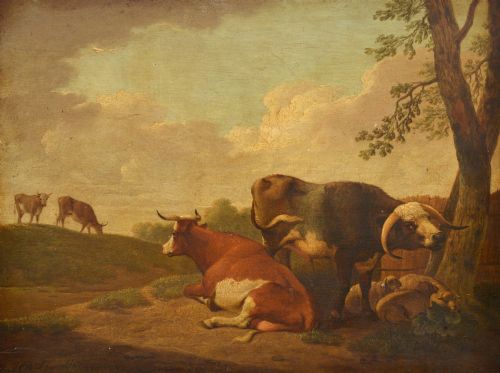
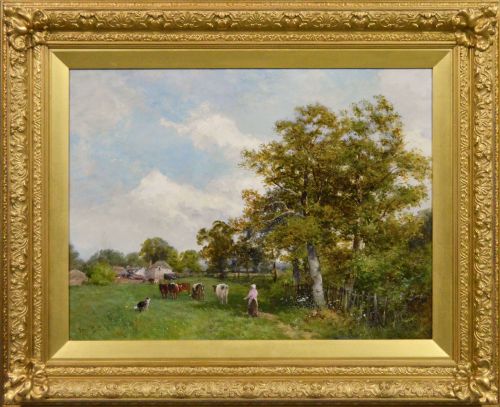
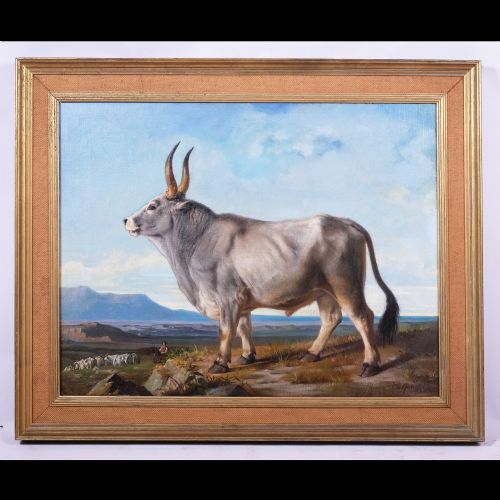
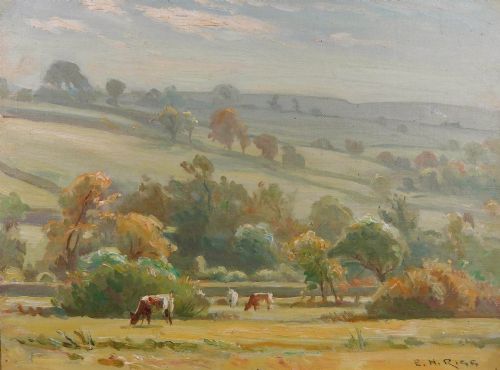
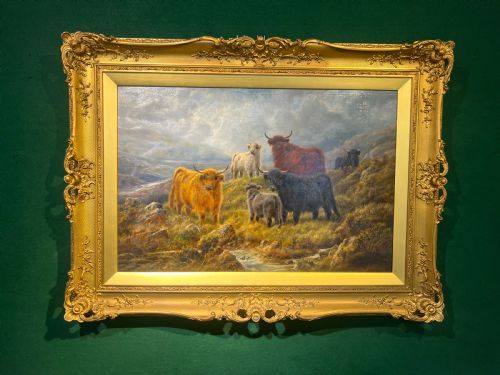
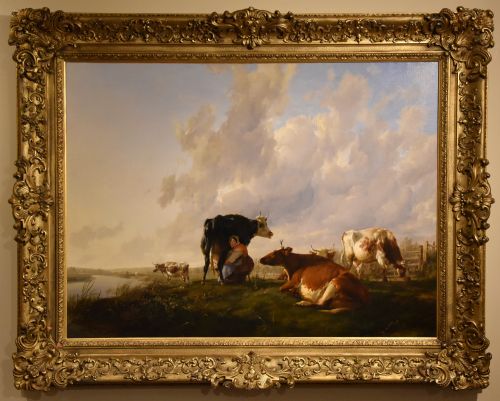
An antique painting with cattle brings domestic livestock and rural working scenes into the domestic interior, focusing on the calm presence of cows and calves within an English, Welsh or Scottish landscape. Buyers find these works spanning the eighteenth century through to the early twentieth century, reflecting shifting tastes from romanticism towards naturalism.
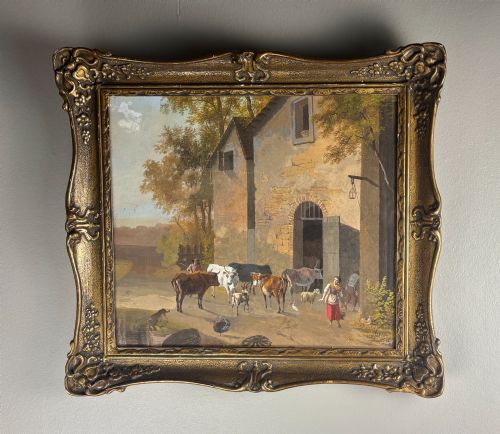
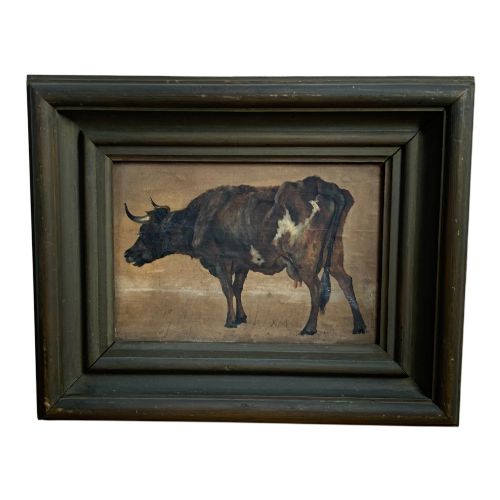
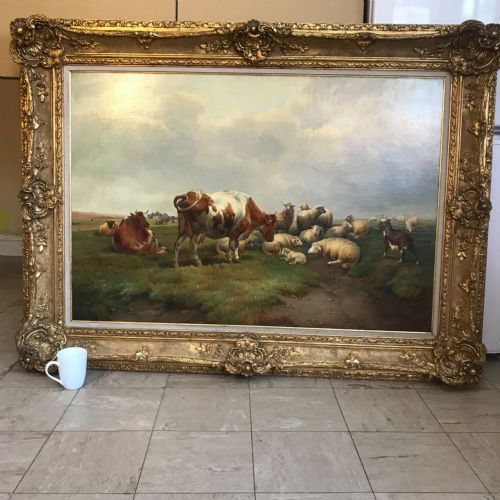
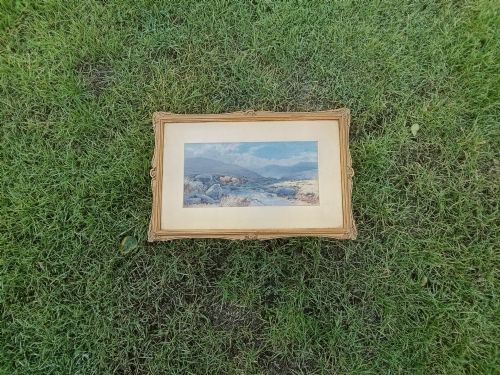
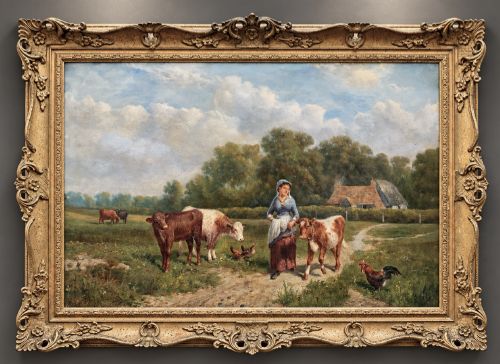
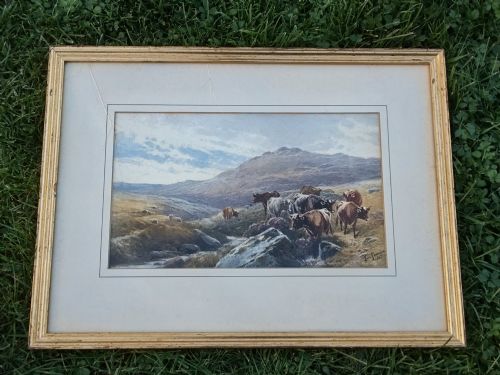
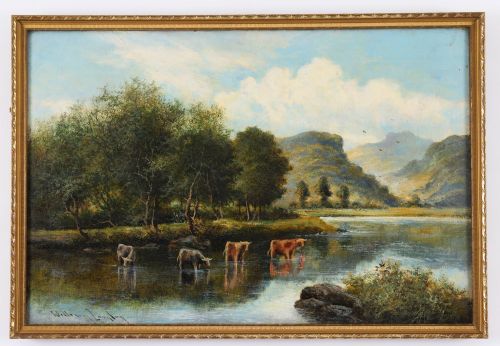
The version most commonly met on this page is the nineteenth-century oil on canvas, often housed in a giltwood frame, though framed watercolours on paper and decorative porcelain spill vases also appear. These pieces frequently pair cattle with riverbanks, castle ruins, farmyards, or highland vistas.
Makers and painters range from prominent academic artists to regional practitioners of the English Country School. Works vary from expansive pastoral vistas to intimate farmyard scenes populated by horses, sheep, and poultry alongside the cattle.
Materials and Techniques
Painters utilised oil paint on stretched canvas or watercolour pigment on paper, applying colour with varying brushwork to render the texture of hides, water, and foliage. Canvases are commonly paired with carved or moulded wood and giltwood frames that protect the perimeter of the work.
Ceramic pieces such as porcelain vases employ fine glazing and hand-painted enamel details to depict highland cattle across rounded surfaces. Support materials like paper for watercolours require protective glass glazing to prevent environmental degradation.
Antique Painting with Cattle Retail Price Guide 2026
Typical asking prices for painting with cattle among the pieces listed under this phrase on Sellingantiques today, from the lower quarter to the upper quarter. They describe what is for sale here now, not the wider market.
The selection includes depictions of highland cattle, farmyard scenes with poultry and pigs, and expansive river landscapes with figures.
Judging Quality
Quality rests in the anatomical accuracy of the animals, the handling of light across the landscape, and the cohesion of the composition. Stronger works display confident brushwork that defines the weight and muscle of the cattle rather than relying on stiff formulaic rendering.
The integration of the framing materials also influences the piece, with original giltwood frames adding appropriate historical context to canvas works. Superior watercolours maintain vibrant pigment strength and crisp detail on paper without excessive fading.
William Langley·Hendrik Willem Schweickhardt·Henry Hillier Parker·Thomas Hunn·Royal Worcester·Eugene Verboeckhoven·Pierre Emmanuel Dielmans·Bernard Walter Evans·George Turner·John Frederick Herring Jnr·Henry Brittan Willis·Harry Stinton·John R K Duff
The Antique Painting with Cattle Glossary
- Giltwood
- Wood carved and coated with gold leaf or gilt composition to form decorative frames. This material surrounds many nineteenth-century canvases.
- Pastoral
- A genre of art depicting the rural lives of shepherds and farmers tending livestock in idealized landscapes. These scenes emphasise tranquility and domesticity.
- Watercolour pigment
- Fine colour particles bound in a water-soluble medium and applied to paper supports. Works using this material require protection under glass.
- Spill vase
- A small ceramic vessel designed to hold slender wooden spills used for lighting fires. Examples here feature hand-painted cattle motifs.
- Provenance
- The documented history of ownership belonging to an artwork. Tracing this record establishes authenticity and exhibition history.
Antique Painting with Cattle: Frequently Asked Questions
How do I hang a heavy oil painting?
Heavy oil paintings require sturdy picture wire attached securely to the wooden stretcher bars and supported by appropriate wall fixings into masonry or studs.
Ensure the frame rests level against the wall to distribute the weight evenly across the hanging hardware.
Are watercolours sensitive to sunlight?
Watercolour pigments on paper fade rapidly when exposed to direct sunlight over extended periods. Hanging these pieces away from bright windows preserves the original colour tones.
Using conservation-grade glass with UV filtering offers additional protection against light damage.
How should I clean a gilded frame?
Giltwood frames collect dust in their carved recesses and require gentle removal using a soft dry brush or a feather duster.
Avoid using water, chemical solvents, or abrasive cloths, which can strip away the delicate gold leaf layer.
What distinguishes Victorian naturalism?
Victorian naturalism shifted away from idealized classical landscapes toward a more truthful observation of everyday rural subjects and lighting conditions. Artists painted cattle and farmyard workers with greater attention to anatomical detail.
This style reflects the period's growing interest in science and the direct study of the natural world.