
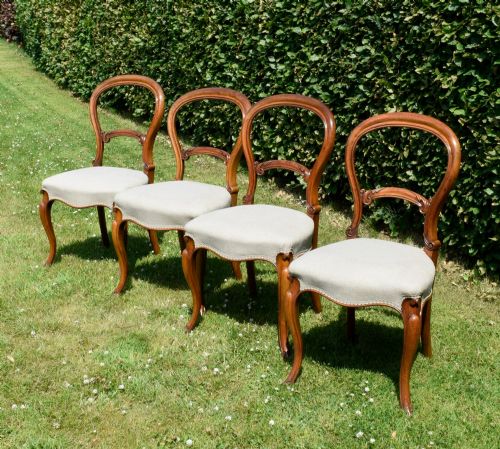


Antique Padded Dining Chairs
These antique padded dining chairs combine period timber frames with comfortable textile or leather seats for formal or everyday dining.
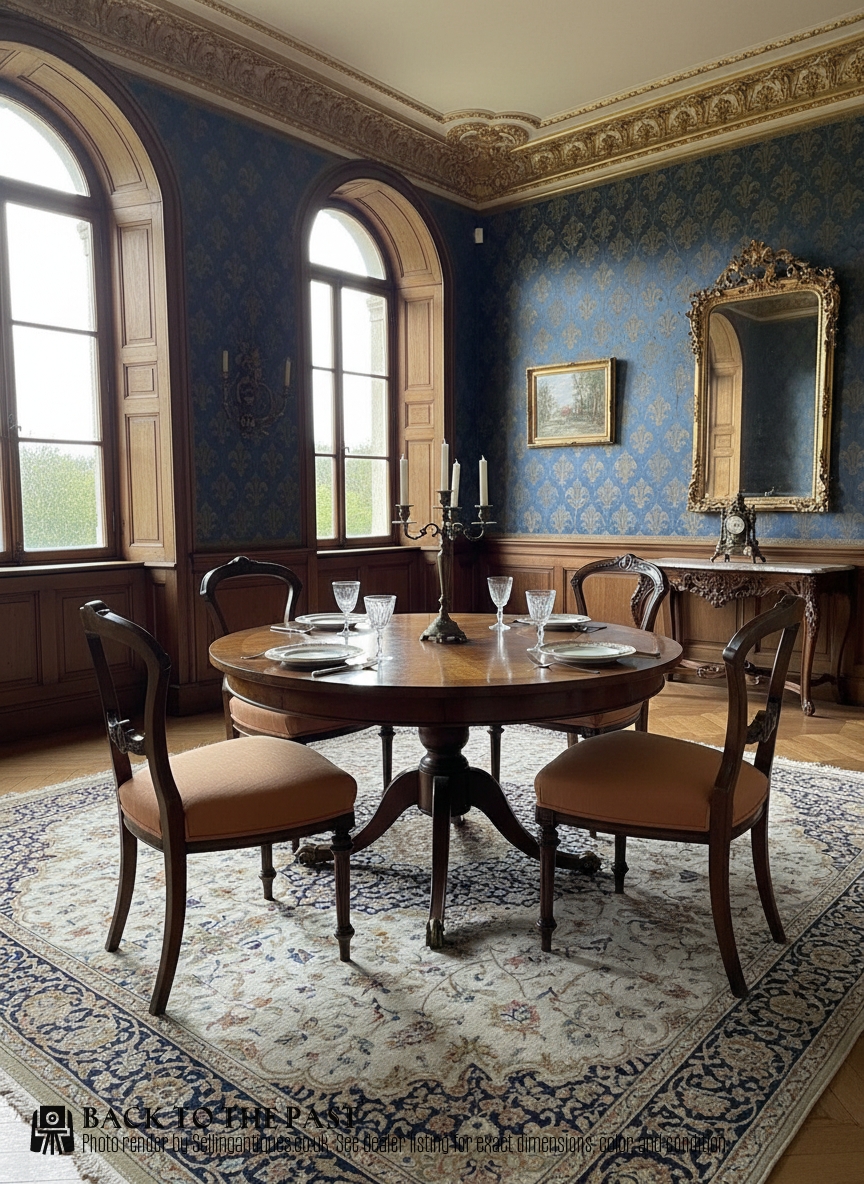
Antique Padded Dining Chairs
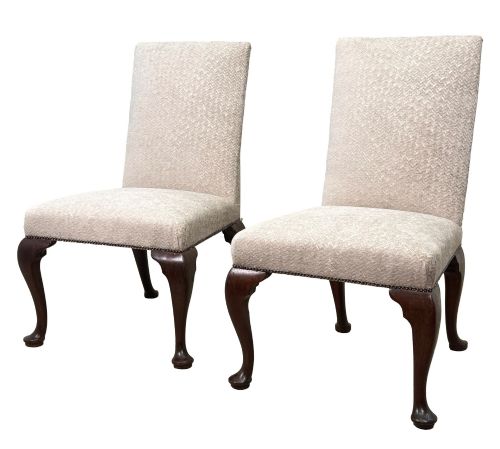
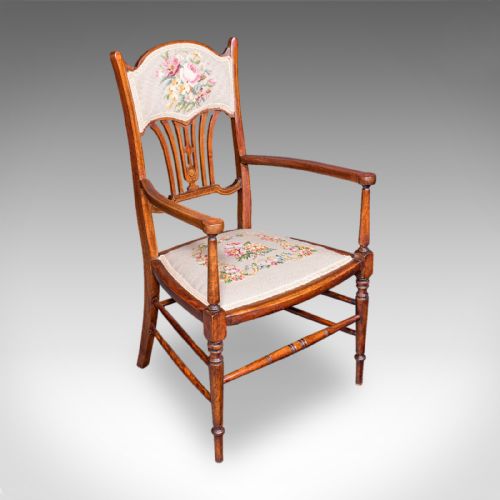
When you search for antique padded dining chairs, you encounter seating built across several centuries, ranging from early eighteenth century walnut examples to Victorian balloon back sets and Art Deco oak designs. The selection includes individual armchairs, carver chairs, and large matched sets designed to accommodate gatherings around a dining table.
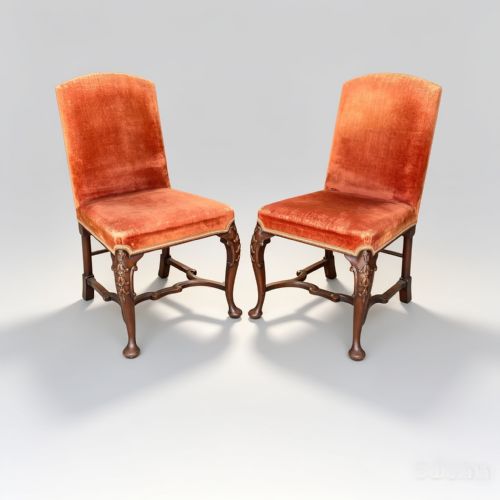
You are most likely to meet Victorian and Edwardian sets constructed from mahogany or walnut, alongside Georgian pieces shaped in the manner of Queen Anne or Chippendale. These seating options appear as side chairs without arms or as elbow chairs intended for the heads of the table.
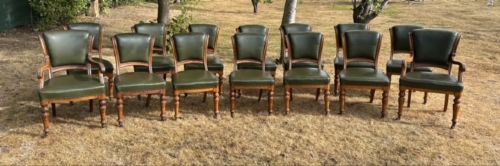
The origin of these chairs spans English, Irish, and continental workshops, showing regional variations in timber choice such as yew wood, beech, and oak. Whether configured as a grand set of twelve or a pair of bedroom side chairs, each piece retains the padded upholstery characteristic of its period of manufacture.
Materials and construction methods
Frames rely upon dense hardwoods, principally mahogany and walnut, supplemented by oak, beech, and yew wood for specific regional chair forms like Windsors. Timber components are joined using traditional techniques, including mortise and tenon joints, and finished with carved details such as vase splats or balloon backs.
Upholstery involves padding secured over the seat frame or high back, utilising materials like leather, fabric, velvet, and textile. Brass tacks and internal webbing support the padding, anchoring the upholstered surface to the wooden structure of the chair.
Listings feature mahogany, walnut, oak, and yew wood across Victorian, Georgian, and Edwardian periods.
Factors influencing quality
The calibre of an antique padded dining chair rests upon the crispness of the timber carving and the integrity of the underlying frame construction. Pieces produced by recorded cabinet makers or workshops display superior joinery, dense grain selection in the mahogany or walnut, and carefully proportioned splats or armrests.
The consistency of a matched set heavily influences the standing of the chairs, particularly when dealing with larger gatherings of eight or twelve pieces. Original upholstery methods and the preservation of the primary timber without excessive replacement parts separate standard utilitarian seating from exemplary cabinet work.
Blyth & Sons·Holland & Son's
The Antique Padded Dining Chairs Glossary
- Carver chair
- An armchair designed to match a set of smaller side chairs, traditionally placed at the ends of a dining table.
- Balloon back
- A rounded, continuous backrest shape popular on Victorian dining chairs that resembles the outline of a balloon.
- Vase splat
- A vertical central strip in the backrest of a chair shaped to resemble the silhouette of a classical vase.
- Queen Anne style
- A design movement characterised by curving lines, cabriole legs, and pad feet, originating in the early eighteenth century.
- Side chair
- A chair without armrests, built specifically for placement around the sides of a dining table.
Antique Padded Dining Chairs: Frequently Asked Questions
What periods do these chairs come from?
The pieces span the eighteenth, nineteenth, and early twentieth centuries, encompassing Georgian, Victorian, Edwardian, and Art Deco eras.
Specific decades represented include the 1850s, 1860s, 1890s, 1900s, 1910s, 1920s, and 1930s.
How do I identify a carver chair?
Carver chairs feature armrests attached to the sides, distinguishing them from standard side chairs that lack arms.
They traditionally served as the head seats at a dining table alongside matching sets of side chairs.
What timbers were used for the frames?
Cabinet makers utilised dense hardwoods such as mahogany, walnut, and oak to construct durable chair frames.
Other materials recorded include beech, yew wood, and red walnut, often complemented by brass details.
How are sets numbered?
Sets appear in varying quantities, from pairs and groups of four up to larger gatherings of six, eight, ten, or twelve chairs.
Larger sets occasionally incorporate matching carver chairs for the ends of the dining table.
What upholstery materials are found?
The padding is covered in a variety of materials including leather, velvet, traditional fabric, and woven textiles.
These upholstered surfaces appear on both the seat pads and the high backs of the chairs.