





Antique Oval Clock
An antique oval clock brings refined proportion and reliable mechanical timekeeping to a mantel or desk.
Antique Oval Clock
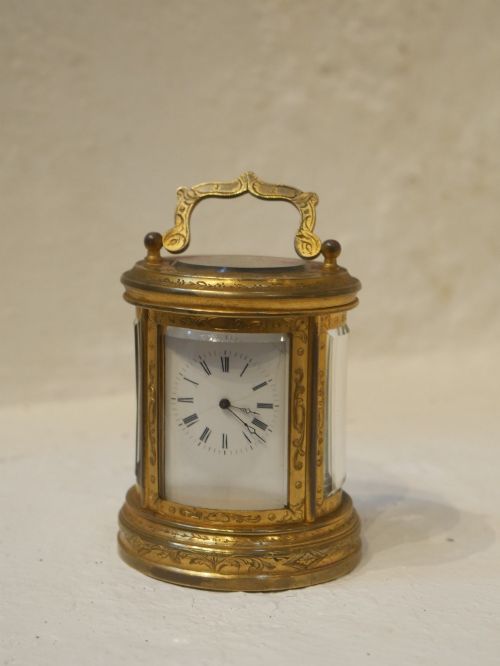
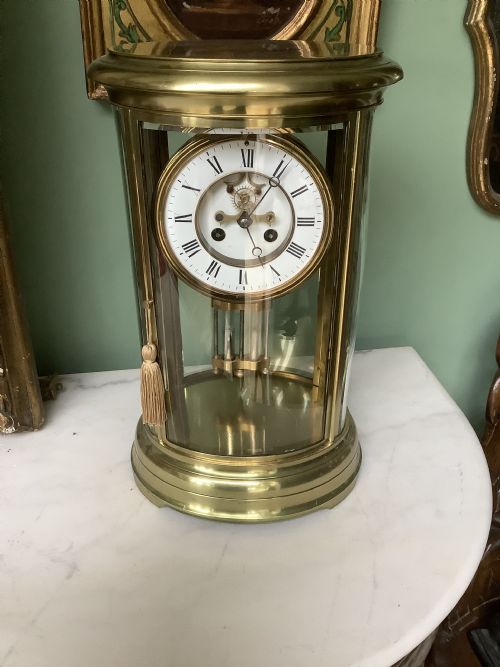
An antique oval clock encompasses several distinct forms designed to sit upon a mantelpiece, table, or desk. These timepieces typically manifest as carriage clocks, four-glass mantel clocks, and strut clocks housed within curved enclosures.
Carriage clocks and four-glass models represent the most frequent iterations encountered within this selection. Originating largely from French workshops, these pieces combine heavy brass or gilt-brass frames with clear glass panels that reveal the escapement and gear train within.
Period manufacturing dates span across the Victorian and Edwardian eras, stretching from the mid-nineteenth century into the early twentieth century. English variations also appear, occasionally taking the form of glass display domes and clock cases intended to protect delicate movements.
Materials and construction
Brass serves as the primary structural metal, frequently gilded to provide a bright reflective finish around the glass panels. Enamel frequently forms the dial face, carrying painted numerals and delicate minute tracks.
Glass panels are cut and bevelled to fit tightly within cast and machined brass bezels and corner posts. Secondary materials such as wood, pine, and fabric appear primarily in the construction of protective display domes and clock bases rather than the movements themselves.
Antique Oval Clock Retail Price Guide 2026
Typical asking prices for oval clock among the pieces listed under this phrase on Sellingantiques today, from the lower quarter to the upper quarter. They describe what is for sale here now, not the wider market.
Some miniature travel clocks are so small they could easily hide behind a teacup, yet they still manage to chime the hours.
Assessing craftsmanship and execution
Quality reveals itself in the weight and rigidity of the brass framework and the precision of the bezel closure. Finer examples display crisp casting work and hand-painted enamel dials free from hairline fractures.
The sophistication of the internal movement distinguishes standard production from superior maker output. Clocks featuring repeater mechanisms, striking trains, or decorated escapements represent a higher tier of horological achievement.
Howell & James London·Drocourt·AD Mougin·Richard & Co Paris
The Antique Oval Clock Glossary
- Carriage clock
- A portable spring-driven timepiece designed for travel during the nineteenth century. These clocks typically feature a rectangular or oval brass case with a viewing glass on top.
- Four-glass clock
- A mantel clock featuring glass panels on the front, back, and both sides. This construction allows maximum visibility of the internal brass movement.
- Repeater
- A mechanism that chimes the hours and quarters upon demand when a lever or button is pressed. This complication was especially popular in carriage clocks.
- Escapement
- The mechanical linkage that controls the release of power from the gear train to the balance wheel or pendulum. Common types include the platform escapement found in portable clocks.
- Clossonie
- A decorative technique involving compartments soldered to a metal base and filled with enamel paste. It appears on select Victorian clock frames.
Antique Oval Clock: Frequently Asked Questions
How do I wind an antique oval clock?
Most carriage and mantel clocks utilise a dedicated winding key inserted into arbors located on the rear backplate or dial face. Turn the key gently until firm resistance indicates the mainspring is fully tensioned.
Avoid over-winding, as this places unnecessary stress on the vintage spring steel. Ensure you support the case securely with one hand while operating the key.
Where should I place a carriage clock?
Position the clock on a level, stable surface away from direct sunlight, draughts, and moisture. A solid mantelpiece or heavy sideboard prevents vibrations that can disrupt the delicate balance wheel.
Because many examples feature glass panels on multiple sides, placement should minimise the risk of accidental knocks from passing traffic.
How do I tell Victorian from Edwardian pieces?
Victorian clocks, produced roughly between eighteen thirty-seven and nineteen hundred, often showcase heavier brass castings, ornate dial surrounds, and robust striking trains. They frequently bear maker marks from established Parisian workshops.
Edwardian pieces, spanning the early twentieth century, lean toward lighter proportions and miniature formats. Simpler lines and refined dials become more common during this later period.
Why does my clock run fast or slow?
Mechanical timekeeping relies on the regulation of the balance wheel or pendulum. Changes in temperature, lubricant thickening, or out-of-beat operation can cause the clock to gain or lose time.
Adjustment is typically managed via a small regulating lever positioned on the platform escapement visible through the glass top or back door.