

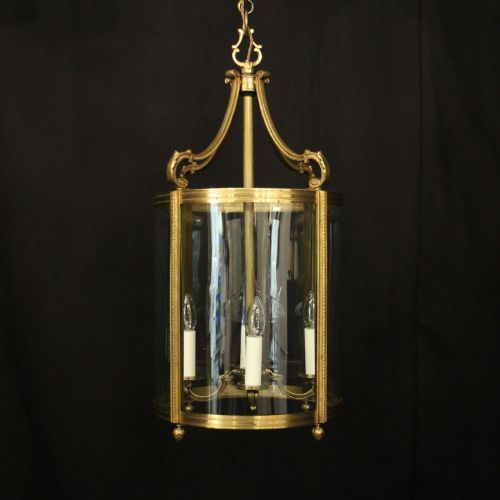
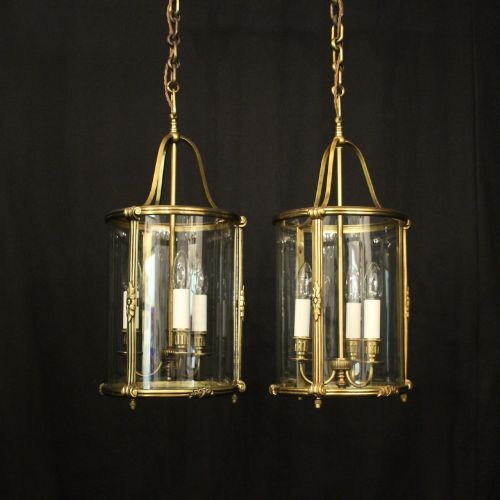


Antique Ormolu Lantern
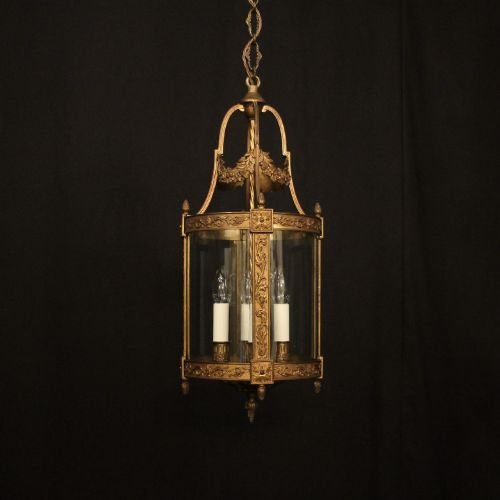
These antique ormolu lantern fixtures are statement pieces of interior illumination, bringing French neoclassical elegance and golden warmth to a hallway.
Antique Ormolu Lantern
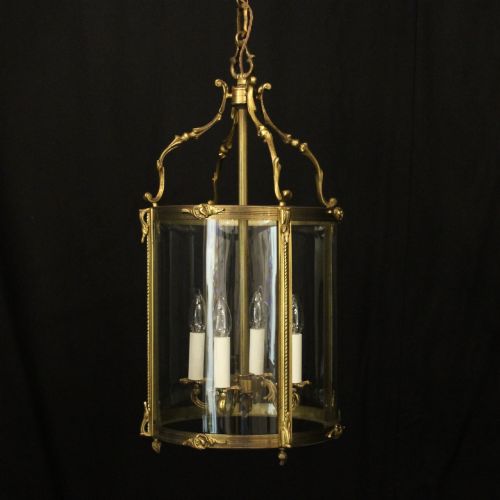
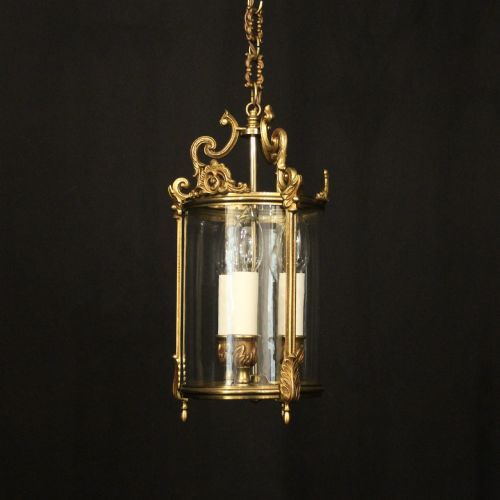
An antique ormolu lantern is a hanging light fixture designed primarily for entrance halls, vestibules, and corridors. These pieces illuminate interior spaces while offering decorative brilliance through cast metal frames and glass panels.
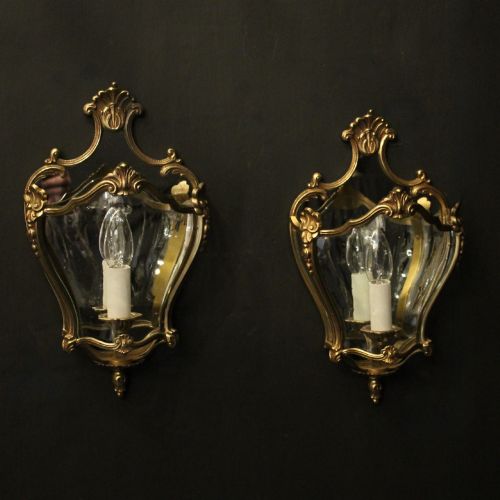
The versions most commonly met on this page originate from French workshops spanning the late nineteenth and early twentieth centuries. They frequently reflect classical French design vocabularies, including Louis XVI and Rococo revival styles.
Makers utilised various hanging formats, ranging from single-light hall lanterns to larger four-light and triple-light pendant configurations. Hexagonal shapes and convex glass designs appear regularly among the selections.
How they were made
The structural framework relies on cast bronze, gilded bronze, or brass, which provides both rigid support and a rich metallic surface. Artisans applied fire-gilding or mercury gilding techniques historically, imparting a durable golden sheen to the metal components.
Panels of glass - often bevelled, etched, or frosted - are fitted meticulously into the metal armature to enclose the internal light sources. These glass elements diffuse illumination softly while protecting the candle or bulb fittings within.
Antique Ormolu Lantern Retail Price Guide 2026
Typical asking prices for ormolu lantern among the pieces listed under this phrase on Sellingantiques today, from the lower quarter to the upper quarter. They describe what is for sale here now, not the wider market.
Listings feature items dated across the nineteenth and early twentieth centuries, spanning from eighteen-eighty to nineteen-thirty.
What varies in quality
Quality in these lanterns depends heavily on the crispness of the metal casting and the depth of the gilding. Finer examples display sharp relief work on scrollwork and mounts, whereas simpler versions show softer, less defined surface details.
The choice and treatment of the glass panels also dictate the grade of a fixture. Thick, bevelled plates or intricate etchings denote superior craftsmanship compared to plain, flat glass panes.
The Antique Ormolu Lantern Glossary
- Ormolu
- A term traditionally describing gilded bronze, derived from the French for ground gold. It refers to the application of a gold-mercury amalgam onto a bronze base.
- Bevelled glass
- Glass panes featuring an angled edge ground down around the perimeter. This treatment catches and refracts light effectively.
- Hall lantern
- A pendant light fixture specifically scaled for narrow entryways and stairwells. These fixtures hang close to the ceiling or on suspension chains.
- Louis XVI style
- A neoclassical design movement characterised by straight lines, symmetry, and classical motifs. It draws inspiration from ancient Greek and Roman art.
Antique Ormolu Lantern: Frequently Asked Questions
Where should I hang a hall lantern?
These fixtures suit entryways, corridors, and high-ceilinged landings where they can act as a focal point. Their downward illumination provides functional light while establishing a formal atmosphere.
Ensure adequate ceiling clearance so the lantern hangs safely above foot traffic. Proportion the size of the fixture to the dimensions of your hallway for visual balance.
How do I clean the glass panels?
Remove dust gently using a soft, dry microfibre cloth before applying any liquid cleaner. Avoid harsh chemical sprays that might damage the surrounding gilded metal frame.
Take care around etched or frosted sections to preserve their texture. A mild soap solution on a damp cloth usually suffices for stubborn grime.
Can these lanterns use modern bulbs?
Most antique lanterns accommodate modern electrical wiring and standard bulb fittings after professional conversion. Electricians can update internal components while maintaining the external historic appearance.
Choose low-wattage or warm LED bulbs to replicate the soft glow of historical lighting. This protects delicate glass and metal from excessive heat build-up.
How do I identify French neoclassical design?
Look for symmetrical arrangements, geometric precision, and classical architectural motifs such as urns and swags. This aesthetic rejects excessive asymmetry in favour of ordered elegance.
Pieces bearing these characteristics often trace their stylistic lineage to French palace interiors. The metalwork emphasises refined structure over ornate clutter.