





Antique Oil Standard
These antique oil standard lamps are tall floor-standing lights designed to illuminate grand Victorian rooms with steady height-adjusted brilliance.
Antique Oil Standard
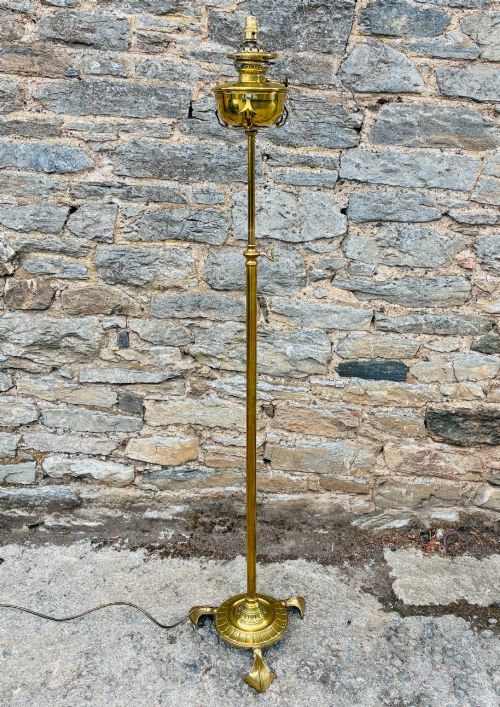
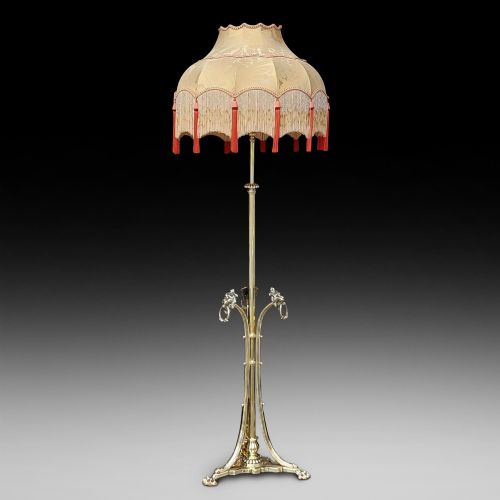
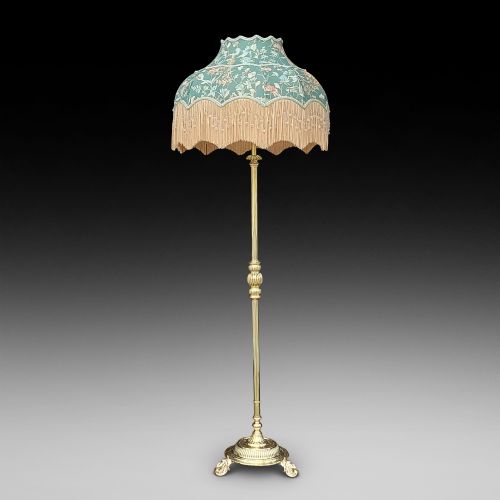
An antique oil standard is a tall floor-standing lighting fixture originating primarily from the Victorian period, designed to hold an oil reservoir at an elevated position.
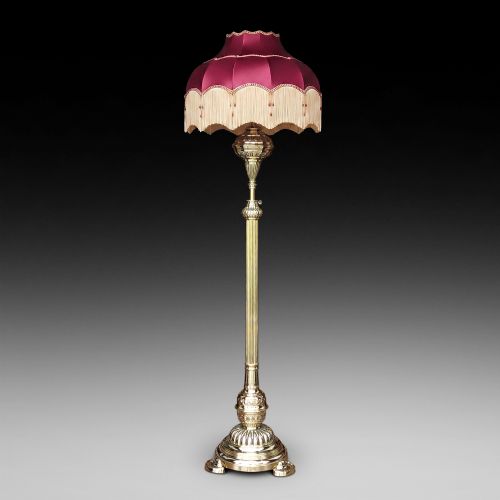
The versions most commonly met on this page include extending or telescopic brass columns, frequently paired with copper details and occasionally featuring converted electrical fittings.
Makers such as Hinks and Messenger dominated production, offering robust mechanisms that allowed households to adjust the height of the light source according to need.
How they were made
Metals form the structural core of these standards, with heavy brass and copper shaped through casting, spinning, and forging to ensure stability across tall vertical shafts.
Artisans incorporated mechanical adjustment screws and telescopic inner tubes, allowing brass standards to extend smoothly without losing structural integrity.
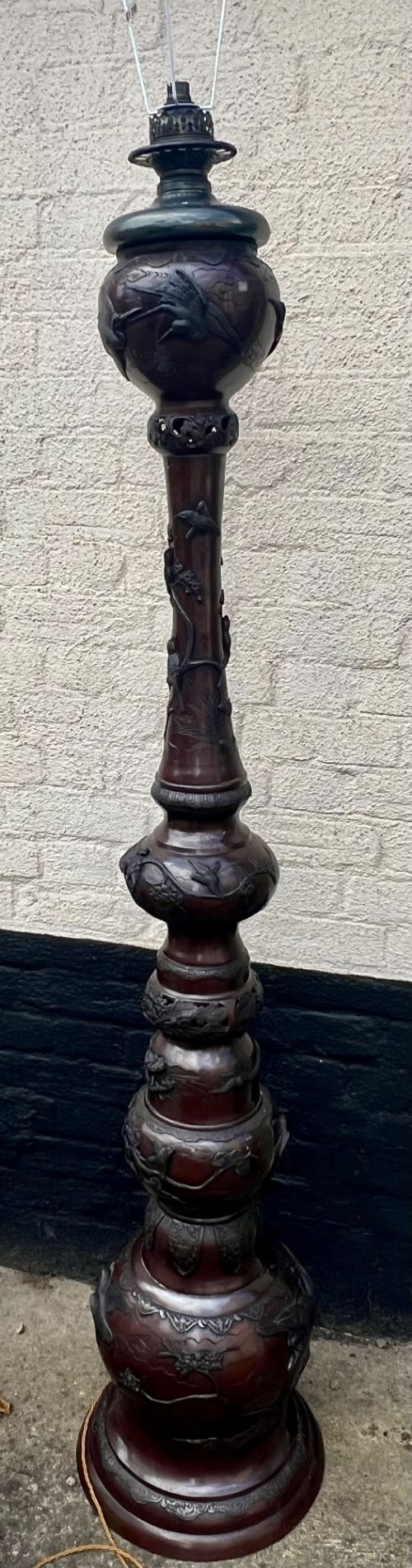
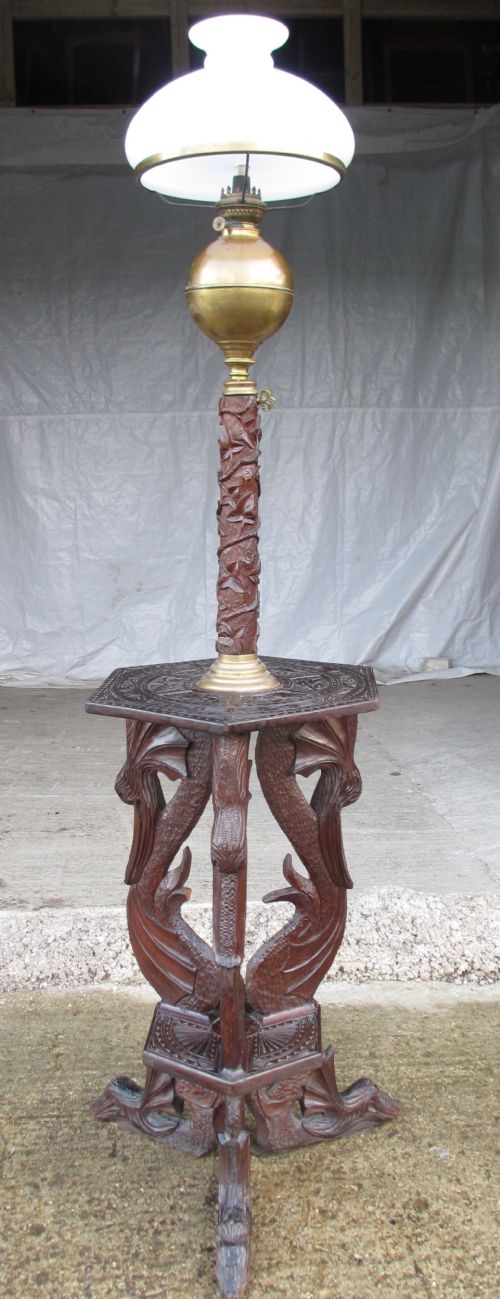
Reservoirs and shades introduced decorative glass, cranberry glass, and patinated bronze, while occasional wrought iron frames provided alternative industrial weight.
Antique Oil Standard Retail Price Guide 2026
Typical asking prices for oil standard among the pieces listed under this phrase on Sellingantiques today, from the lower quarter to the upper quarter. They describe what is for sale here now, not the wider market.
Some Victorian manufacturers offered steamer oil lamps designed specifically to remain stable despite the rolling motion of ocean liners.
What varies in quality
Weight and gauge of the brass dictate stability, separating robust heavy floor stands from lighter tubular constructions that flex under extension.
Precision in the telescopic mechanism defines superior examples, where brass threads and collars move cleanly without binding or dropping.
Subtlety in stylistic execution, from restrained Victorian neoclassical columns to intricate Arts and Crafts hammering, marks the distinction between standard workshop output and notable maker production.
Hinks of B'ham·Messenger
The Antique Oil Standard Glossary
- Telescopic
- A nesting column design allowing the lamp height to be raised or lowered via an internal sliding shaft.
- Standard lamp
- A traditional British term for a tall floor-standing lamp designed to illuminate a room from a raised position.
- Font
- The removable container situated at the top of the standard that held lamp oil before electrification.
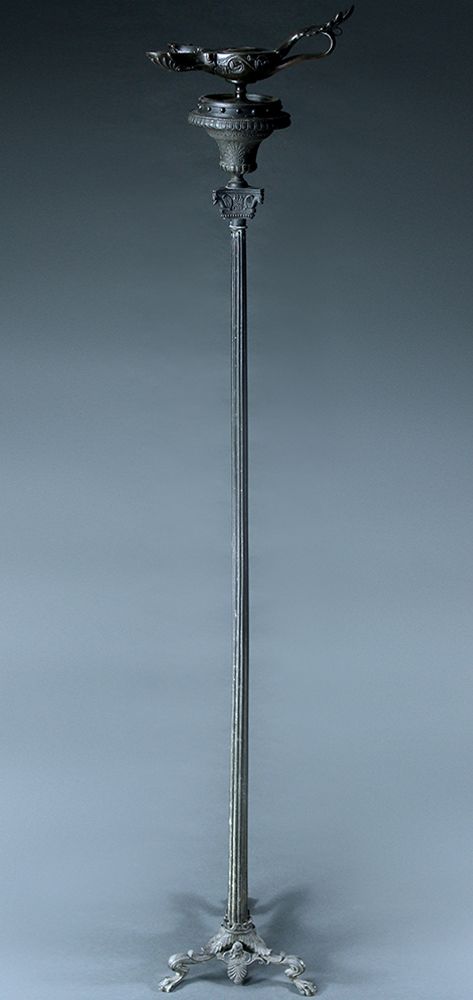
- Neo-Pompeian
- A decorative style inspired by archaeological discoveries in Pompeii, featuring classical motifs cast in bronze.
- Duplex burner
- A double-wick oil burning mechanism common on larger Victorian standards to maximise illumination.
Antique Oil Standard: Frequently Asked Questions
Can I convert an antique oil standard back to oil?
Most surviving standards on the market have undergone conversion to electricity over the decades to suit modern domestic requirements safely.
Restoring one to burn oil requires sourcing original period burners and fonts, which demands specialist knowledge and careful fitting.
How do I adjust the height on a telescopic lamp?
Telescopic standards generally feature a central thumbscrew or collar mechanism near the upper section of the brass shaft. Loosening this screw gently allows the inner column to slide upwards or downwards to the desired position before tightening.
Forcing the mechanism without releasing the tension screw can damage the internal brass tracking and ruin the extension function.
What is the difference between Victorian and Arts and Crafts standards?
Victorian standards typically favour classical proportions, reeded brass columns, and ornate cast bases influenced by historical revival styles.
Arts and Crafts examples turn towards simpler geometric lines, hand-beaten copper textures, and visible construction details that celebrate the work of the maker.
Where should I place a heavy floor lamp in a room?
These tall standards require a stable surface and sufficient clearance to prevent accidental knocks, making corners or beside heavy armchairs ideal locations.
Because the heavy brass and iron bases provide natural gravity support, placing them away from high-traffic household pathways protects both the lamp and delicate glass shades.