




Antique Oil Reservoir Lamp
An antique oil reservoir lamp brings the warm glow of the nineteenth century into a modern room.
Antique Oil Reservoir Lamp
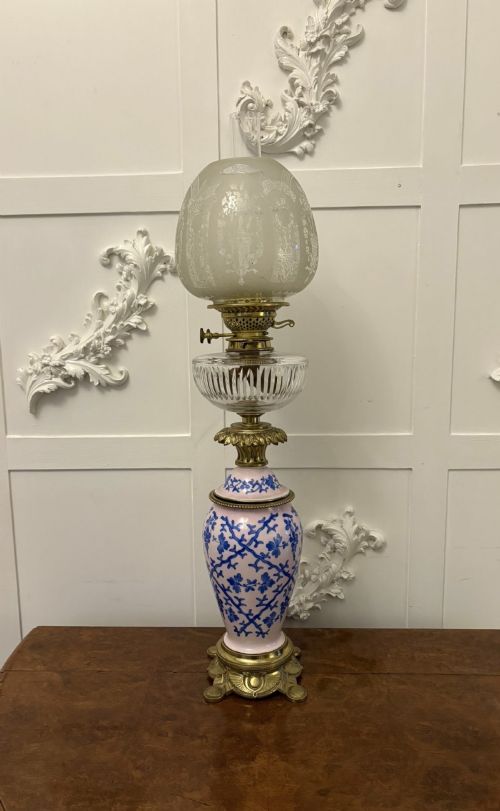
An antique oil reservoir lamp is a domestic lighting fixture designed to burn paraffin or vegetable oil before domestic electricity became common. When you search for an antique oil reservoir lamp, you find tall column designs, ceramic bodies, and table lamps from the Victorian and Edwardian eras.
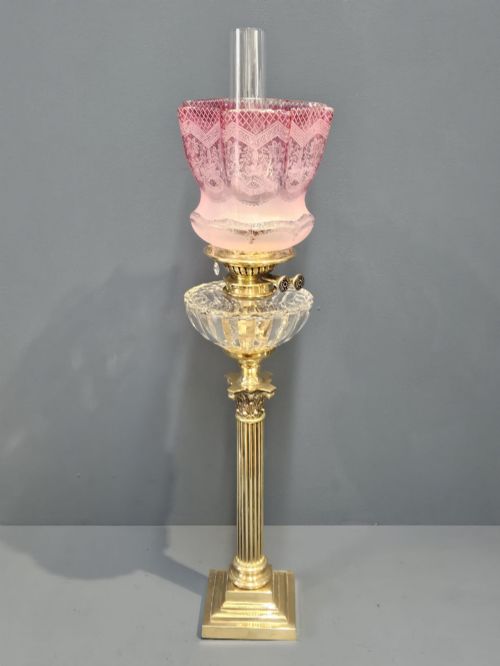
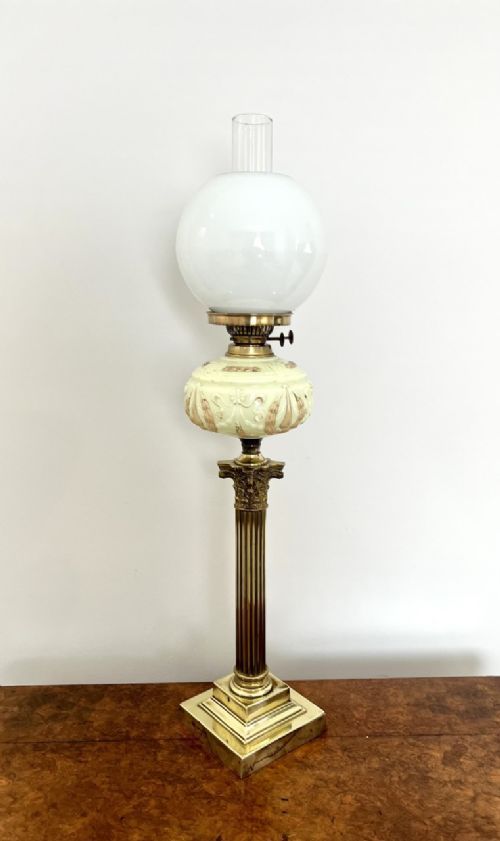
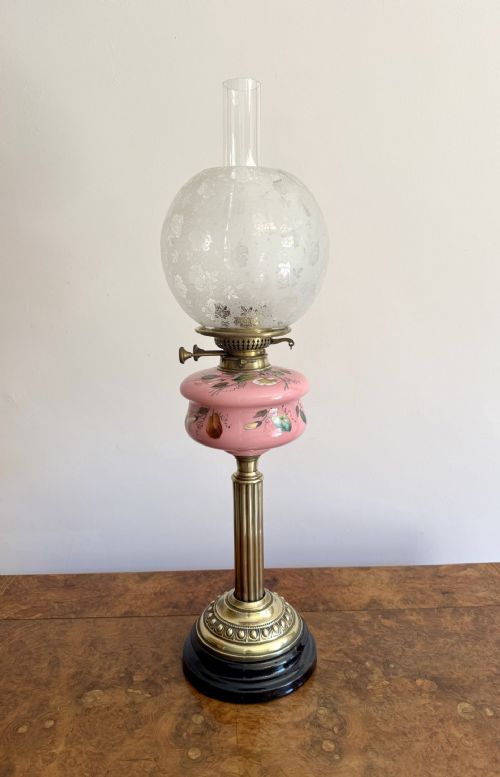
The version you are most likely to meet on this page is a brass column lamp, often featuring a Corinthian capital, paired with a glass font and a coloured shade. These pieces date principally from the mid-nineteenth century through to about nineteen hundred.
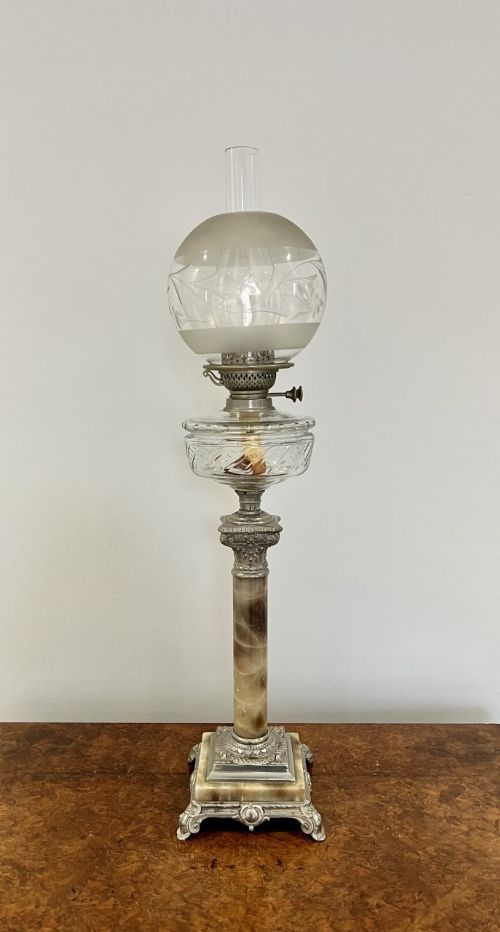
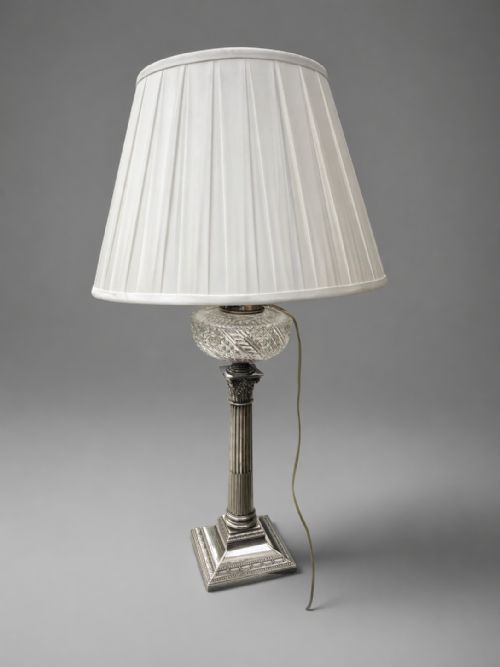
Beyond the standard brass columns, the selection includes Italian cast brass and bronze Lucerna lamps, silver-plated column pieces, and ceramic or onyx bodies. These table lamps reflect the changing domestic tastes of the nineteenth century, moving from classical revivals toward Art Nouveau curves.
How these lamps were manufactured
Makers utilised cast and spun brass, bronze, and silver plate to form the structural columns and bases of these lamps. Metalwork was frequently combined with moulded, cut, or satin glass for the oil reservoirs, known as fonts, and paired with ceramic or onyx plinths.
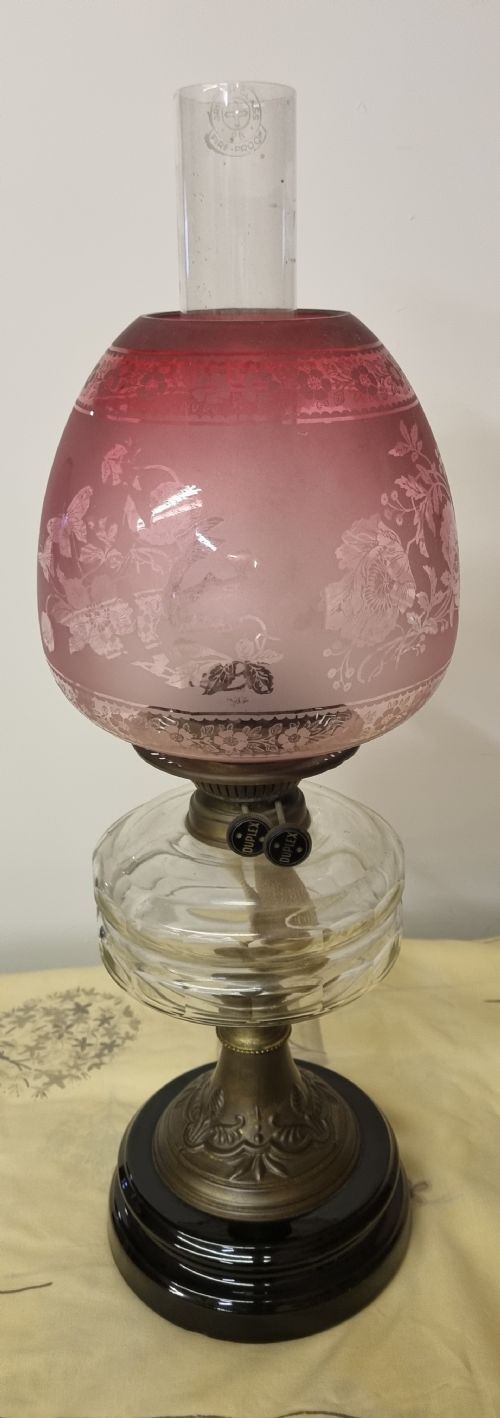
Shades were produced in coloured, cranberry, or blue glass, sometimes accompanied by fabric elements, diffusing the bright light of the burner. Metal components were turned on lathes or cast in sand moulds, resulting in heavy, stable bases capable of supporting tall glass chimneys and shades.
Several lamps double as architectural study aids, standing proud as miniature Corinthian columns ready to illuminate a Victorian study.
What separates the finest examples
The distinction between standard domestic lighting and the finest specimens lies in the crispness of the casting and the weight of the materials. Heavy gauge brass, deeply carved Corinthian capitals, and thick cut glass reservoirs separate the workshop output of known makers from ordinary factory pieces.
Proportion and material harmony also dictate worth, as seen when brass meets coloured satin glass or fine ceramics without awkward joins. The presence of original maker markings on the brass burner mechanisms distinguishes lamps that retain their complete historical integrity.
Hinks of Birmingham·Messenger·Young
The Antique Oil Reservoir Lamp Glossary
- Corinthian Column
- A classical architectural column style featuring ornate acanthus leaves at the top, frequently utilised for Victorian table lamps.
- Lucerna
- An ancient style of oil lamp, reproduced in nineteenth-century Italian cast brass and bronze with multiple spouts and hanging tools.
- Peg Lamp
- A small oil lamp designed with a tapered lower metal spigot that drops directly into the socket of a candlestick.
- Chimney
- The tall, narrow glass tube placed over the burner to steady the flame and create the draft necessary for clean combustion.
Antique Oil Reservoir Lamp: Frequently Asked Questions
How do I identify a Victorian oil lamp?
Look for heavy brass or bronze construction combined with glass fonts and nineteenth-century burner mechanisms. Many feature classical column designs or ceramic bodies characteristic of the period between eighteen fifty and nineteen hundred.
Check for maker names stamped onto the brass burner thumbscrews or collars. The presence of a heavy stepped base and original glass shade further confirms the era.
Can these lamps still burn oil?
Most antique oil reservoir lamps are now sold as decorative objects or have been converted to electricity for safe modern use. Using them with oil requires checking the integrity of the font and replacing old wicks.
If the metal reservoir or collar has hairline cracks, filling it with fuel creates a fire risk. Many collectors prefer to keep them unconverted as display pieces or rely on professional rewiring.
What is a peg lamp?
A peg lamp is a smaller oil reservoir fitted with a protruding peg at the base designed to sit inside a matching candlestick. This clever arrangement allowed people to elevate their light source using existing tableware.
They appear in materials such as satin glass and clear glass paired with silver-plated or brass mounts. Their compact size makes them versatile for placement on side tables.
How should I clean brass and glass parts?
Clean brass components gently with a soft dry cloth to preserve the aged patina valued by collectors. Avoid harsh chemical polishes that strip away historical character and dull the metal surface.
Wash glass fonts and shades in warm soapy water, taking care to remove them from any metal mounts first. Glass chimneys and cranberry shades require careful handling to avoid chipping the delicate rims.