

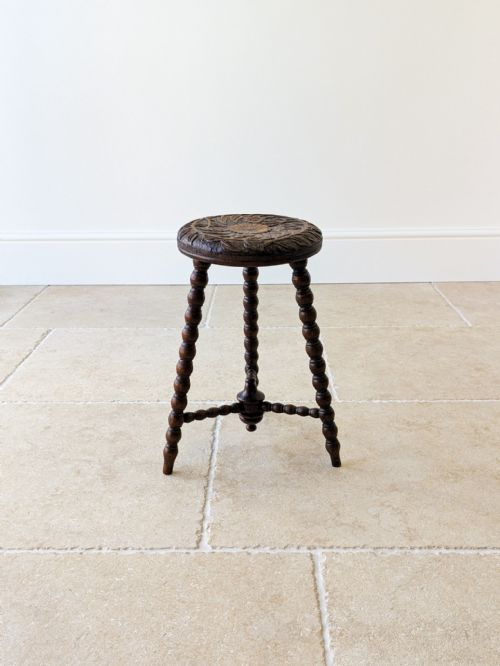
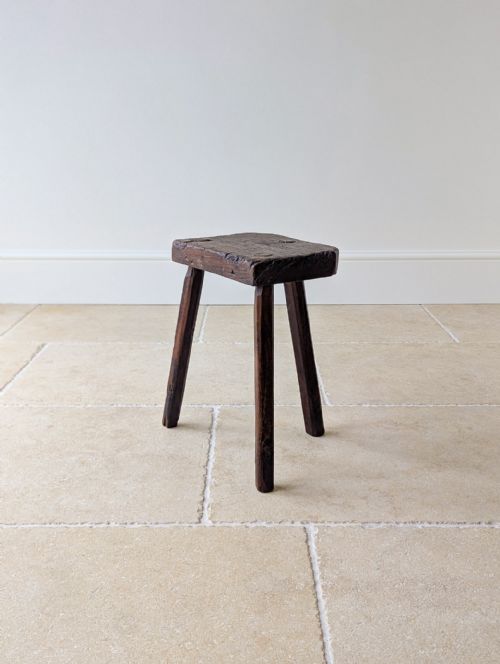

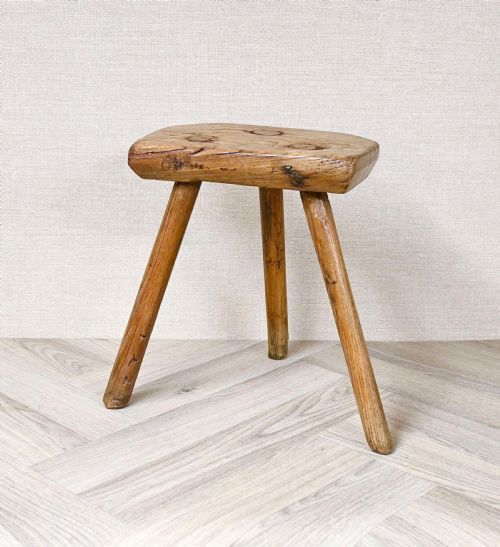


Antique Oak Tripod Stool
An antique oak tripod stool offers three splayed legs and honest country utility, bringing enduring character and tactile warmth to any room.
Antique Oak Tripod Stool
An antique oak tripod stool is a sturdy three-legged seat rooted in utilitarian country traditions. You encounter forms spanning the eighteenth century through the Victorian era, shaped for everyday tasks in dairies, workshops, and farmhouses.
The most common examples on this page are rustic country and vernacular pieces featuring splayed wooden legs and solid timber tops. Makers designed these seats with three legs to sit stable on uneven stone and dirt floors.
Beyond standard seating, the listings encompass related tripod and small circular forms such as milking stools, cutting blocks, and low tables. Each piece bears the marks of practical domestic or trade use rather than formal parlour display.
How they were made
Carpenters and rural joiners constructed these seats primarily using solid oak, elm, ash, and beech, selecting local hardwoods for strength and availability. They turned legs on simple lathes or shaped them with drawknives, wedging them firmly into bored holes through the seat top.
Iron brackets, braces, and blacksmith repairs frequently reinforce joints and legs that endured heavy daily strain. Surfaces often reveal the tool marks of adzes, saws, and planes, displaying the direct methods of regional craftspeople.
Antique Oak Tripod Stool Retail Price Guide 2026
Typical asking prices for oak tripod stool among the pieces listed under this phrase on Sellingantiques today, from the lower quarter to the upper quarter. They describe what is for sale here now, not the wider market.
One nineteenth-century Scottish pokerwork stool bears the defiant inscription 'Touch me wha daur'.
What varies in quality
Quality in an antique oak tripod stool rests on the integrity of the timber, the snugness of the leg joints, and the honesty of the wear. Superior examples retain their original surface patination, untouched by modern stripping, with legs that remain firmly seated in the top.
Proportion and stance distinguish finer vernacular pieces from heavier, purely utilitarian blocks. A well-balanced splay of the legs and a thick, characterful top provide both visual appeal and structural longevity.
The Antique Oak Tripod Stool Glossary
- Tripod
- A piece of furniture supported by three legs. This construction ensures absolute stability on uneven ground without rocking.
- Splayed legs
- Legs angled outwards from the centre of the seat. This design widens the base for greater stability during heavy work.
- Vernacular
- Everyday objects made by local craftsmen for practical use rather than following high-style academic designs. These pieces reflect regional materials and traditions.
- Patina
- The deep, lustrous surface sheen developed through decades of handling, polishing, and natural ageing. It cannot be artificially replicated.
- Primitive
- An early or simple form of construction lacking refined decorative detailing. Such objects value raw utility above ornament.
Antique Oak Tripod Stool: Frequently Asked Questions
How do I use an antique tripod stool today?
These sturdy three-legged seats function well as low side tables for books or drinks, plant stands, or extra seating in a hallway. Their compact footprint allows them to fit easily into tight corners.
Place them away from direct heat sources such as radiators to prevent the dry timbers from splitting. A simple application of natural wax preserves the aged surface without creating an artificial gloss.
Are three-legged stools stable on flat floors?
A tripod base naturally adjusts to rest firmly on three points, meaning these stools rarely rock even on uneven historical flooring. This specific geometry explains their historical popularity in farmhouses and workshops.
Modern flat wooden or tiled floors present no issue for a well-balanced three-legged base. If a slight wobble occurs, it usually stems from historical timber shrinkage rather than a design flaw.
How do I date an antique oak tripod stool?
Dating relies on examining tool marks, timber shrinkage, construction joints, and wear patterns. Hand-sawn boards and early blacksmith repairs often point toward eighteenth-century or early nineteenth-century origins.
Later Victorian and early twentieth-century examples frequently show machine assistance or standardised turning. Comparing the piece to dated stylistic equivalents in regional country furniture helps narrow the manufacturing period.
What is a milking stool?
A milking stool is a small, low three-legged seat designed for dairy workers to sit close to an animal during milking. Their compact size and stable tripod base made them easily portable around the farmyard.
Over time, these utilitarian objects transitioned into domestic decorative pieces due to their sculptural simplicity. Their worn tops and sturdy legs embody practical agricultural history.
How do I care for rustic oak furniture?
Maintain the wood by applying a quality bees-wax polish sparingly and buffing it with a soft cloth. Avoid commercial liquid cleaners that strip natural oils and moisture from aged hardwood.
Keep the stool out of strong direct sunlight to prevent uneven fading of the timber. Stable indoor humidity levels protect the ancient joints from loosening over time.