





Antique Oak Nest
An antique oak nest offers tiered practicality that slides away when floor space matters, making these sets essential for modern rooms.
Antique Oak Nest
An antique oak nest comprises sets of graduating tables designed to slide neatly beneath one another to save floor space. Buyers search for an antique oak nest to gain flexible surface area for drinks or books without cluttering a room.
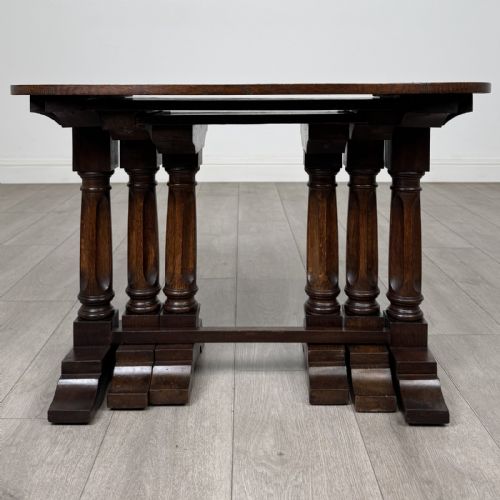
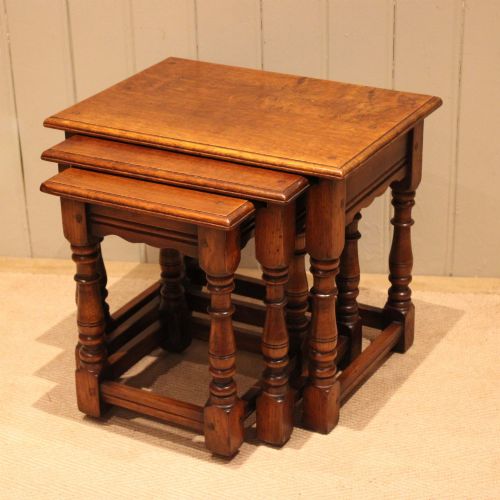
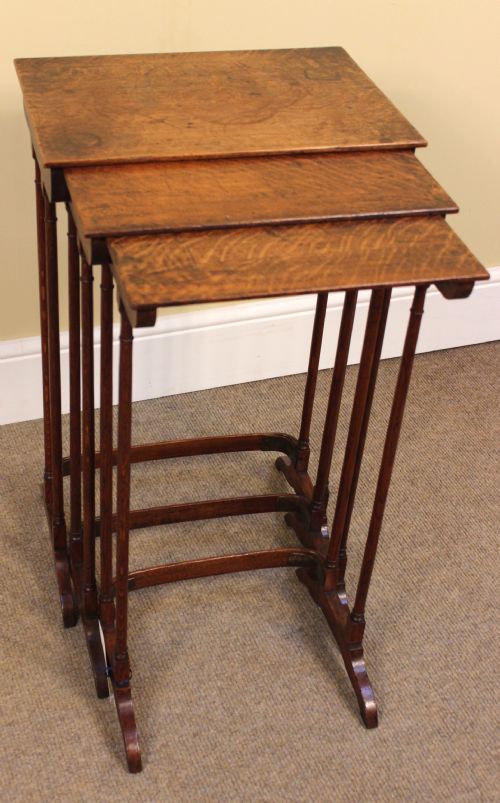
The pieces on this page span several decades and styles, ranging from Victorian and Edwardian examples to 1920s and 1930s designs. Most sets encountered here consist of three or four tables with square, round, oval, or carved tops.
Origins vary from traditional English country workshops to Anglo-Indian production, using woods such as solid oak alongside wood veneer and carved hardwood. Whether styled with barley twist legs or Art Deco lines, each set delivers compact utility.
Materials and construction
Construction relies heavily on solid oak and wood veneer, shaped into square, round, and oval tops supported by sturdy legs. Cabinet makers utilised traditional joinery to ensure the smaller tables glide smoothly under the largest frame.
Carving and turning techniques define the visual character, seen in examples featuring barley twist supports or detailed Anglo-Indian carved hardwood. These methods combine structural resilience with distinct period styling.
Antique Oak Nest Retail Price Guide 2026
Typical asking prices for oak nest among the pieces listed under this phrase on Sellingantiques today, from the lower quarter to the upper quarter. They describe what is for sale here now, not the wider market.
Listings feature oak, wood veneer, and carved hardwood across periods including Victorian, Edwardian, and the 1920s and 1930s.
Assessing quality
Quality rests on the precision of the fit when the tables nest together and the stability of each frame during daily use. Superior sets display crisp carving, well-matched timber grain, and solid joints that withstand repeated sliding.
The choice of materials also dictates the standard of the piece, with richly figured golden oak or intricate hand-carved hardwood standing above simpler utilitarian production. Construction details reveal whether a set was built by a skilled hand or mass-produced.
The Antique Oak Nest Glossary
- Nest of tables
- A set of graduating tables designed to fit one beneath another to save space. This configuration allows multiple surfaces to occupy the footprint of a single small table.
- Quartetto
- A set of four small occasional tables designed to nest together. The term often appears on nineteenth-century examples.
- Barley twist
- A turned wooden furniture leg resembling a twisted rope. This decorative feature is common on early twentieth-century tables.
- Wood veneer
- A thin layer of fine wood applied to a base surface to provide a decorative finish. It allows makers to display attractive grain patterns without using solid timber throughout.
Antique Oak Nest: Frequently Asked Questions
How many tables are in a standard nest?
Most sets comprise either three or four graduating tables that slide together. The largest table houses the smaller ones underneath.
Some specialist sets, such as quartetto nests, specifically contain four tables designed for maximum compactness.
What periods do these tables come from?
The pieces span from the nineteenth century through the Edwardian era into the 1920s and 1930s. Styles range from Victorian and Jacobean Revival to Art Deco.
Earlier examples often feature hand-carved details, while later sets may incorporate simpler geometric lines or veneers.
How were these tables originally used?
They served as flexible furniture for entertaining, providing extra surfaces for tea, drinks, or books when guests visited. Because the tables stacked away, they kept rooms tidy during quieter times.
Households used individual tables pulled out around a room and returned them to the stack when finished.
How do I care for an oak nest?
Keep the wood clean with a soft, dry cloth and avoid placing tables in direct sunlight or near heat sources that might dry the timber. Periodic waxing helps maintain the lustre of the oak.
Take care when sliding the tables in and out to prevent unnecessary friction or scratching on the inner legs.