




Antique Oak Mirror Chest
An antique oak mirror chest combines the utility of bedroom storage with a tilting looking glass, offering solid timber construction and period character.
Antique Oak Mirror Chest
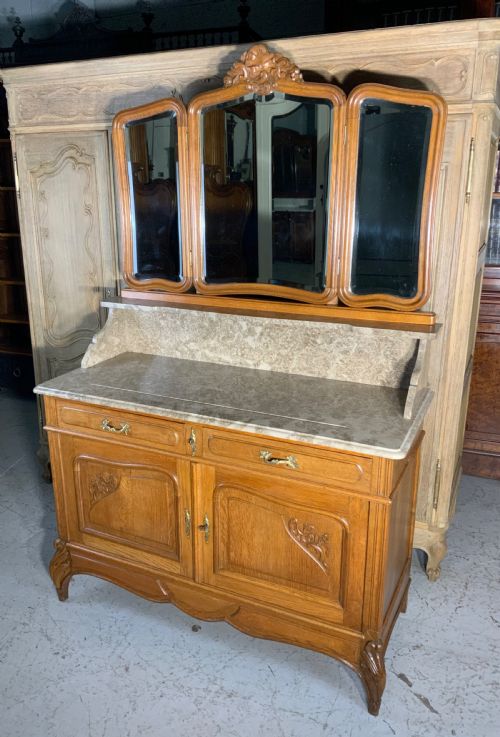
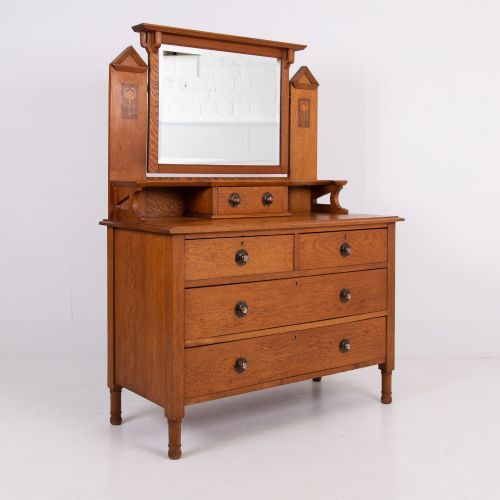
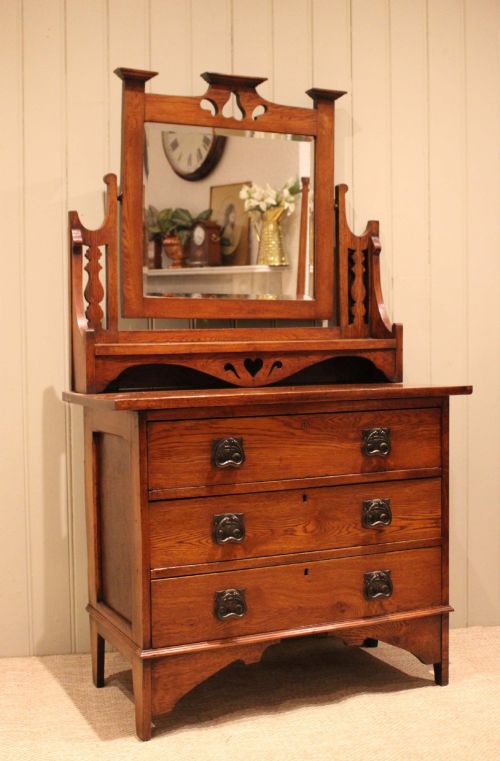
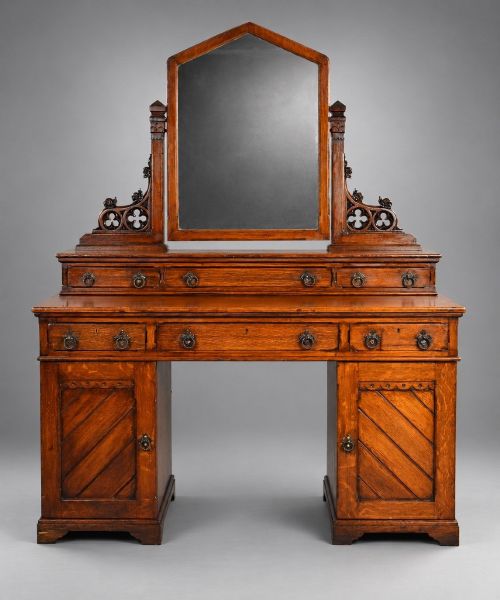
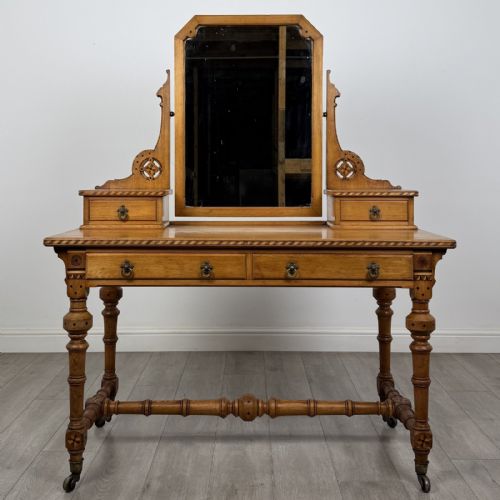
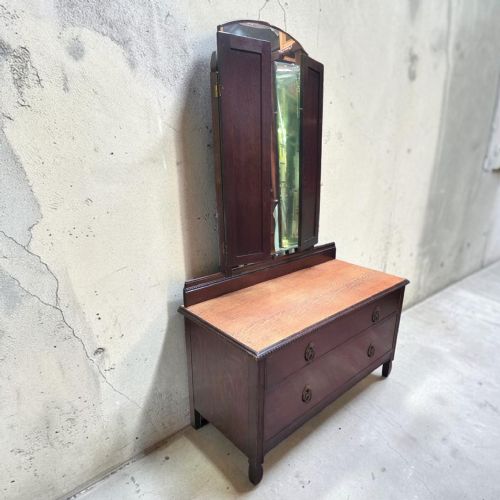
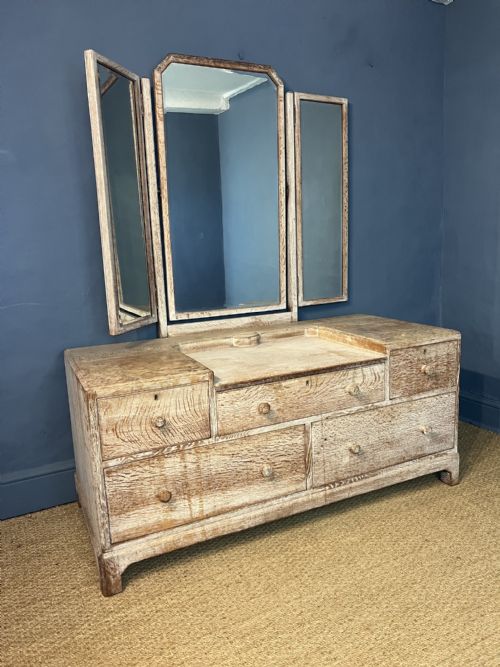
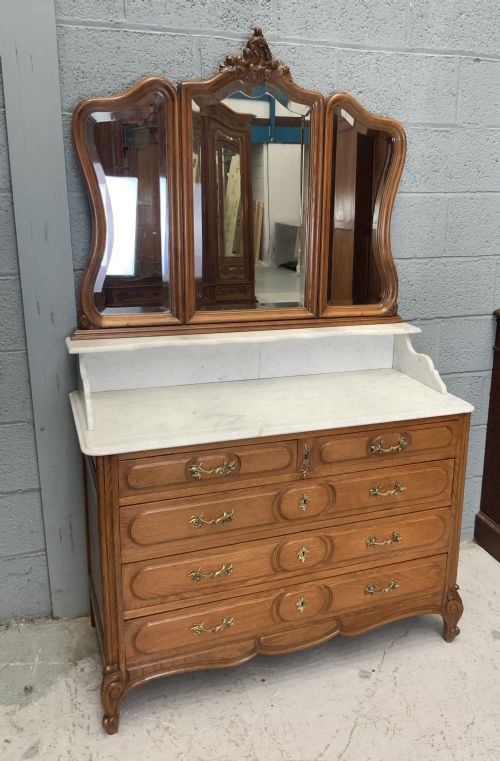
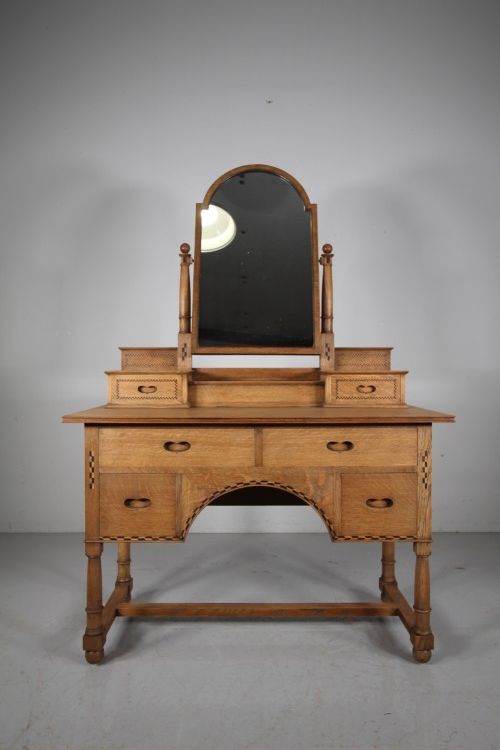
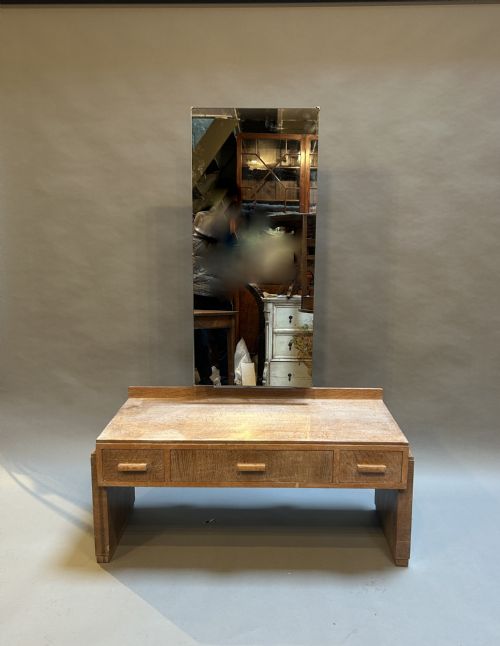
An antique oak mirror chest generally manifests as a dressing chest, dressing table, or washstand fitted with glass. These pieces serve as functional bedroom furniture that centres on a central or triple mirror configuration.
The selections span from the late Victorian and Edwardian eras into the 1920s and 1930s. Buyers frequently encounter Arts and Crafts interpretations alongside simpler Edwardian and Art Deco forms.
Beyond standard bedroom chests, the broader category includes related oak case pieces and suites equipped with mirrors, glass panels, and brass or metal hardware.
How they were made
Cabinet makers utilised solid oak and blonde oak, frequently incorporating wood inlay, marquetry, and carved details to embellish drawer fronts and panelled doors. Metal fittings such as brass handles and iron accents secure the structural joints.
The integrated mirrors rely on bevelled or plain glass plates held within adjustable frames. Secondary materials like marble appear on specific washstand tops to provide a durable, water-resistant surface.
Antique Oak Mirror Chest Retail Price Guide 2026
Typical asking prices for oak mirror chest among the pieces listed under this phrase on Sellingantiques today, from the lower quarter to the upper quarter. They describe what is for sale here now, not the wider market.
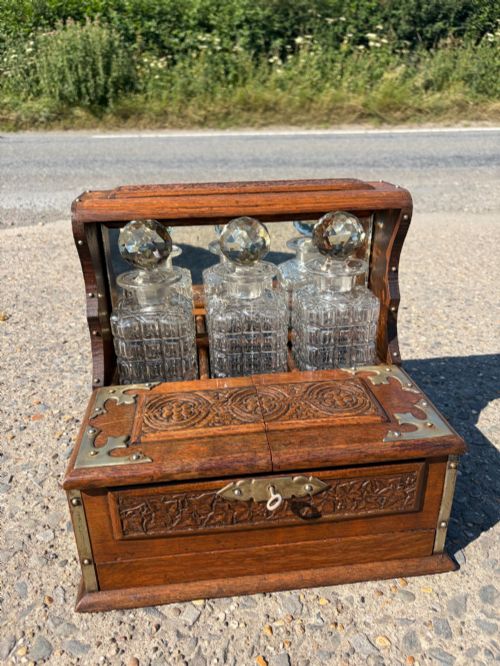
Some oak chests hide bottles behind locking bars, treating gin and whisky with the same security as crown jewels.
What varies in quality
Construction methods and workshop origin heavily influence the standard of a piece. Signed or labelled examples from known makers command attention for superior joinery and considered proportions.
The integration of decorative techniques, such as delicate wood inlay, marquetry stringing, or hand-carved motifs, separates standard utility furniture from finer artistic commissions.
Heals of London·Shapland and Petter·George Walton·Harris Lebus of London·B Cohen and Sons
The Antique Oak Mirror Chest Glossary
- Marquetry
- The art and craft of applying pieces of veneer to a structure to form decorative designs. This technique frequently graces the drawer fronts of Arts and Crafts and Art Deco pieces.
- Tantalus
- A decorative cabinet designed to hold decanters securely behind a locking bar while displaying their contents. These liquor containers often appear in matching timber housings.
- Compactum
- A multi-compartment wardrobe or storage chest designed for efficient organisation. It combines hanging space with drawers in a reduced footprint.
- Limed oak
- A wood finishing technique that fills the grain with a whitish compound to create a pale appearance. This finish is characteristic of modernist pieces from the early twentieth century.
- Barley twist
- A woodworking detail featuring a spiral carved column resembling a twisted rope. This turned motif decorates the legs and supports of many period tables.
Antique Oak Mirror Chest: Frequently Asked Questions
How do I date an oak mirror chest?
Dating relies on observing stylistic markers such as clean Arts and Crafts lines, heavy Victorian carvings, or geometric Art Deco forms. Hardware and mirror bevels also offer clues to the decade of manufacture.
Examining the drawer construction and timber preparation helps confirm whether a piece belongs to the late nineteenth century or the interwar period.
Are mirrors original to the chest?
Many mirrors remain original, fixed securely within their adjustable wooden frames by original brackets and screws. Silvering degradation or replacement plates can sometimes indicate later swaps.
Checking the oxidisation of the mirror backing and the fit within the frame helps determine if the glass has endured since the piece was made.
How do I care for antique oak furniture?
Maintaining antique oak involves keeping the timber away from direct heat sources and sudden humidity shifts to prevent splitting. Regular dusting with a soft cloth preserves the polish.
Applying a traditional wax polish occasionally nourishes the grain without building up heavy chemical layers that dull the original patina.