


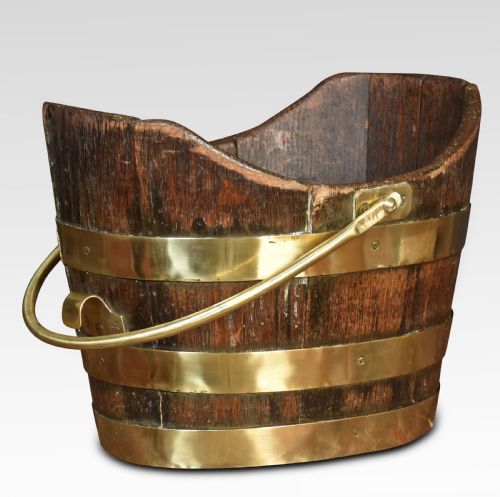


Antique Oak Hearth Bucket
An antique oak hearth bucket brings solid timber, coopered staves and brass fittings right to the fireside for practical fuel storage.
Antique Oak Hearth Bucket
When you search for an antique oak hearth bucket, you are looking at sturdy fireside storage pieces designed to hold coal, logs or peat. These functional domestic containers turn utilitarian fuel bins into handsome room accents.
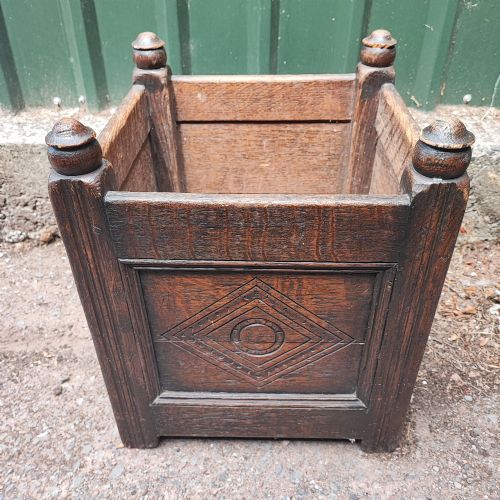
The versions you are most likely to meet on this page span the Georgian, Victorian and Edwardian periods. They appear as coopered log bins, brass-banded coal buckets and carved wooden purdoniums from English and Scottish workshops.
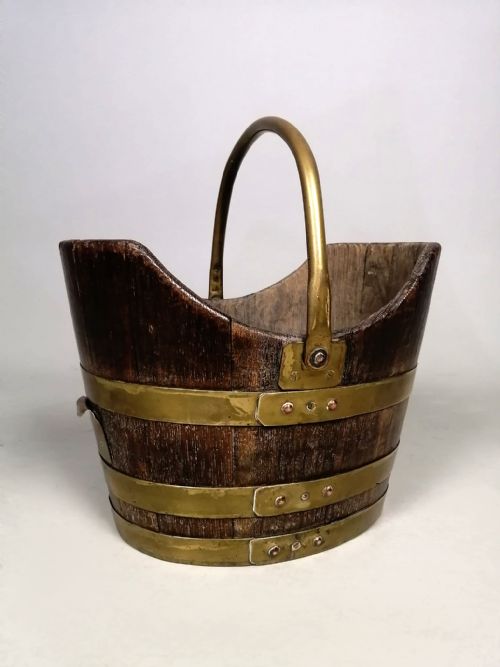
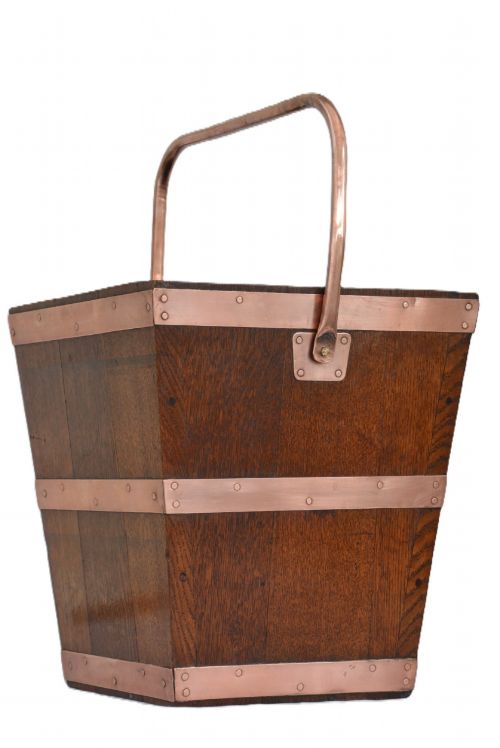
Many examples combine heavy oak staves with contrasting metal mounts like brass swing handles and iron bands. Beyond fuel storage, these timber buckets often serve double duty as garden planters or general fireside stores.
How they were made
Maker-joiners built these pieces using solid oak, elm or mahogany, often shaping the timber into curved staves secured by tight cooperage techniques. Metal components such as brass bands, iron mounts and heavy swing handles were then fitted to reinforce the wooden body against the weight of heavy coal or logs.
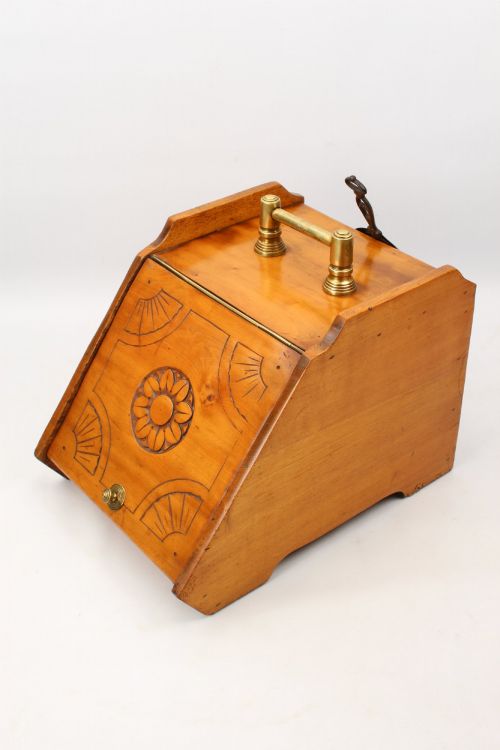
Surface finishes range from simple wax polish on country rustic grain to detailed linenfold or carved decoration on late Victorian fronts. Some pieces incorporate copper linings or shovel attachments to handle daily hearth maintenance without damaging the surrounding wood.
Several well buckets double as peat carriers, reminding us that British hearths once burned everything from Scottish turf to Welsh anthracite.
What varies in quality
The standard of an antique oak hearth bucket rests on the integrity of its coopered construction and the weight of its metal fittings. Tightly fitted staves and substantial brass banding indicate careful workshop production rather than hurried assembly.
Decorative detail also sets examples apart, moving from plain country utility bins to finely carved Victorian purdoniums with fitted shovels. Original hardware, intact metal linings and rich timber patination elevate pieces beyond basic utility storage.
The Antique Oak Hearth Bucket Glossary
- Coopered
- Constructed from curved wooden staves bound together by metal hoops, similar to barrel-making. This traditional technique provides structural strength for holding loose fuel.
- Purdonium
- A specialised coal box featuring a sloping front or drop-down door designed for easy shovelling. These typically house an internal metal liner to contain ash and small debris.
- Stave
- One of the narrow, shaped strips of oak or elm that form the vertical sides of a bucket or bin. Skilled joiners tapered these pieces to create the characteristic flared cylinder shape.
- Patina
- The surface sheen and deep colour developed by aged timber through decades of handling and polishing. Natural wear enhances the character of antique oak.
- Hod
- A portable container used for carrying coal or peat directly to the hearth. These often feature sturdy top handles for balanced lifting.
Antique Oak Hearth Bucket: Frequently Asked Questions
What did people use a hearth bucket for?
These containers held solid fuels like coal, logs and peat near the fireplace for convenient daily refuelling. They kept hearth areas tidy while keeping dry fuel close at hand.
Over time, many of these sturdy wooden containers found secondary uses as indoor plant holders or general storage bins in country homes.
How do I date an antique oak bucket?
Dating relies on combining the wood type, construction methods, carving styles and metal hardware present on the piece. Georgian examples often feature clean coopered lines and brass banding, while Victorian versions frequently show heavier carving or drop-front purdonium designs.
Looking closely at the fastenings and interior linings helps distinguish late 18th-century work from Edwardian reproductions or later country pieces.
Can I still use these for real logs?
Many solid oak buckets remain entirely strong enough to hold firewood beside a working fireplace today. Checking the internal lining and base stability ensures the timber can handle the weight of logs.
Using a protective inner liner prevents damp wood from marking the historic oak base or accelerating interior wear.
What is the difference between a log bin and a purdonium?
A log bin is typically an open-topped coopered bucket or tub designed for stacking loose firewood upright. A purdonium is a more formal box with a hinged or sloping front lid that conceals an internal metal coal scuttle.
While both serve hearth storage needs, purdoniums generally offer a more enclosed, furniture-like appearance suited to formal Victorian parlours.
How should I clean antique oak furniture?
Maintaining antique oak involves gentle dusting with a soft, dry cloth and occasional application of traditional beeswax to nourish the dry grain. Avoid harsh modern chemical sprays that can strip the historic finish.
Keeping the timber away from direct heat sources prevents the coopered staves from shrinking and loosening their metal bands.