



Antique Night Storage
Antique night storage pieces are practical bedside cabinets and tables designed to keep your evening essentials neatly tucked away out of sight.
Antique Night Storage
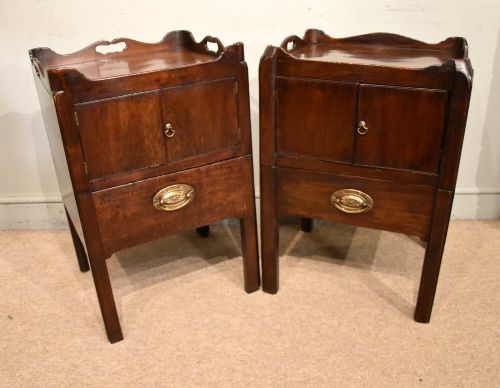
When buyers search for antique night storage, they are looking at compact bedside cabinets, pedestal cabinets, and side cabinets intended for the bedroom. The most frequent versions met on this page are mahogany bedside tables and cupboards spanning the Georgian, Victorian, and Edwardian eras, alongside Art Deco walnut designs.
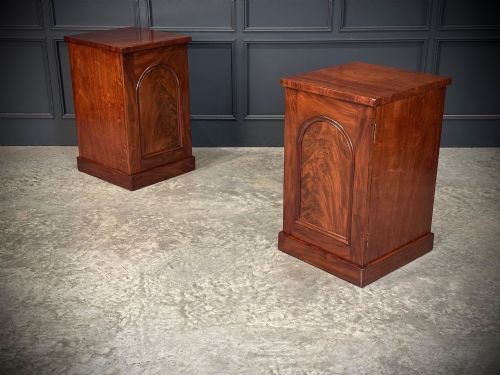
Forms range from simple single-door cupboards to pairs of large flame mahogany cabinets and functional key cupboards. These pieces originate across the eighteenth, nineteenth, and early twentieth centuries, reflecting the changing domestic requirements for private storage beside the bed.
How these pieces were made
Cabinetmakers relied heavily on mahogany as the primary timber, often selecting flame mahogany veneer and burr walnut veneer to create striking figured surfaces on doors and tops. Secondary woods provided structural stability beneath these decorative exterior veneers.
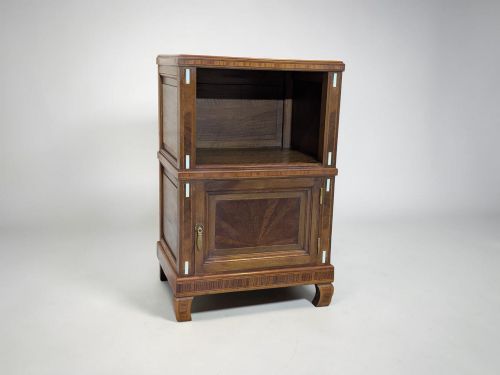
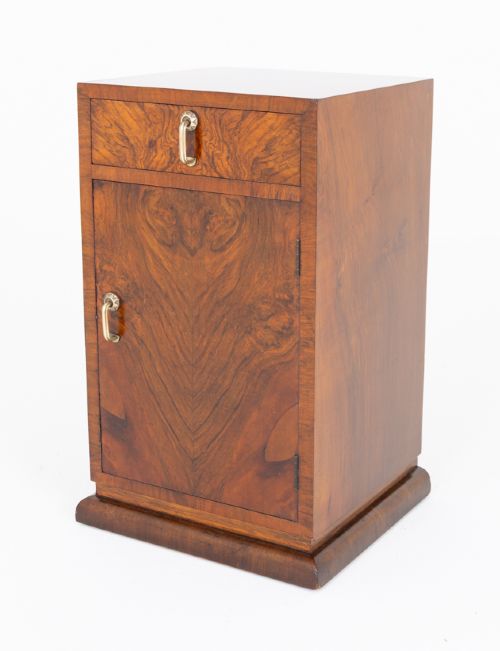
Craftsmen incorporated fine details such as bone inlay and wood inlay to accent the cabinetry, while brass hardware served both functional and decorative purposes on doors and drawer pulls.
Materials recorded across the inventory include solid mahogany, flame mahogany veneer, walnut, burr walnut veneer, brass, and bone inlay.
What varies in quality
The degree of refinement in the timber selection separates standard items from the finest examples, particularly where highly figured flame mahogany or burr walnut veneers are matched across a pair of cabinets. Superior pieces demonstrate meticulous control in the application of veneers and intricate inlay work.
Construction methods and the integration of hardware also dictate the standing of a piece, with well-executed joinery and substantial brass fittings marking out superior nineteenth and eighteenth-century craftsmanship.
The Antique Night Storage Glossary
- Flame mahogany veneer
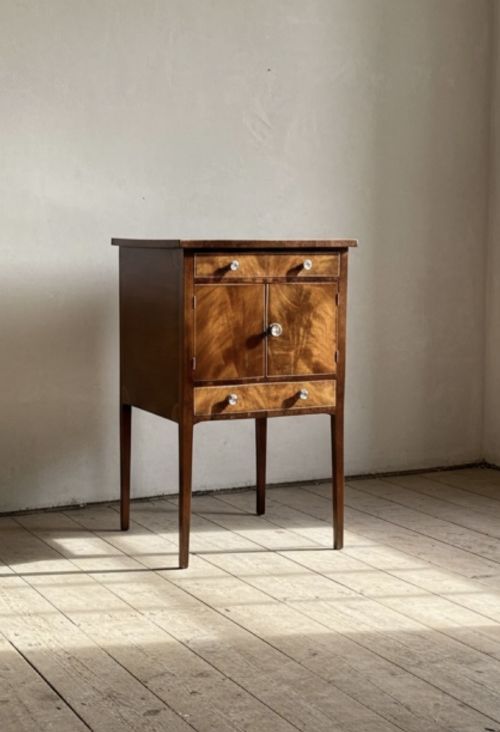
- A thin slice of mahogany timber featuring a distinctive, flamelike grain pattern. Cabinetmakers applied this to prominent surfaces for visual impact.
- Burr walnut veneer
- Decorative wood veneer taken from the wart or burl growths of walnut trees. It yields a swirling, highly figured pattern prized in later period pieces.
- Pedestal cabinet
- A tall, freestanding cupboard resting on a fixed base. These single-door units provided enclosed storage within compact bedroom footprints.
- Bone inlay
- Small pieces of bone inserted into recesses cut into the wood surface to form decorative motifs. This technique adds stark contrast against dark timbers.
- Night table
- An alternative term for a bedside table or cabinet. These items kept chamber pots, candles, and personal items close to the bed.
Antique Night Storage: Frequently Asked Questions
What is antique night storage?
Antique night storage refers to bedside cabinets, cupboards, and tables made in centuries past to hold personal items near the bed.
These pieces typically feature enclosed doors or drawers rather than open shelves, keeping nighttime necessities concealed.
How were these cabinets used?
They functioned as bedside companions to hold chamber pots, night lights, and reading materials before modern electrification.
Over time, their internal layouts adapted to serve simply as enclosed bedside storage for personal belongings.
How do I date a piece?
Dating relies on identifying the prevailing style, such as Georgian, Victorian, Edwardian, or Art Deco, combined with timber choices.
Mahogany dominates the eighteenth and nineteenth centuries, while walnut and specific veneers often point towards later periods.
Are pairs common?
Matched pairs do appear, particularly in nineteenth-century flame mahogany and eighteenth-century forms.
Finding a true matching pair requires careful comparison of timber grain, proportions, and construction details.
What woods were used?
Mahogany is the most prevalent timber found across these listings, alongside walnut and various decorative veneers.
Inlays in bone and contrasting woods frequently enhance the primary timber surfaces.