






Antique Naval Furniture
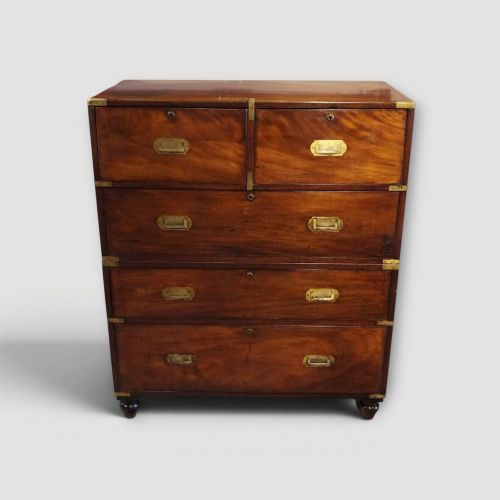
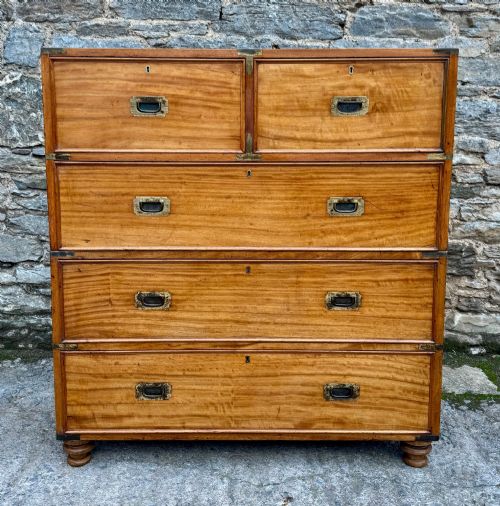
Antique naval furniture comprises utilitarian pieces built for travel at sea, most often seen here as mahogany or camphorwood chests of drawers.
Antique Naval Furniture
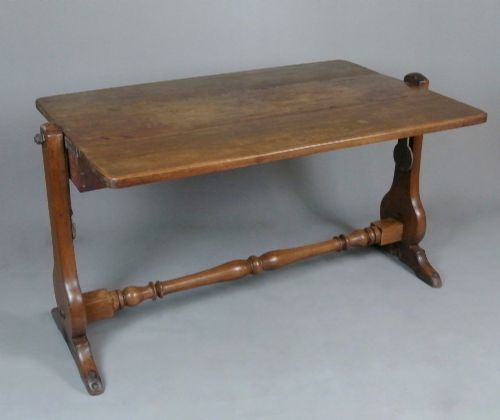
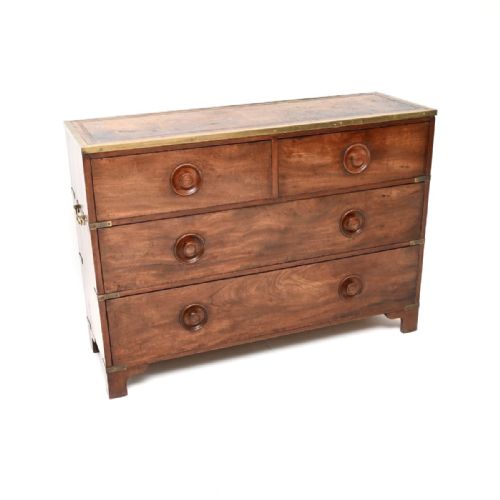
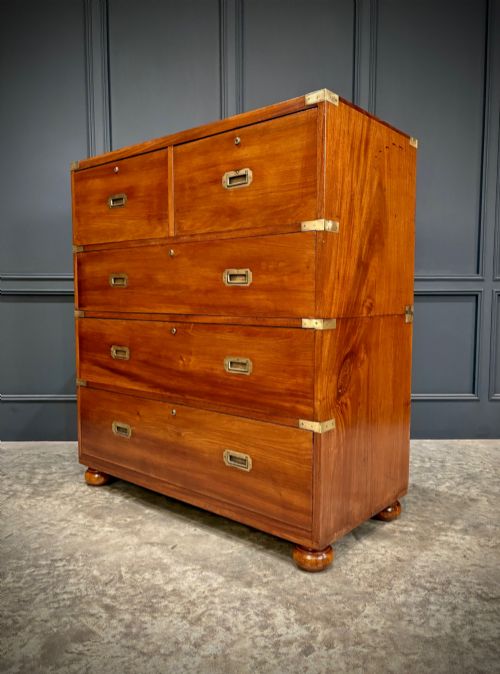
Antique naval furniture encompasses practical items designed for officers on board ship or in the field, with campaign chests and trunks forming the bulk of what appears here. These pieces span the eighteenth century through the Edwardian period, with Victorian examples appearing most frequently.
Forms include chests of drawers, secretaire desks, trunks, whatnots and cabinets, typically constructed to separate into distinct sections for transport. The design prioritises structural resilience and utility in restricted quarters.
Materials and construction
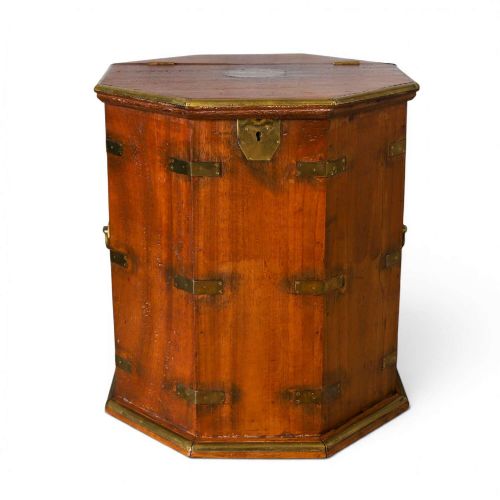
Cabinetmakers utilised durable hardwoods such as mahogany, teak and camphorwood to withstand damp conditions at sea and tropical climates. These timbers are paired with robust metal fittings and brass corners to protect edges from heavy handling.
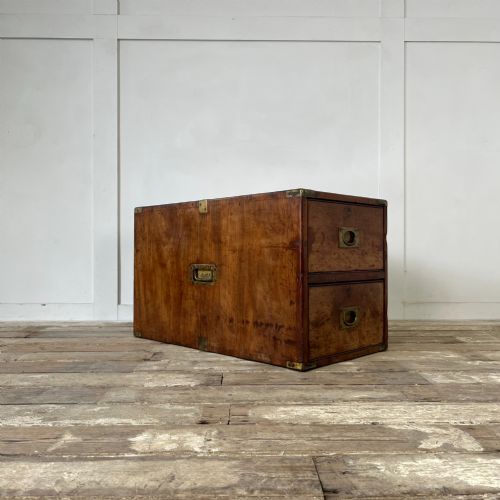
Construction relies on a two-part modular design held together by flush-fitting brass mounts and recessed carrying handles, allowing officers to pack and move their belongings efficiently.
Captain James John Stopford RN once trusted a particular campaign cabinet to keep his papers dry across the waves.
Assessing quality
Quality rests in the precision of the joinery and the integrity of the brass hardware, where tightly fitted mounts and original flush handles indicate higher craftsmanship. Superior examples display carefully selected timber grain and complete, matching brass corners.
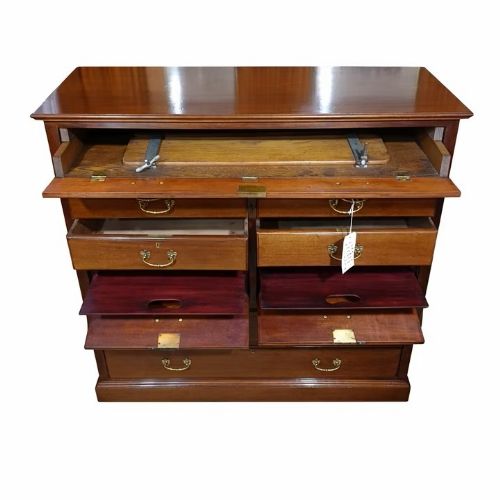
The presence of functional interior writing drawers, secretaire compartments, or named provenance elevates an individual piece above standard utilitarian trunks.
The Antique Naval Furniture Glossary
- Campaign chest
- A modular chest of drawers built to split into two or more stacking sections for military or naval transport. These typically feature brass corners and recessed pulls.
- Secretaire chest
- A chest of drawers incorporating a hinged writing flap that pulls down to reveal a fitted desk interior with small drawers and pigeonholes.
- Camphorwood
- An aromatic hardwood native to Asia, utilised for trunks and chests because its natural scent repels insects and protects contents from humidity.
- Whatnot
- A piece of open shelving with multiple tiers, used on ships or in homes for storing and displaying small items.
- Brass binding
- Metal strips and corner pieces affixed to the edges of campaign furniture to reinforce the structure against heavy transit.
Antique Naval Furniture: Frequently Asked Questions
What is antique naval furniture?
Antique naval furniture consists of robust, portable furnishings used by officers aboard ships and during military campaigns from the eighteenth century to the early twentieth century.
These items are characterised by modular designs, brass reinforcement, and dense timbers chosen to endure difficult travel conditions.
Why did naval furniture separate into parts?
Modular construction allowed officers to pack heavy wardrobes, desks and chests into manageable sections for transport through narrow ship hatches and up steep gangways.
Once relocated, the stacking portions secured together using metal pins and brackets to form a stable unit.
How do I identify camphorwood chests?
Camphorwood chests are recognised by their pale, richly grained timber and the distinct, aromatic scent of the wood when opened.
These pieces were especially popular for storing uniforms and textiles during colonial service.
Where should I place these pieces at home?
Campaign chests and trunks fit well in living rooms, bedrooms or hallways as substantial storage solutions with a distinct historical character.
Their flat tops and sturdy construction make them useful as side tables or display surfaces.