


Antique Music Chest of Drawers
An antique music chest of drawers is a specialised home for sheet music, built to keep scores flat and tidy in Edwardian and Victorian parlours.
Antique Music Chest of Drawers
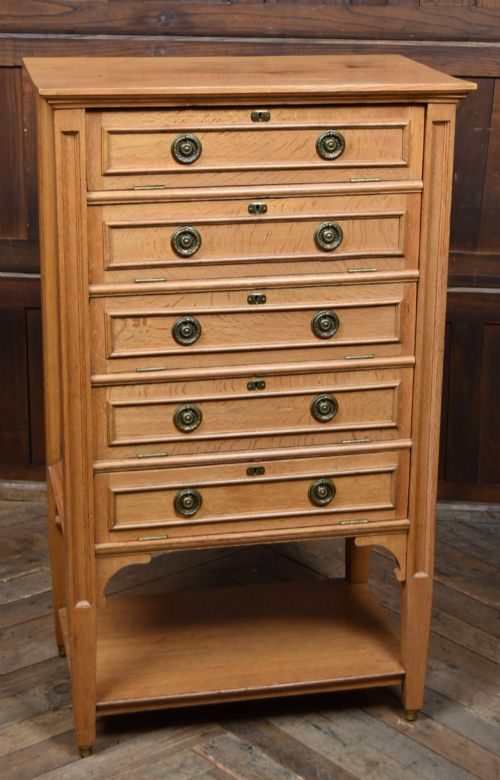
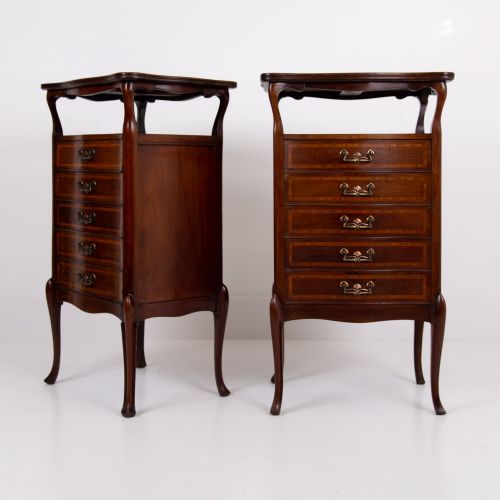
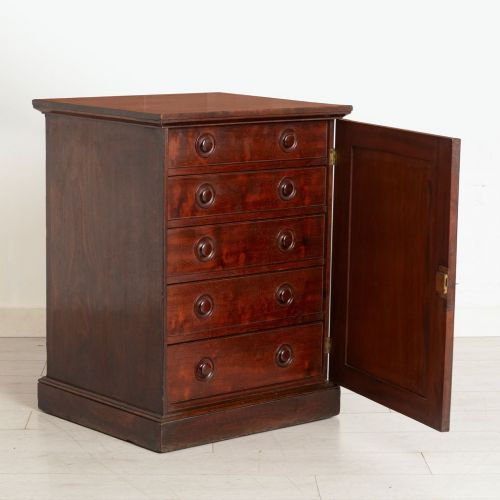
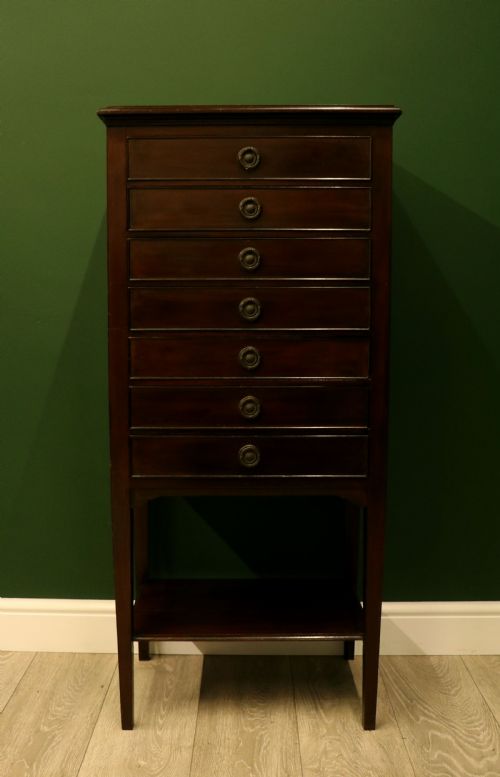
An antique music chest of drawers provides upright storage specifically designed for sheet music and folios within period homes. Most examples met on this page date from the Edwardian era and the late Victorian period, reflecting the popularity of domestic piano playing during those decades.
The forms range from slim four-drawer and multi-drawer cabinets to drop-front chests and specialised music filing cabinets. Buyers also encounter music cabinets paired with brass handles, mirror glass, or satinwood inlay, alongside related variants like bedside cabinets and music Canterburys.
How they were made
Cabinet makers relied primarily on mahogany, oak, and walnut timbers, often selecting fine veneers for the main body and drawer fronts. Satinwood inlay and contrasting stringing added decorative detail to Edwardian and Victorian surfaces.
Hardware such as brass drop handles and escutcheons completed the construction, while internal drawer divisions kept individual sheets of music separated and upright.
Some Edwardian music cabinets hide drop-front drawers designed so sheet music tumbles forward with polite Victorian efficiency.
What varies in quality
The degree of craftsmanship shows in the precision of the inlay work and the choice of primary timbers, such as figured mahogany or rich walnut. Superior pieces exhibit well-balanced proportions, particularly in slim-size formats, and retain their original brass fittings.
Construction methods determine how smoothly internal drawers or drop-front mechanisms operate over time. Finer cabinets display careful joinery that integrates decorative elements like Art Nouveau motifs or satinwood banding harmoniously.
The Antique Music Chest of Drawers Glossary
- Drop-front
- A drawer or compartment front hinged at the bottom that swings downward for easy access to sheet music inside.
- Inlay
- A decorative technique where contrasting woods or materials are set into the surface of the primary timber to create patterns.
- Canterbury
- A low stand or cabinet featuring vertical partitions, originally designed to hold sheet music, folios, or loose papers.
- Satinwood
- A pale, lustrous exotic timber frequently used for banding, stringing, and decorative inlay work on Edwardian furniture.
Antique Music Chest of Drawers: Frequently Asked Questions
What is a music chest used for?
These cabinets were designed to store sheet music, scores, and folios for pianos and other parlor instruments. The shallow drawers kept paper flat and organised.
Today, they serve equally well for storing documents, art supplies, or small collections in modern living spaces.
How do I date an antique music cabinet?
Dating relies on stylistic clues, timber choices, and construction methods. Edwardian examples often feature satinwood inlay and lighter mahogany frames, while Victorian pieces tend to be heavier and darker.
Archive records and period titles help narrow down whether a cabinet belongs to the late nineteenth century or the early twentieth century.
Are music cabinets different from regular chests?
Music cabinets feature much shallower drawers than standard chests of drawers, tailored specifically for the dimensions of sheet music. Many incorporate drop-front mechanisms or vertical filing dividers.
Their slim proportions allowed them to fit easily into smaller Victorian and Edwardian drawing rooms.
Can I use a music cabinet for documents?
The shallow drawers and compartmentalized interior make these cabinets well-suited for letters, paperwork, and flat stationery. Many period pieces were marketed interchangeably for music, documents, or specimens.
Living with one simply requires utilising the existing drawer depth for modern storage needs.