
Antique Mirrored Table
An antique mirrored table brings shifting light and rich timber into a room, combining a reflective surface with a functional stand.
Antique Mirrored Table
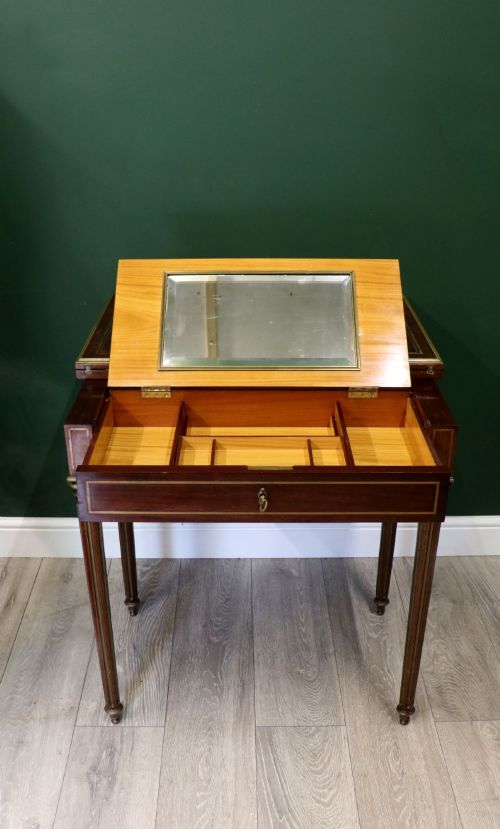
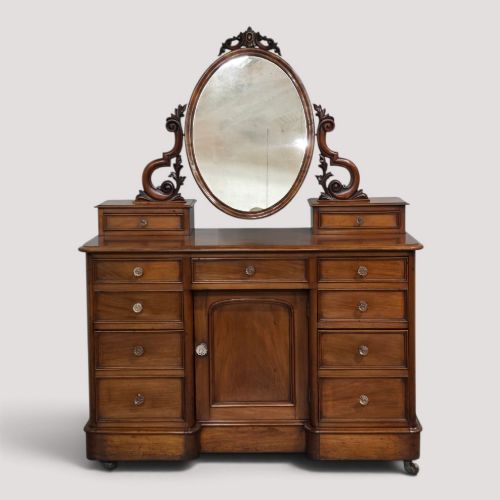
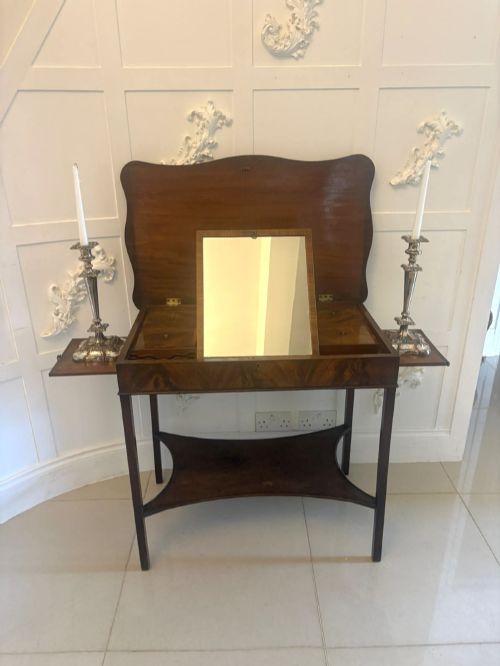
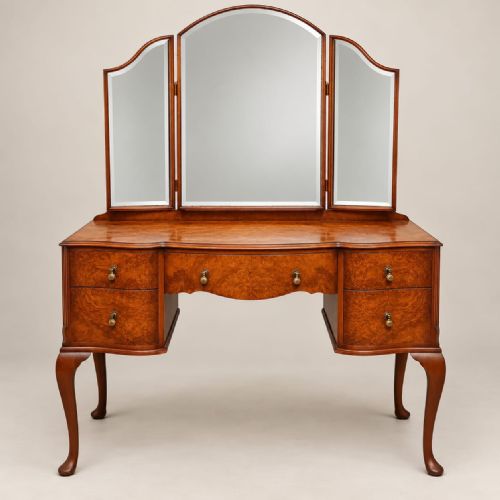
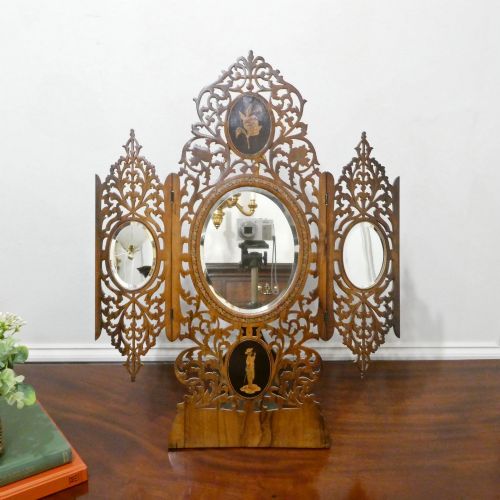
When someone searches for an antique mirrored table, they encounter a diverse group of domestic furnishings that integrate glass panels, swing mirrors, or console and pier glass sets. The selection spans Georgian, Victorian, and Edwardian eras, alongside Art Deco designs from the 1920s and 1930s.
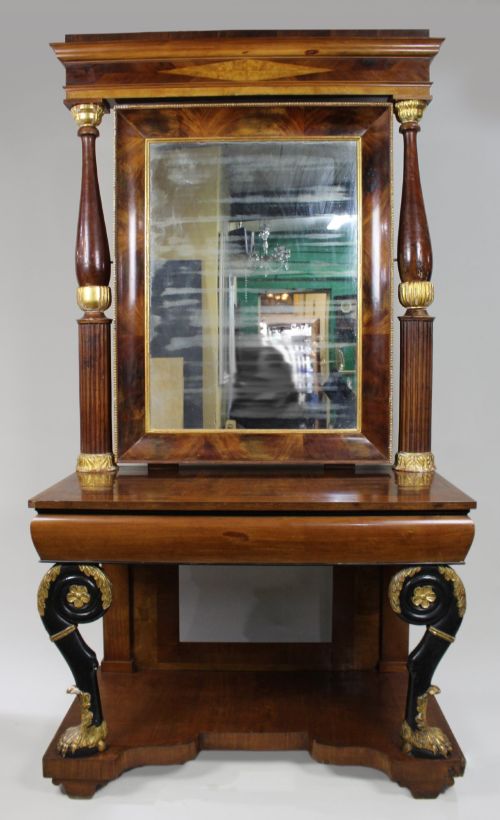
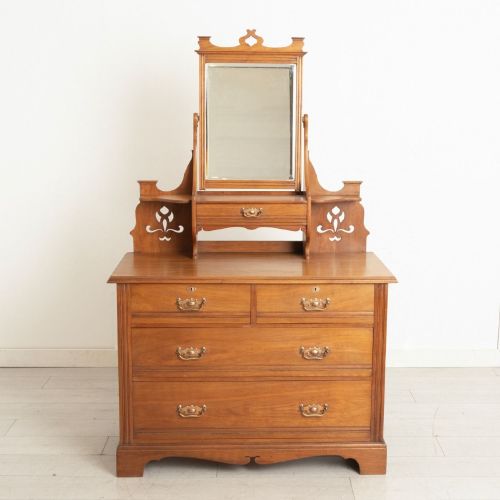
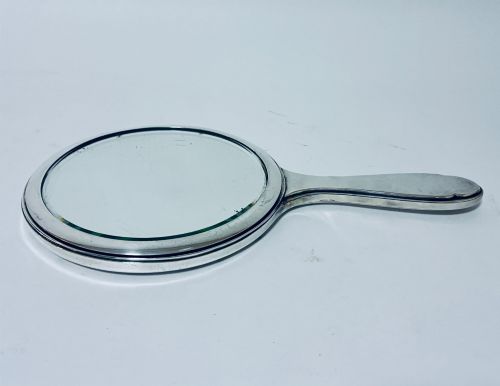
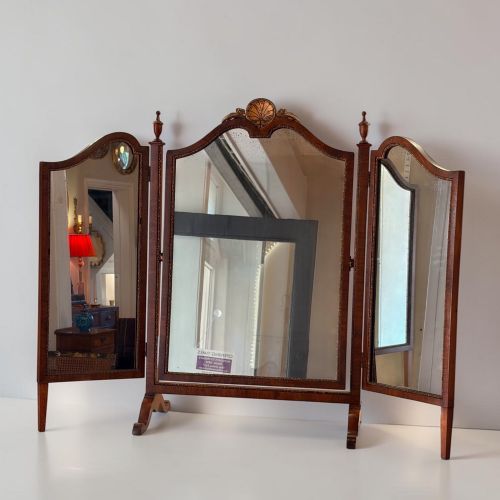
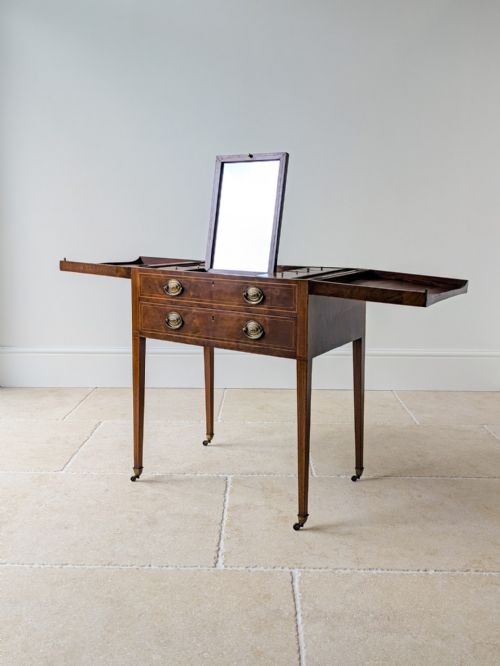
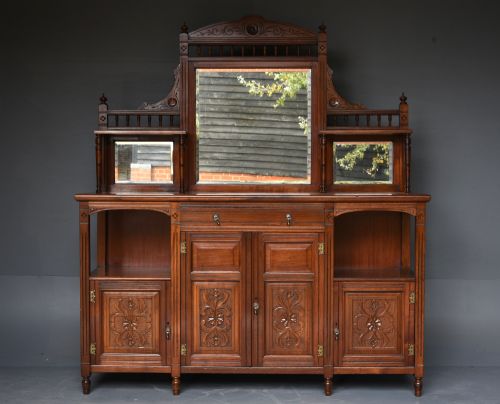
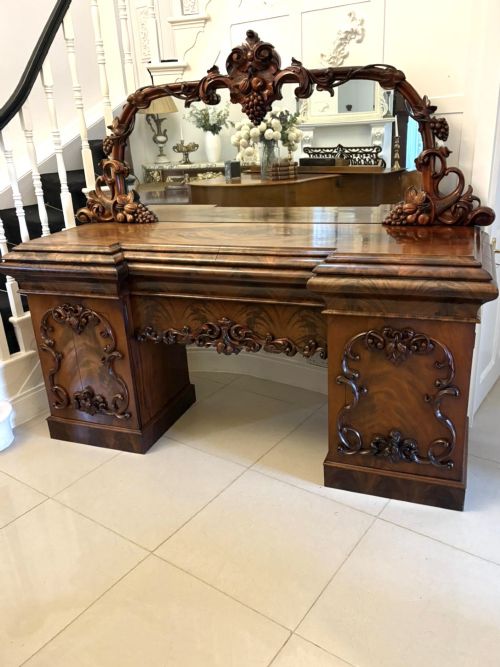
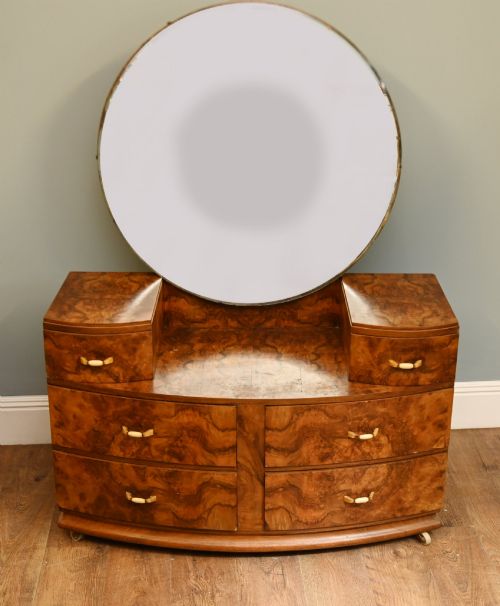
The pieces on this page are most frequently dressing tables, vanity units, and console tables paired with matching wall or pier mirrors. Formats range from large mahogany mirror-back sideboards to compact shaving mirrors and silver-mounted hand-held vanity items.
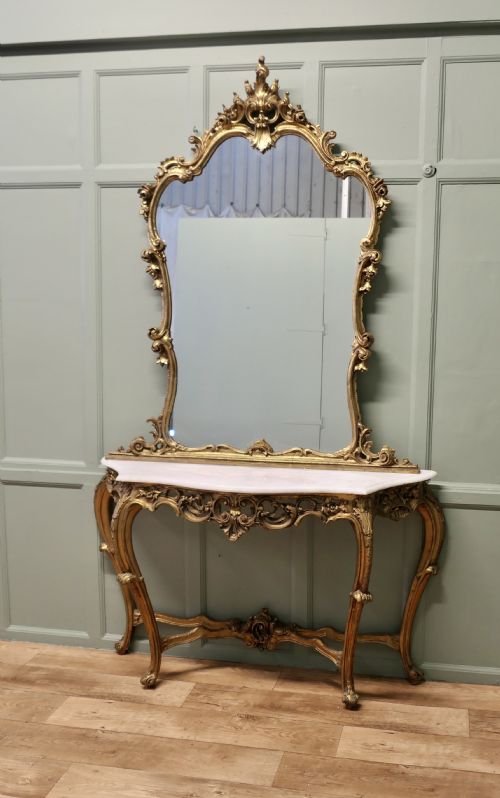
Origins vary across English workshop traditions and continental European centres, particularly French makers producing gilt console tables and toilet mirrors. Buyers also find occasional Arts and Crafts walnut dressing chests and inlaid rosewood desks.
Materials and construction methods
Cabinet makers utilised dense hardwoods such as mahogany, walnut, burr walnut, and rosewood, often applying figured veneers to accent the surfaces of dressing tables and sideboards. Drawer linings frequently employ secondary timbers like oak or pine, joined with traditional handmade dovetails.
Reflective elements rely on historic silvered glass, sometimes framed in carved giltwood, parcel-gilt mahogany, or brass mountings. Decorative details incorporate inlay, boxwood stringing, mother-of-pearl, and parcel-gilt highlights.
Metal components, from hand mirrors to shaving stands, involve cast brass, silver, silver-plated base metals, and spelter figures characteristic of the Art Deco period.
The furniture forms vary from compact shaving stands and hand-held vanity mirrors to grand console tables and mirror-back sideboards.
Distinctions in construction and finish
The standard of a piece depends heavily on the selection of timber veneers, such as highly figured burr walnut or birds-eye maple, matched symmetrically across drawer fronts and table tops. Superior examples show refined carving on mirror frames and console bases, executed by hand rather than cast in mass production.
The integrity of the original glass plate separates standard items from finer survivals, as historic silvering develops natural foxing and oxidation over centuries. Cabinet stability, smooth drawer action, and intact original brass hardware also distinguish better workshops.
Proportion and stylistic coherence define the top tier, whether in a grand 19th-century French gilt console set or a cleanly geometric Art Deco vanity table.
Shapland & Petter·Edwards and Roberts
The Antique Mirrored Table Glossary
- Pier mirror
- A tall glass designed to hang on the wall between windows, frequently positioned directly above a matching console table.
- Swing mirror
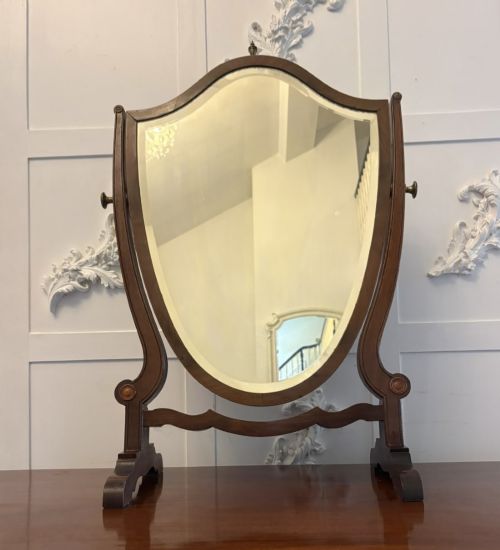
- A dressing plate mounted on pivots between upright vertical supports, allowing the user to tilt the angle of reflection.
- Burr walnut
- A prized timber harvested from the knobbly growths of walnut trees, yielding complex swirling grain patterns used extensively in cabinet veneers.
- Parcel-gilt
- A decorative treatment where specific carved details or mouldings are partially covered in gold leaf while the surrounding wood remains exposed.
- Surtout de table
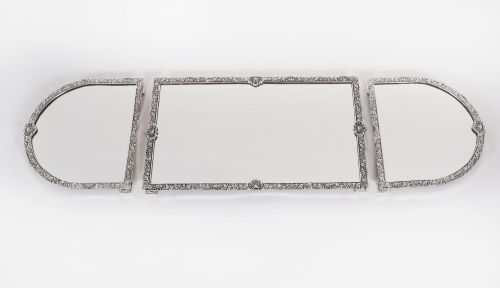
- A large decorative plateau or centrepiece, often mirrored and silver-plated, placed in the middle of a dining surface.
Antique Mirrored Table: Frequently Asked Questions
What is an antique mirrored table?
An antique mirrored table encompasses furniture items that incorporate glass surfaces, ranging from dressing tables with fixed or swing mirrors to console tables sold alongside matching wall glasses.
These pieces served functional grooming roles in bedrooms and formal display purposes in reception rooms across the 18th, 19th, and early 20th centuries.
How do I identify the period?
Dating relies on timber choices, construction techniques, and stylistic markers such as Georgian mahogany framing, Victorian walnut carving, Edwardian inlay, or geometric Art Deco veneering.
Hardware styles, dovetail construction, and the type of mirror glass also provide clear indicators of manufacturing eras.
Were mirrors always attached to the tables?
Mirrors were constructed in multiple formats, sometimes permanently fixed to a sideboard backboard or supported by side arms on a dressing chest.
Alternatively, console tables and pier mirrors were manufactured as separate matching pairs designed to be placed together against a wall.
How do I care for antique glass?
Historic glass requires gentle cleaning with soft, dry cloths to protect the fragile silvered backing and prevent moisture seepage behind the plate.
Avoiding harsh chemical cleaners preserves both the original mercury or silver application and the surrounding timber frame.