
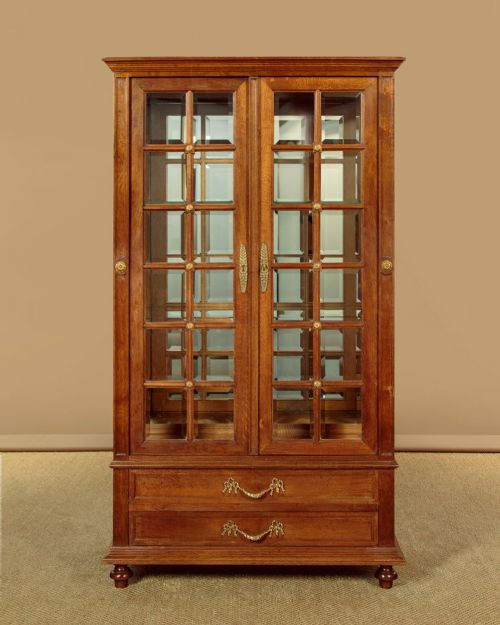


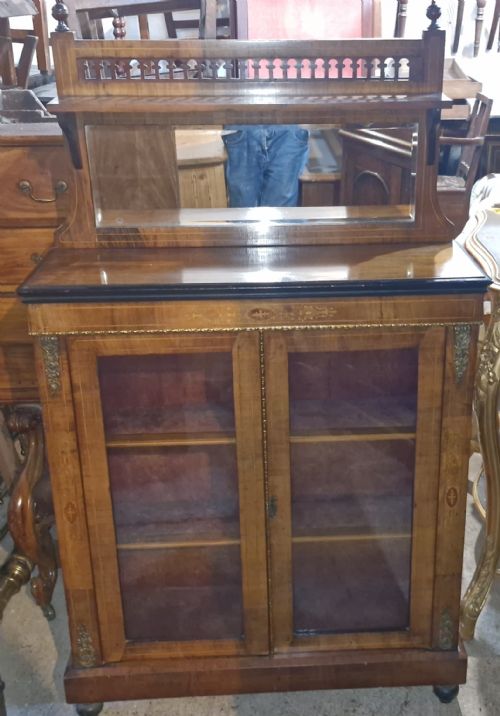


Antique Mirror Back Bookcase
An antique mirror back bookcase combines open shelving or glazed display with a reflective glass panel, bringing light and depth into a room.
Antique Mirror Back Bookcase
An antique mirror back bookcase serves as both a storage piece for volumes and an ornamental cabinet, often taking the form of a display cabinet, side cabinet, or chiffonier. These pieces originate across the nineteenth and early twentieth centuries, spanning Victorian, Edwardian, and Regency periods.
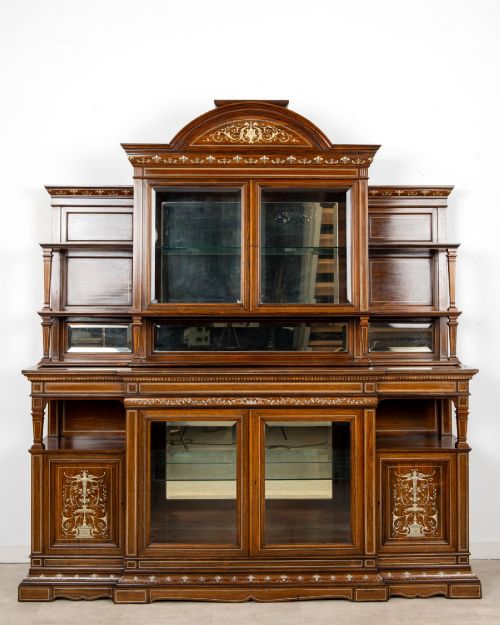
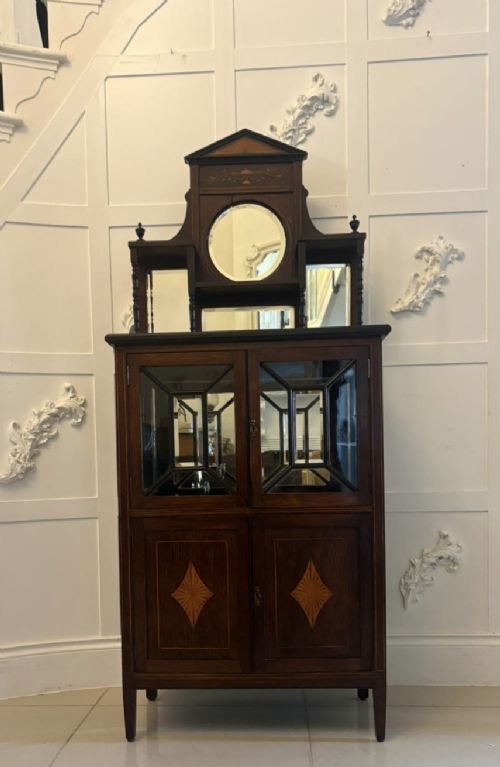
The version most frequently encountered on this page is the Edwardian or Victorian mahogany display cabinet featuring inlaid decoration and an integrated mirror. Alongside these, buyers find open bookcases, sideboards, and occasional whatnots equipped with mirrored panels to catch and reflect the light.
Makers and cabinetmakers of the nineteenth century utilised these reflective backs to brighten dark corners and amplify the presence of porcelain, glass, and books displayed upon the shelves. The combination of timber frames, such as rosewood, walnut, and mahogany, with glass creates a distinctive piece of period furniture.
How they were made
Cabinetmakers constructed the primary carcase of these pieces using timbers such as mahogany, walnut, and rosewood, frequently incorporating decorative stringing in satinwood or brass inlay. Sections of the cabinet, particularly on Edwardian and Victorian examples, display careful timber selection and polished veneer surfaces.
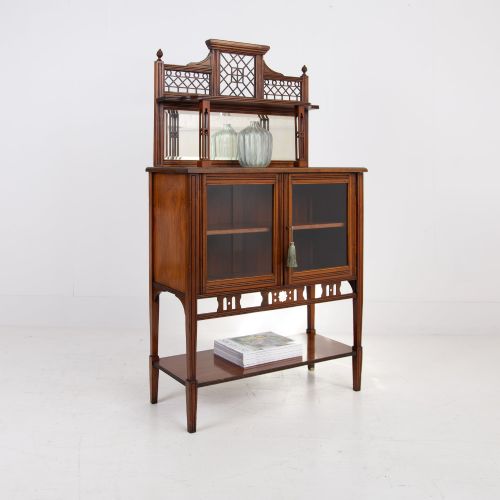
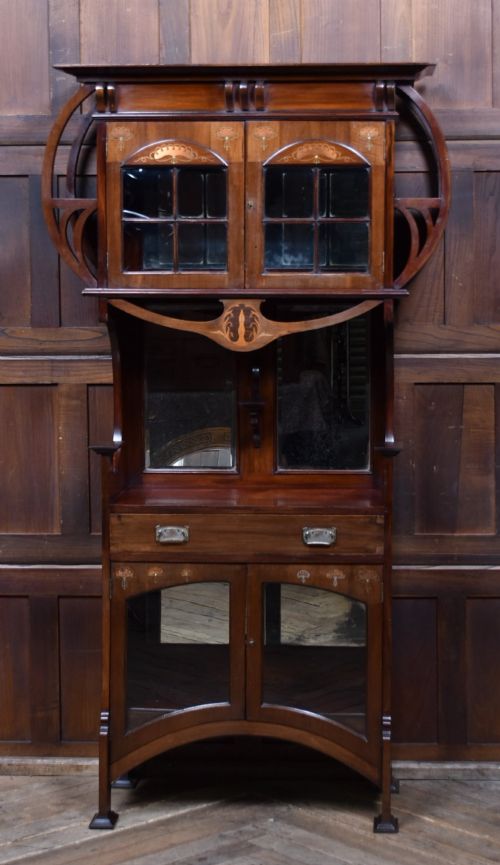
Mirrors were set into the backboards behind the shelving tiers, secured within wooden frames or backed directly against the panelwork to bounce light through the glazed or open compartments. Brass mounts, gilt details, and carved woodwork further defined styles ranging from Aesthetic Movement and Art Nouveau to Chippendale Revival.
Cabinet styles span Aesthetic Movement designs, Art Nouveau curves, and traditional Chippendale Revival carved woodwork.
What varies in quality
The standard of timber selection and inlay work separates finer cabinets from simpler commercial production, with figured mahogany, rosewood, and delicate satinwood marquetry marking out superior examples. Artisans who invested time in carving details, such as the barley twist turns or gilt mounts, produced pieces of distinct visual weight.
The integration of the mirror back and the precision of the glazing bars indicate the level of craftsmanship involved in construction. Cabinets that retain their original brass hardware, stable carcases, and clean glass plates reflect a higher grade of workshop output across the Victorian and Edwardian periods.
Collinson and Lock
The Antique Mirror Back Bookcase Glossary
- Chiffonier
- A low sideboard or cabinet, often featuring shelving or a mirrored superstructure, common in nineteenth-century interiors. It evolved from simpler storage into a decorative piece for the parlour.
- Marquetry
- The art of applying pieces of veneer to a structure to form decorative patterns and pictures. Craftsmen used contrasting timbers like satinwood and mahogany to achieve intricate surface designs.
- Pier cabinet
- A narrow cabinet designed to stand against the wall space between windows. These pieces often incorporated glass doors and mirrored backs to maximise available light.
- Whatnot
- An open set of shelving with multiple tiers supported by slender uprights, used for displaying ornaments. Examples from the Victorian period occasionally integrated mirrored back panels.
- Stringing
- Thin inlay lines of contrasting wood or light-coloured timber used to outline panels and drawers. It highlights the geometric lines of Edwardian and Victorian cabinetry.
Antique Mirror Back Bookcase: Frequently Asked Questions
How do I style an antique mirror back bookcase?
These pieces suit living rooms or studies where the reflective glass can brighten darker corners while holding books or ceramics.
Keep the arrangement of objects balanced so the mirror remains partially visible behind your displayed items.
What periods do these bookcases come from?
The selection spans the nineteenth and early twentieth centuries, taking in Regency, Victorian, and Edwardian eras.
Each period brings distinct stylistic traits, from the heavy rosewood of the mid-nineteenth century to the lighter satinwood and mahogany of Edwardian times.
Were these always used for books?
While many served to house libraries, a significant number functioned as display cabinets for decorative ceramics, glassware, and ornaments.
Cabinets with glazed doors and mirrored backs were explicitly designed to showcase fine possessions alongside bound volumes.
How do I tell Victorian from Edwardian examples?
Victorian pieces tend to use darker timbers like rosewood and walnut, often with heavier carving, turning, or substantial proportions.
Edwardian cabinets frequently feature lighter mahogany, delicate satinwood inlay, and airier structures influenced by the Sheraton revival.