

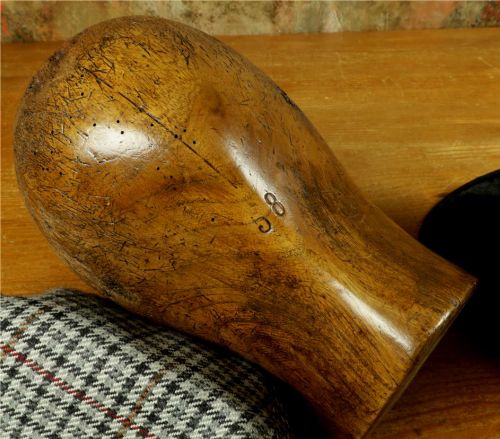


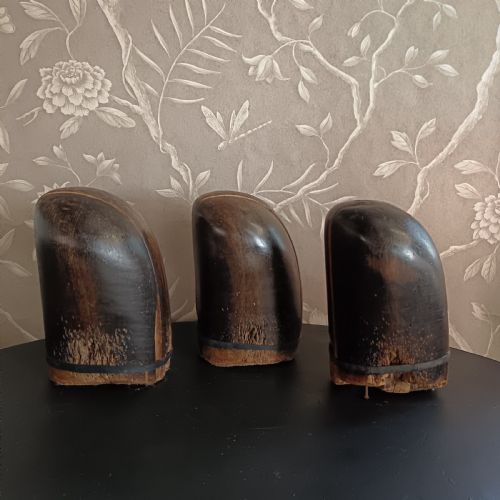


Antique Millinery Mould
An antique millinery mould is a solid block or form once used to shape hats, prized today as striking sculptural objects for the home.
Antique Millinery Mould
When you search for an antique millinery mould, you encounter heavy functional forms designed for shaping headwear in the nineteenth and twentieth centuries. These objects take the form of hat blocks, millinery heads, and hat stretchers originating from periods such as the Victorian era and the nineteen-twenties.
The most common versions on this page are carved wooden forms and cast aluminium moulds used in hat production. Pieces range from French fruitwood and oak and walnut examples to utilitarian industrial designs intended for military bearskin caps.
These items transition easily from workshop tools into decorative display pieces. Their sculptural qualities and patinated surfaces draw interior designers and collectors who value authentic workshop history.
How they were made
Traditional millinery blocks rely on dense timbers such as carved wood, beech, fruitwood, oak, and walnut. Artisans shaped these materials by hand to create smooth surfaces capable of withstanding the repeated pressure of damp felt and straw pulled tightly over the form.
Later twentieth-century production introduced metalworking techniques, utilising cast iron and aluminium to form durable moulds. These metal pieces often bear numbered markings from their time in commercial hat factories.
Antique Millinery Mould Retail Price Guide 2026
Typical asking prices for millinery mould among the pieces listed under this phrase on Sellingantiques today, from the lower quarter to the upper quarter. They describe what is for sale here now, not the wider market.
Current listings feature materials ranging from carved hardwood, beech, fruitwood, oak, and walnut to cast aluminium and iron.
What varies in quality
Material choice and maker intention also set examples apart. Solid hardwood blocks shaped for specialised millinery work carry a different presence compared to standard industrial aluminium production moulds.
The Antique Millinery Mould Glossary
- Hat block
- A solid form made of wood or metal over which a hat is shaped and dried. These were essential tools in every commercial hat maker's workshop.
- Millinery form
- A general term for any block or mould used to construct or resize hats. They appear in various geometric and anatomical shapes.
- Hat stretcher
- A mechanical device inserted into a hat to expand the band and correct the fit. These wooden tools often feature operable screw mechanisms.
- Folk art style
- A description applied to items created outside formal academic traditions, often featuring charming vernacular carving. In millinery heads, this manifests in simplified yet striking facial contours.
- Bearskin cap
- A tall fur cap worn by military guards. Moulds made for these specific items have an unusual elongated proportion.
Antique Millinery Mould: Frequently Asked Questions
What are millinery moulds?
Millinery moulds are solid forms historically used by hat makers to shape and dry felt, straw, and fabric hats during production.
Today, they are collected and displayed as decorative sculptures that celebrate industrial and workshop heritage.
How do I style them?
You can display wooden blocks and aluminium moulds on open shelving, desks, or mantelpieces where their sculptural profiles stand out.
Their neutral wood tones and patinated metal surfaces blend easily into both modern and traditional interiors.
Are they made of wood?
Many traditional examples are carved from hardwoods like beech, fruitwood, oak, and walnut.
Later twentieth-century versions are frequently cast from aluminium or iron for heavy commercial use.
How old are these blocks?
The pieces seen here date from the mid-nineteenth century through to the nineteen-twenties.
Earlier examples often display hand-carved details, while later pieces tend to be industrial aluminium moulds with factory numbers.