


Antique Milk Glass Lamps
These antique milk glass lamps bring a warm, diffused glow to a room through opaque white and opaline shades paired with brass, ceramic, and metal bases.
Antique Milk Glass Lamps
When you search for antique milk glass lamps, you encounter a varied selection of domestic lighting fixtures spanning the Victorian era through to the mid-twentieth century. The listings on this page focus heavily on oil lamps, pendant lights, and ceiling lights originating from the nineteenth and early twentieth centuries.
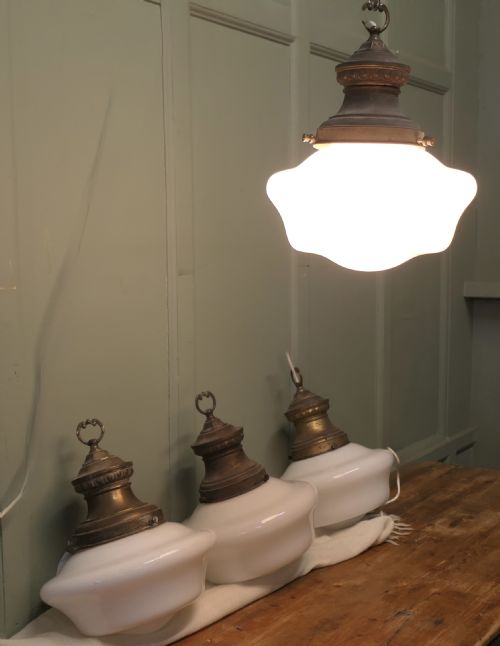
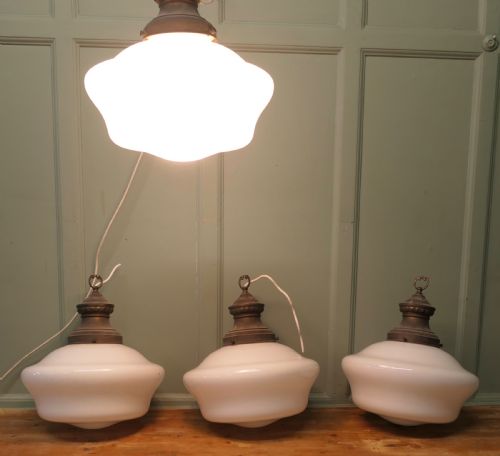
The Victorian examples frequently combine brass bases with ceramic bodies and opaque glass shades, reflecting the domestic lighting technology of the period. Later pieces shift toward industrial and architectural pendant lighting, utilising opaline and moonstone glass shades from the 1920s and 1930s.
Table lamps and hanging shades form a significant portion of the selection, showing how these objects transitioned from paraffin illumination to electricity. Styles range from ornate late Victorian designs to clean Art Deco and industrial ceiling lighting.
How they were made
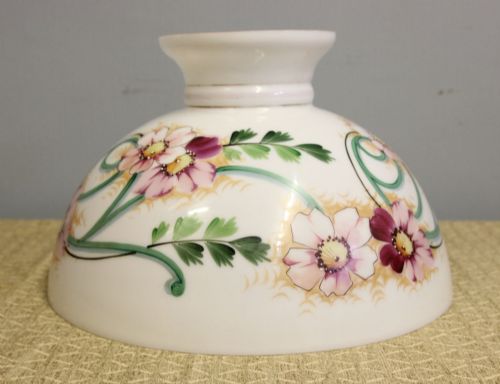
The construction of these lamps relies on the combination of moulded or blown glass with metalwork components such as brass and gilt brass. Glassblowers formed the milk glass, opaline, and moonstone shades into pear shapes, cones, and globes, sometimes adding hand-painted or enamelled decoration.
Metal collars, rings, and burners attach securely to the glass shades and bodies, utilising durable brass and cast metal. Bases often incorporate contrasting materials like black glass, ceramic, and heavy metal to provide stability for table lamps and oil lamps.
The listings span periods from the 19th Century through to 1930, featuring materials such as brass, opaline glass, and enamel.
What varies in quality
Quality in these lighting fixtures lies in the weight and clarity of the glass, alongside the finish of the metal mountings. Thicker opaline and moonstone glass demonstrates superior material substance, while hand-painted details and fine gilt brass casting elevate the decorative merit.
The integrity of the fittings and the retention of original shades and burners distinguish finer examples from altered pieces. Lamps that preserve their matching original glass globes and undamaged brass collars represent a higher standard of craftsmanship.
The Antique Milk Glass Lamps Glossary
- Milk glass
- An opaque, milky-white or coloured glass used extensively for decorative table lamps and lighting shades during the nineteenth and early twentieth centuries.
- Opaline glass
- A slightly translucent glass type with a milky appearance, often showing subtle shifts of colour when lit from within.
- Oil lamp
- A lighting device that burns paraffin or oil via a wick, typically featuring a glass reservoir and a matching shade or globe.
- Pendant light
- A hanging fixture suspended from the ceiling by a cord, chain, or metal rod, designed to direct illumination downwards.
- Moonstone glass
- A specific variety of translucent white glass prized for its soft, ethereal light diffusion in industrial and domestic pendants.
Antique Milk Glass Lamps: Frequently Asked Questions
How do I date an old lamp?
Dating relies on examining the materials, manufacturing techniques, and fitting styles characteristic of specific periods like the Victorian era or the 1930s. Oil lamp mechanisms and heavy brass bases generally point to the nineteenth century.
Later pendant lights from the 1920s and 1930s display simpler, more industrial forms with opaline glass shades suited for early electrical wiring.
Were these lamps converted to electricity?
Many surviving oil lamps and paraffin lamps undergo conversion to electricity to allow safe daily use in modern homes. This adaptation typically involves routing wiring through the original burner or font.
Unconverted pieces retain their original wick mechanisms and brass burners, making them suitable for display or specialist collection.
How should I clean milk glass shades?
Cleaning requires warm water and mild soap, applied gently with a soft cloth to protect the delicate surface of the glass. Harsh chemical cleaners can damage hand-painted details or enamel work.
Metal components like brass benefit from gentle polishing separate from the glass to preserve the historic patina.
What is the difference between milk glass and opaline?
Milk glass is strictly opaque and traditionally solid white, whereas opaline glass possesses a subtle translucency that allows light to pass through with a soft glow. Opaline can also exhibit faint colour tints.
Both materials were utilised across the Victorian and early twentieth-century periods for lighting globes and shades.