


Antique Metamorphic Steps
Antique metamorphic steps transform from everyday seating into sturdy library ladders, offering clever utility for high shelves.
Antique Metamorphic Steps
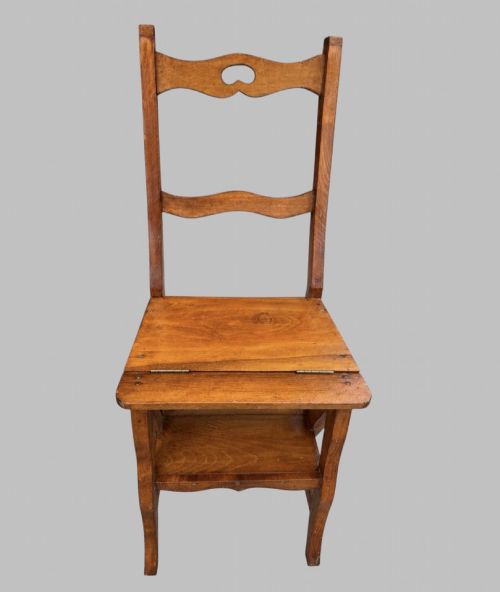
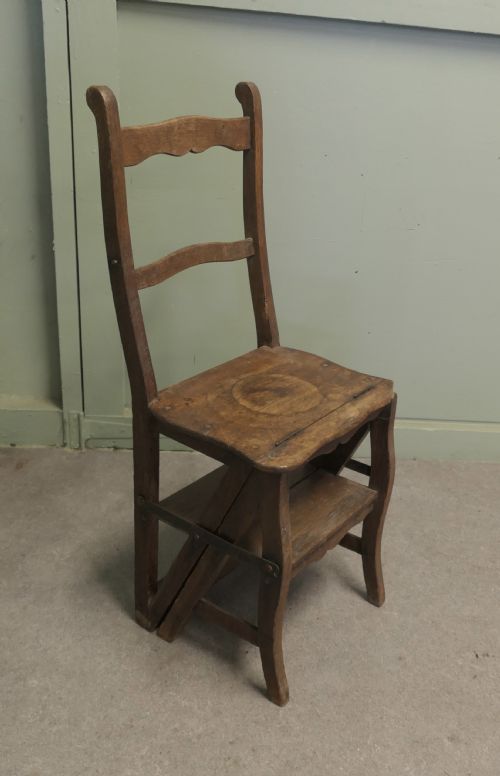
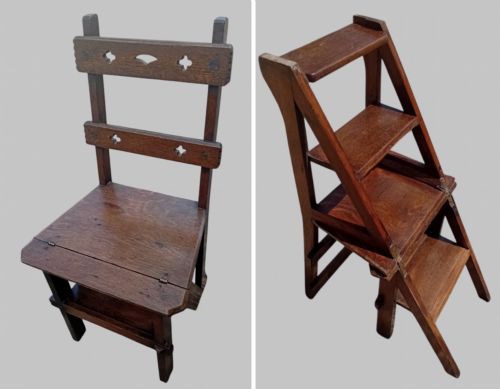
Antique metamorphic steps combine seating and elevation into dual-purpose furniture designed for domestic libraries and studies. The selection centres on library chairs and armchairs that unfold or swivel into sets of stairs.
The pieces span Georgian, Regency, and Victorian periods, alongside Arts & Crafts and Gothic Revival styles. Oak and mahogany dominate the structural forms, frequently complemented by leather or cane inserts.
Library chairs that convert into steps appear most frequently across these listings. These designs provide a seat for reading before transforming to reach high bookshelves.
How they were made
Cabinetmakers utilised dense timbers like mahogany and oak to construct frames capable of supporting weight in multiple configurations. Brass hinges, pivots, and metal mechanisms facilitate the smooth transition between chair and ladder forms.
Upholstered elements incorporate leather and cane to finish the seating surfaces. Joinery methods ensure the moving sections remain stable during regular use as steps.
Some chairs disguise their dual purpose so thoroughly that unsuspecting guests might take a sudden, elevated tumble.
What varies in quality
The sophistication of the mechanical action separates standard conversions from exceptional examples. Superior items operate smoothly without catching, concealing their hinges cleverly within the mahogany or oak framework.
The selection of timber grain and the refinement of the carved details indicate the standing of the piece. Well-executed library chairs maintain correct proportions and comfort whether deployed as seating or as a staircase.
J Jarvis·Morgan and Sanders·Richard Hicks Bridgens
The Antique Metamorphic Steps Glossary
- Metamorphic furniture
- Pieces designed to transform from one functional form into another, such as a chair turning into a set of steps.
- Library steps
- Portable staircases created to reach high bookshelves in domestic libraries.
- Regency
- An English design period spanning the early nineteenth century, noted for classical influences and refined mahogany construction.
- Arts & Crafts
- A late nineteenth-century movement emphasising visible construction, honest materials, and handcrafted oak forms.
- Gothic Revival
- A style drawing on medieval architectural motifs, featuring pointed arches and heavy timber detailing.
Antique Metamorphic Steps: Frequently Asked Questions
How do metamorphic library steps work?
The chair back or seat sections pivot and unfold on hidden brass hinges to form a sturdy flight of stairs.
Once finished, the structure folds back securely into the profile of a standard armchair or library chair.
What periods do these steps come from?
The available pieces originate primarily from the Georgian, Regency, and Victorian eras.
Later examples extend into the Arts & Crafts movement around nineteen hundred, showcasing different timber choices.
Are metamorphic chairs sturdy enough to climb?
Cabinetmakers built these pieces from solid mahogany and oak to support the weight of a person safely.
The integrated metal mechanisms lock the steps firmly into place during use.
What materials were used in their construction?
Primary frames rely on hardwoods like oak and mahogany for structural strength.
Details often include leather seat pads, cane panels, and brass hardware to complete the design.