

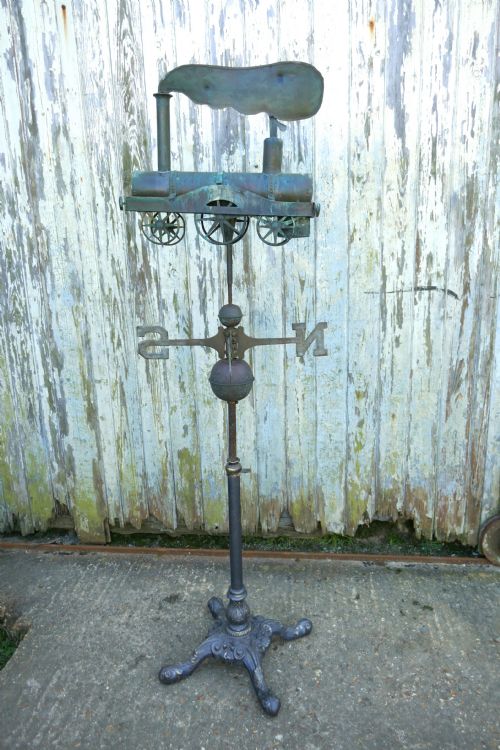


Antique Metal Weathervane
An antique metal weathervane brings silhouette and movement to a roofline, shaped by wind and weather over centuries.
Antique Metal Weathervane
When you search for an antique metal weathervane, you find sculptural indicators of wind direction shaped from copper, iron, and sheet metal. These objects span periods from the Georgian era through the Victorian period and into the early twentieth century.
The most common form on this page is the cockerel, often rendered in copper or retaining traces of old paint. Other forms include silhouette figures such as huntsmen and horses.
These pieces reflect traditional metalwork and folk art traditions, moving away from utility to decorative presence. They combine simple sheet metal fabrication with dynamic silhouettes designed to pivot atop buildings.
Construction and materials
The primary materials recorded in these listings are copper, sheet iron, and wrought iron, occasionally mounted with stone or wood elements. Copper was beaten or shaped to form hollow animal bodies, while iron was worked into flat silhouettes and support rods.
Surfaces often show layers of old paint applied to protect the metal from the elements. Traditional metalworking techniques combined joined sheet metal with forged iron pivots to ensure smooth rotation in the wind.
Antique Metal Weathervane Retail Price Guide 2026
Typical asking prices for metal weathervane among the pieces listed under this phrase on Sellingantiques today, from the lower quarter to the upper quarter. They describe what is for sale here now, not the wider market.
Listings span the Georgian period, the nineteenth century, and the early twentieth century up to nineteen forty.
Judging quality in metal vanes
Quality rests upon the crispness of the silhouette and the character of the surface patination. Examples with undisturbed old paint or rich verdigris on copper hold greater visual appeal than repainted or overly cleaned alternatives.
The strength of the underlying fabrication distinguishes standard production from sculptural folk art. Pieces that retain their original mounting brackets and show balanced proportions demonstrate superior craftsmanship.
The Antique Metal Weathervane Glossary
- Verdigris
- A green patina that forms naturally on copper surfaces exposed to weather over long periods. This layer protects the underlying metal and indicates genuine age.
- Silhouette
- An outline of a figure filled in with a solid colour, typical of flat iron and sheet metal weathervanes. This form relies on strong outer contours for recognition against the sky.
- Folk art
- Objects created by self-taught or traditional artisans outside academic traditions. These pieces prioritise bold visual impact over strict anatomical accuracy.
- Wrought iron
- Iron beaten into shape by hand while hot, used for sturdy support rods and directional arms. It displays slight irregularities from the forging process.
Antique Metal Weathervane: Frequently Asked Questions
What are antique metal weathervanes made from?
These pieces are constructed primarily from copper, sheet iron, and wrought iron, sometimes featuring wood or stone components.
Surfaces frequently retain remnants of old paint or develop a natural verdigris patina over decades outdoors.
How do I date an old weathervane?
Dating relies on stylistic clues, fabrication methods, and material choices associated with periods like the Georgian era, the nineteenth century, or the early twentieth century.
Folk art silhouettes and traditional metalwork techniques provide further context for determining age.
Can these weathervanes still be mounted outside?
Many examples are robust enough for exterior display, provided they are secured with appropriate mounting hardware and protected against severe gales.
Collectors often prefer to display delicate or paint-decorated specimens indoors to preserve their current condition.
Which animal motifs are most common?
Cockerels appear frequently among these listings, rendered in copper with detailed tail feathers and textured surfaces.
Other recurring subjects include horses and human silhouettes such as huntsmen.