




Antique Metal Tea Table
An antique metal tea table brings striking surface work and enduring frames into a room, offering both a functional surface and a focal point.
Antique Metal Tea Table
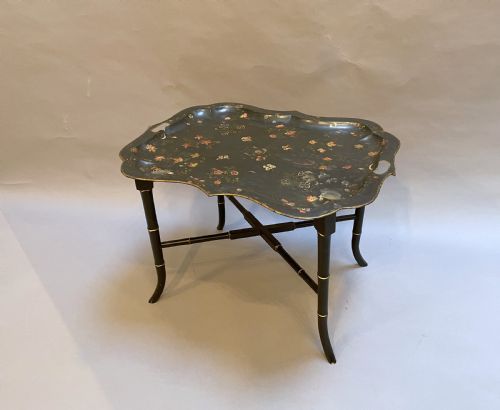
An antique metal tea table combines sturdy structural frames with decorative metallic surfaces, originating from periods spanning the nineteenth century into the twentieth century. These pieces often adapt traditional serving trays onto dedicated stands or utilise durable metals for their primary surfaces.
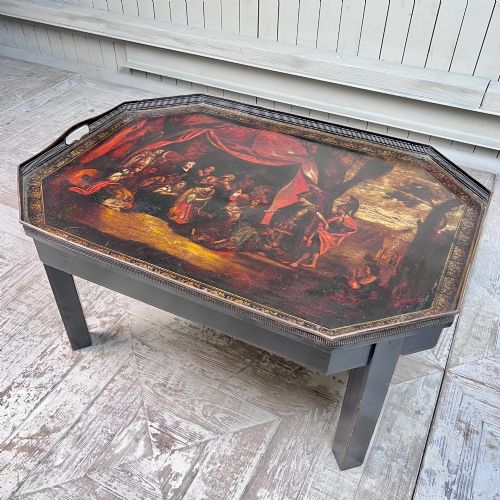
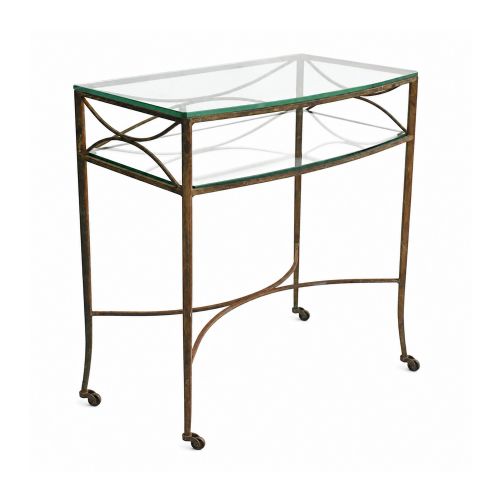
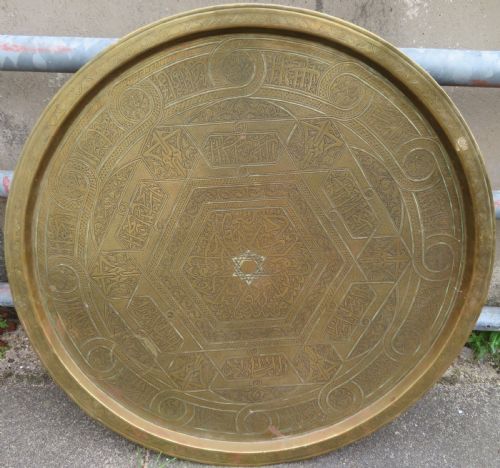
The varieties encountered on this page range from Victorian toleware trays set upon folding supports to cast-iron console tables and brass-topped occasional pieces. Makers drew upon eclectic styles including Regency, Edwardian, and Mamluk Revival to shape these household items.
Buyers frequently select an antique metal tea table for its ability to anchor a seating arrangement while introducing distinct textures of copper, brass, and painted iron. Each example reflects the domestic habits of its period, transitioning from utilitarian service items into prominent decorative furniture.
Materials and construction methods
Craftsmen built these tables using robust structural metals such as wrought iron and cast-iron alongside lighter alloys for tops, including brass, copper, and painted toleware. Wood occasionally supported the primary framework or formed the core beneath metal cladding.
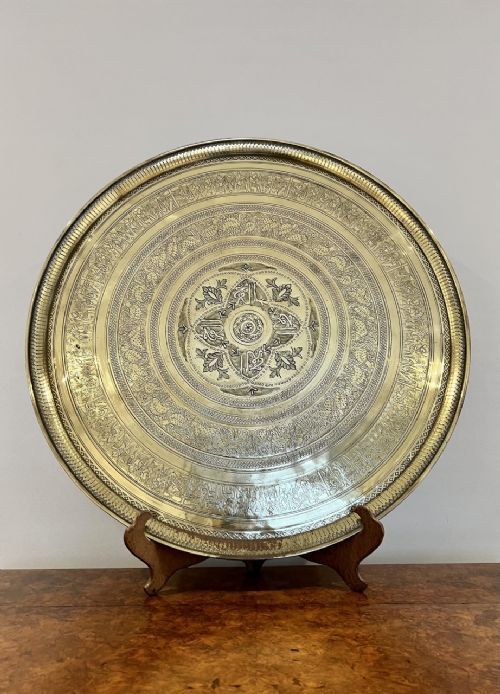
Surfaces frequently display meticulous hand-engraving, repousse work, or painted decorations such as historical scenes found on octagonal tole trays. Stands range from simple folding wooden legs to elaborate cast-iron two-tier structures designed to secure heavy vessels.
A disguised biscuit box shaped precisely like a Victorian hat box proves that Victorians enjoyed hiding their treats in plain sight.
Assessing quality in construction and surface
Quality rests upon the crispness of the surface engraving and the integrity of the joinery between the top and its support. Superior examples maintain stability without wobble and preserve their original surface patination without excessive modern intervention.
The weight and gauge of the metal used for trays and stands distinguish finer productions from standard utilitarian wares. Artistry in hand-hammered details and the retention of original painted or patinated finishes elevate the standing of any given piece.
Walker & Hall·William Soutter & Sons
The Antique Metal Tea Table Glossary
- Toleware
- Painted or enamelled sheet metalware, often decorated with floral or pictorial scenes. These surfaces require careful cleaning to preserve the original pigment.
- Samovar
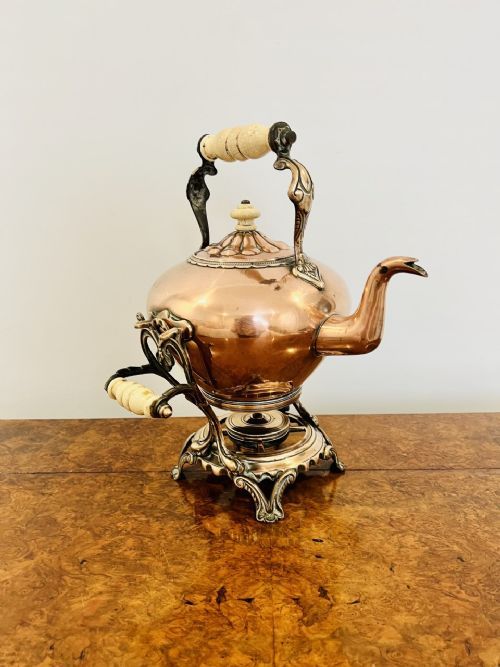
- A heated metal container traditionally used to boil water for tea, frequently mounted on a dedicated stand with a tap. They appear in brass, copper, and silver-plated finishes.
- Mamluk Revival
- A nineteenth-century design movement inspired by medieval Islamic metalwork from Egypt and Syria. Pieces feature dense geometric and calligraphic brass engraving.
- Spirit Kettle
- A water kettle suspended above a small burner fueled by spirit or alcohol, designed to keep water hot at the tea table. They are commonly paired with fitted metal stands.
Antique Metal Tea Table: Frequently Asked Questions
How were metal tea tables used?
These tables served primarily in the parlour or drawing room for the formal preparation and service of tea. The removable trays allowed servants to transport vessels easily between the kitchen and the guests.
Over time, many of these trays became permanently fixed to stands, transforming from utilitarian service equipment into permanent occasional furniture used for display.
What metals are most common?
Brass and copper predominate among the surviving examples, often paired with iron frames or wooden bases. Toleware, which is painted tin or sheet metal, also appears frequently in tray formats.
Mixed metal compositions and silver plating occur in specific Victorian and Edwardian pieces, offering contrasting tones across the surface.
How do I care for the surface?
Maintain metal surfaces with a dry or barely damp cloth to avoid stripping historical patination or damaging painted toleware details. Avoid abrasive commercial polishes that can wear away hand-engraved lines on brass and copper.
Protect the finish from standing moisture by using coasters beneath any glassware placed upon the table.
Are the trays removable?
Many examples feature a distinct tray resting loosely upon a folding or fixed stand, true to their original function of carrying tea service. Other pieces integrate the metal top permanently into a two-tier console or occasional table structure.
Examining the underside of the rim and the support brackets usually reveals whether the top was designed to lift off.