





Antique Metal Tea Canisters
These antique metal tea canisters bring hand-painted toleware and silver plate into modern rooms as striking storage.
Antique Metal Tea Canisters
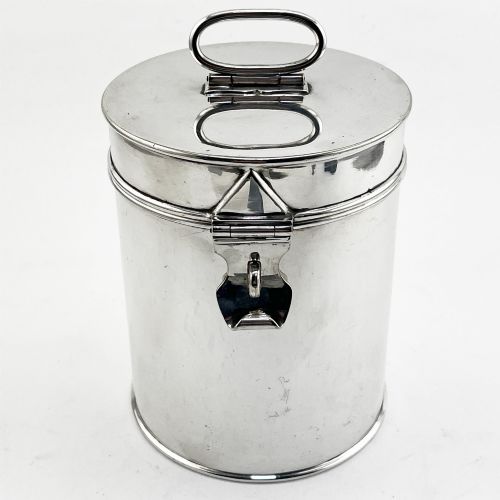
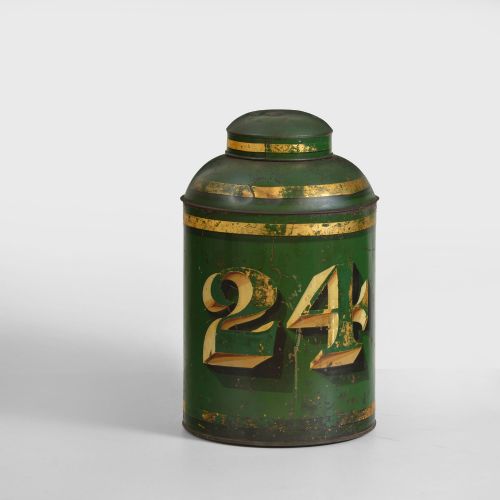
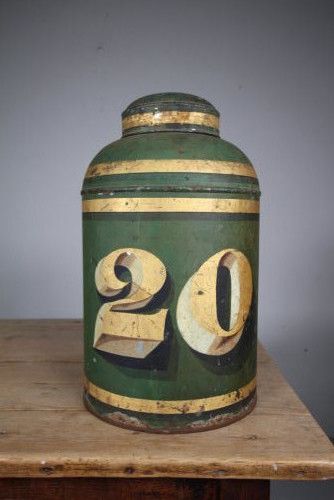
When you search for antique metal tea canisters, you encounter storage vessels formed from tinplate, toleware, and iron, alongside silver-plated examples. These pieces span periods from the eighteenth century through the Edwardian era, including Georgian, Regency, William IV, and Victorian iterations.
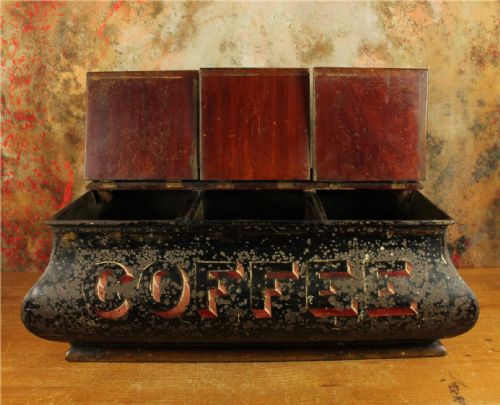
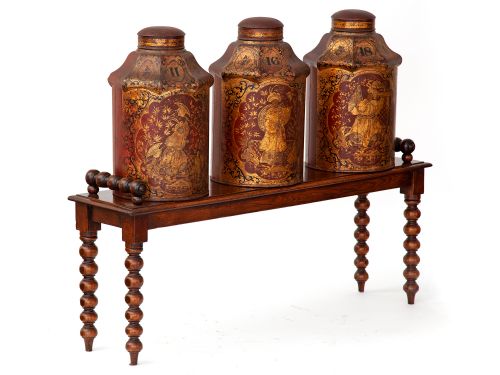
The selections on this page range from large single toleware tins and triple-compartment shop boxes to sets of painted canisters and converted table lamps. Forms vary from traditional pagoda styles and book-shaped biscuit tins to mahogany caddies housing internal metal canisters.
How they were made
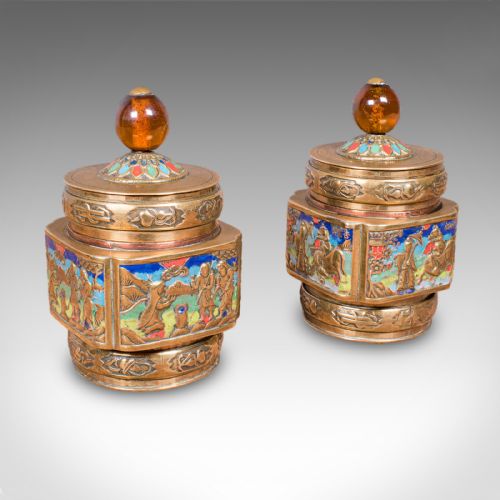
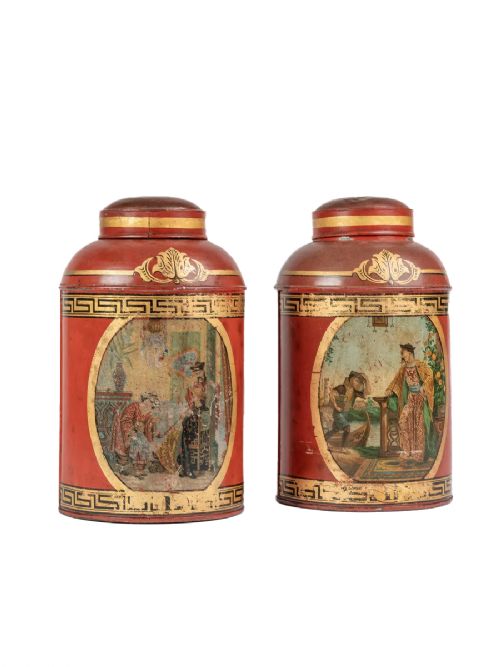
The pieces rely primarily on sheet iron or tinplate shaped into canisters and boxes, frequently finished with heavy layers of paint and toleware surfaces. Artisans applied gold leaf detailing and intricate Chinoiserie decoration by hand, depicting oriental scenes and architectural motifs directly onto the dark backgrounds.
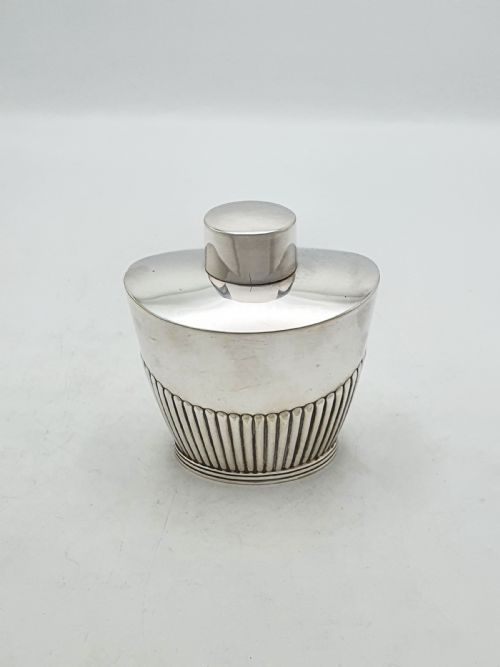
Silver-plated and Sheffield plate examples involve base metals bonded with silver, while eighteenth-century iterations often combine exterior woodwork like inlaid mahogany with internal metal containers.
Antique Metal Tea Canisters Retail Price Guide 2026
Typical asking prices for metal tea canisters among the pieces listed under this phrase on Sellingantiques today, from the lower quarter to the upper quarter. They describe what is for sale here now, not the wider market.
Biscuits were so treasured that Victorian literature occasionally mentions locking the decorative Huntley & Palmers tins away from children.
What varies in quality
Quality rests in the preservation of the original painted surface and the crispness of the gilt work. Pieces featuring intact Chinoiserie details and original black or maroon painted grounds stand apart from those with later repainting.
The sophistication of the form dictates distinction, separating standard utility tins from decorative pagoda shapes or matched sets of multiple canisters.
Mappin & Webb·Huntley & Palmers
The Antique Metal Tea Canisters Glossary
- Toleware
- Painted or enamelled metalware, typically tin or iron, decorated with applied designs. It was widely produced in England during the eighteenth and nineteenth centuries for domestic storage.
- Chinoiserie
- European artistic interpretation of Chinese and East Asian artistic traditions. This style dominates the decoration on nineteenth-century tole canisters.
- Tinplate
- Sheet iron or steel coated with a thin layer of tin to prevent corrosion. It serves as the primary substrate for painted tea canisters.
- Sheffield Plate
- A composite material formed by fusing a thin sheet of silver to a thicker copper base. It appears on finer tea caddies from the Georgian period.
- Tea Caddy
- A vessel designed for storing loose tea leaves securely. They often contained internal metal canisters to keep expensive tea dry.
Antique Metal Tea Canisters: Frequently Asked Questions
What were antique metal tea canisters used for?
These metal canisters stored expensive loose tea leaves in domestic homes and commercial shops, protecting the dry leaves from moisture and light.
Larger versions accommodated bulk storage, while multi-compartment boxes held different varieties of tea within a single container.
How do I style antique metal canisters in a modern room?
Their dark painted surfaces and gilt details make them effective as decorative shelf objects or functional containers on kitchen worktops.
Some examples have been converted into table lamps, offering a way to introduce lighting with period character.
How can I tell a Georgian tea caddy from a Victorian one?
Georgian examples frequently utilise timber construction, such as mahogany, with internal metal canisters, reflecting earlier cabinet-making traditions.
Victorian pieces lean towards heavier toleware and tinplate, often decorated with bold Chinoiserie paintwork or multi-compartment shop box formats.
What is toleware?
Toleware refers to painted or enamelled metal objects, usually made from tin or iron, finished with dark grounds and decorative motifs.
The technique allowed makers to achieve ornate finishes resembling Asian lacquerware using accessible European materials.