


Antique Metal Gong
An antique metal gong brings resonant presence to a room, offering a striking blend of utility and decorative design.
Antique Metal Gong
When you search for an antique metal gong, you encounter sound-producing objects primarily shaped by Victorian, Arts and Crafts, and Aesthetic Movement ideals. These pieces range from compact table tops to substantial framed dinner gongs mounted on carved wood or wrought iron.
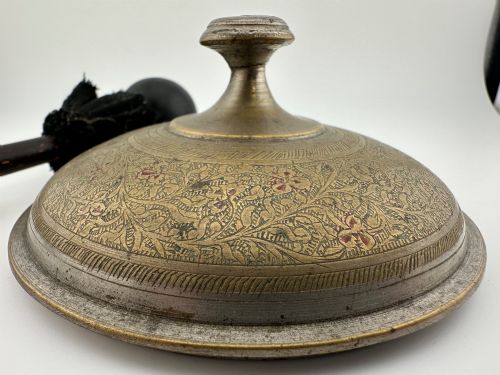
The versions most frequently met on this page date from the late nineteenth century through to the early decades of the twentieth century. They encompass domestic items intended for announcing meals alongside regional and imported examples featuring engraved brass or cast bronze.
Domestic forms often utilise fitted wooden frames, silver plating, or novelty motifs such as animal horns and carved figures. Alongside these stand oriental temple bells and hand gongs that reflect diverse cultural craft traditions preserved in metal.
Materials and construction
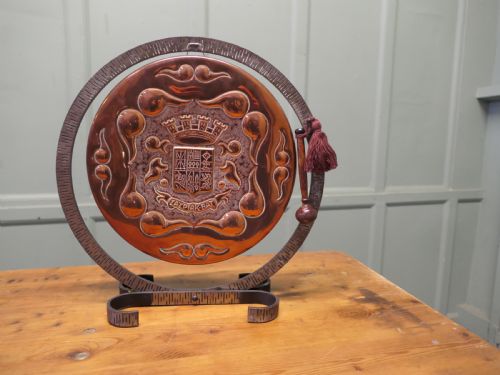
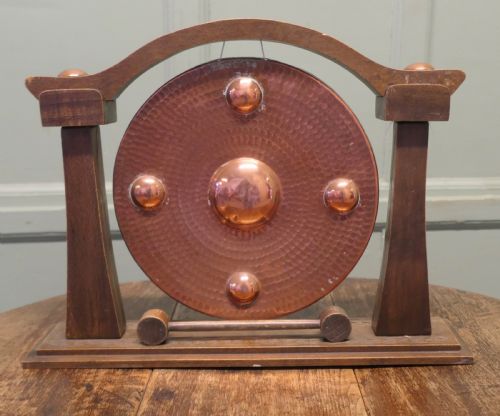
The construction of these pieces relies heavily on worked metals such as brass, copper, bronze, and silver plate, combined with supportive structures of oak, ebonised wood, and wrought iron. Makers shaped the metal plates through hand hammering and casting, producing resonant discs and bells designed to hold a clear tone.
Wooden and iron frames provide sturdy suspension for the hanging gongs, frequently ornamented with intricate carving or decorative metalwork characteristic of the period. Strikers and beaters, often fashioned from wood or paired with matching metal elements, complete the functional design.
Listings feature items spanning the 19th century up to 1920, incorporating styles from Basque folk art to Arts and Crafts.
Assessing quality and execution
Quality in an antique metal gong reveals itself through the depth and clarity of the cast or hammered metal, alongside the integrity of its mounting frame. Superior examples demonstrate careful hand finishing on the metal surface and harmonious proportions between the gong and its stand.
The refinement of the supporting woodwork or metal forging sets finer pieces apart from standard utilitarian items. Detail in engraving, consistency in hammering, and the secure integration of decorative elements such as horns or carved figures indicate higher craftsmanship.
The Antique Metal Gong Glossary
- Dinner gong
- A hanging metal disc or bell mounted on a frame, traditionally used in large houses to summon guests to meals. These often include a matching wooden striker.
- Aesthetic Movement
- A late nineteenth-century design style emphasising visual beauty over narrative subject matter, frequently seen in stylized brass and copper work. Pieces from this movement prioritize form and decorative surface patterns.
- Silver plate
- A thin layer of silver applied to a base metal substrate, common in Victorian tableware and decorative gongs. This finish offers the appearance of solid silver with increased durability.
- Wrought iron
- Iron beaten or bent into shape by hand while hot, commonly utilised for robust frames supporting hanging gongs. Its visible texture reflects traditional blacksmithing techniques.
- Lithophone
- A musical instrument consisting of pieces of resonant stone or metal struck to produce tones, occasionally referenced in descriptive classifications of historical sound instruments.
Antique Metal Gong: Frequently Asked Questions
How were antique metal gongs used?
These gongs served practical domestic functions, most notably announcing the arrival of dinner in large Victorian households. They also acted as decorative hallway furnishings and occasional musical instruments.
Over time, their role shifted toward interior decoration, where their distinctive metal surfaces and frames added visual interest to reception rooms.
What metals are most common?
Brass, copper, and bronze appear frequently across the listings, often shaped into hammered plates or cast bells. Silver plate is also common on Victorian table gongs.
Supporting structures introduce additional materials like oak, wrought iron, and occasionally organic elements such as cow horn.
How do I care for an antique gong?
Maintain the metal surfaces by keeping them free of dust with a soft, dry cloth. Avoid aggressive cleaning agents that might strip historical patina or silver plating.
Inspect the suspension cords or hooks periodically to ensure the hanging gong remains securely supported within its frame.
How can I tell the period?
Dating relies on stylistic clues such as Aesthetic Movement motifs, Arts and Crafts hand hammering, or Victorian oak framing details. Associated markers like registration dates or specific maker inscriptions provide further chronological context.
Examining the manufacturing techniques, such as hand-cut threads or cast iron assembly methods, helps distinguish nineteenth-century examples from later work.