






Antique Medical Chest
An antique medical chest is a fitted wooden box or cabinet designed to hold remedies and instruments, prized for its intricate internal arrangement.
Antique Medical Chest
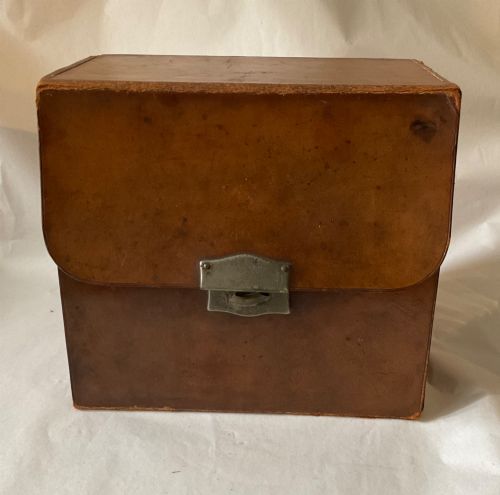
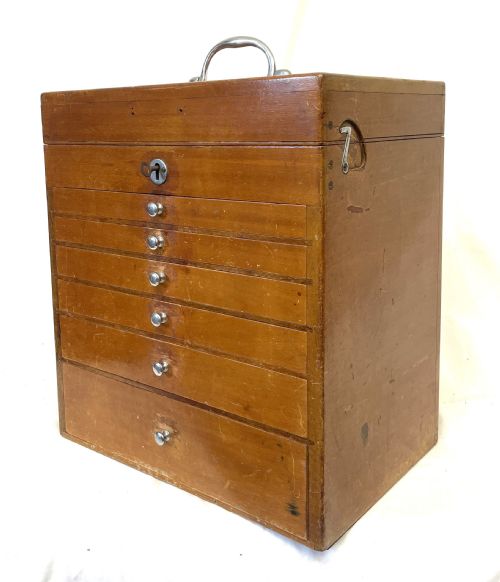
When you search for an antique medical chest, you encounter a specialised form of storage designed for pharmaceuticals, instruments, and remedies. These pieces range from compact travel cases intended for homeopaths and physicians to larger floor-standing cabinets used by dentists and chemists.
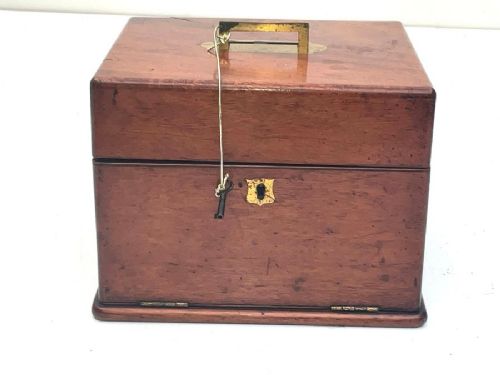
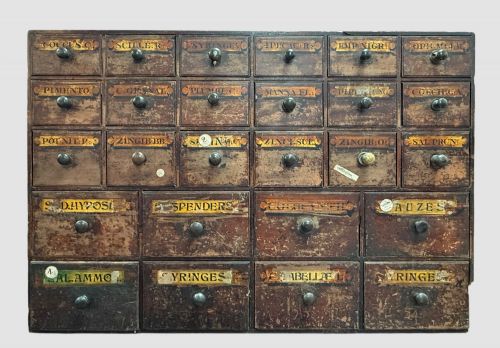
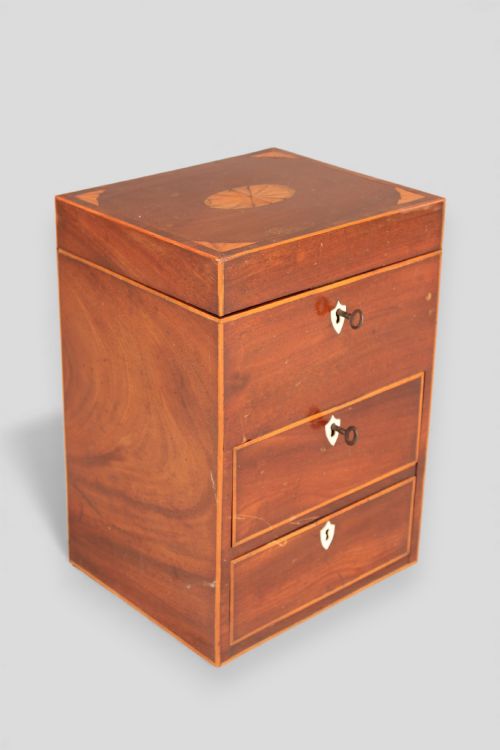
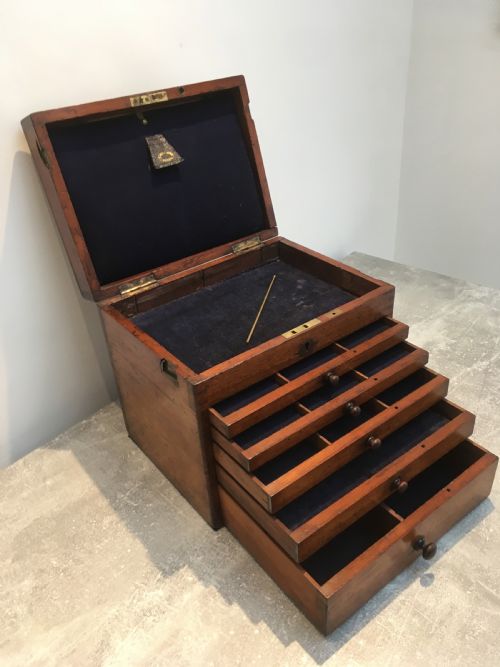
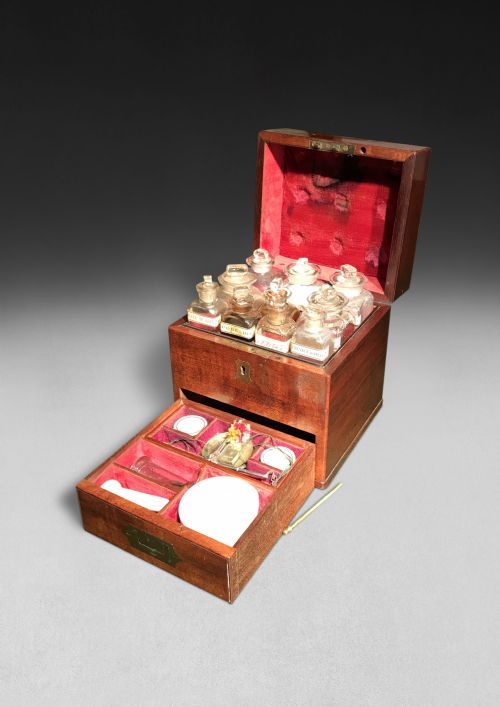
The most common versions on this page are mahogany apothecary boxes and fitted chests dating from the Georgian, Regency, and Victorian periods. You also find banks of drawers, veterinary cabinets, and instrument cases housing original glass bottles or lenses.
Originating across the nineteenth and early twentieth centuries, these objects reflect the medical practices of their eras, often retaining fitted compartments and velvet linings.
How they were made
Cabinet makers utilised dense hardwoods such as mahogany and burr walnut to construct the primary carcases, ensuring durability for travel or surgery use. Brass hardware, including flush carrying handles and escutcheons, reinforced corners and added secure locking mechanisms.
Interiors required precise carpentry to create pigeonholes and slots for glass bottles, frequently lined with velvet or leather to protect fragile glassware. Inlays and polished wood finishes demonstrated the fine craftsmanship applied to utilitarian objects intended for professional practitioners.
Antique Medical Chest Retail Price Guide 2026
Typical asking prices for medical chest among the pieces listed under this phrase on Sellingantiques today, from the lower quarter to the upper quarter. They describe what is for sale here now, not the wider market.
What varies in quality
The standard of timber selection and internal joinery largely determines the grade of an antique medical chest. Superior examples display figured mahogany or burr walnut veneers, secret drawers, and complex locking systems that secure all compartments simultaneously.
Completeness dictates much of the appeal, as chests retaining their original glass bottles, stoppers, and medical instruments command greater regard than stripped carcases. The sophistication of the layout, from simple homeopath boxes to elaborate dentist cabinets with multiple drawers, separates basic utility from high craftsmanship.
Maws And Son London
The Antique Medical Chest Glossary
- Apothecary box
- A fitted wooden case designed to transport medicines and phials safely. These boxes typically feature a hinged lid and a locking lower drawer.
- Bank of drawers
- A multi-drawer storage unit used in pharmacies and surgeries to organise dry ingredients and equipment. They provide substantial storage capacity in a compact footprint.
- Homeopathic chest
- A smaller carrying case intended for the specific storage of homeopathic remedies in tiny glass vials. They often appear in pairs or compact tabletop formats.
- Escutcheon
- A protective brass plate surrounding a keyhole on the exterior of a box or chest. It prevents the surrounding wood from splitting through repeated use of the key.
Antique Medical Chest: Frequently Asked Questions
What is an antique medical chest?
An antique medical chest is a purpose-built wooden box or cabinet created to store medicines, glass bottles, and surgical instruments safely.
These pieces vary from portable travelling cases used by doctors to larger desktop and freestanding cabinets found in nineteenth-century surgeries.
How were medical chests used?
Practitioners, ship captains, and households utilised these chests to dispense remedies, prepare prescriptions, and transport delicate pharmaceutical equipment.
Interior compartments kept glass bottles upright and secure during transit, while locking mechanisms protected dangerous substances from unauthorized access.
How do I date an antique medical chest?
Dating relies on timber choices, brass hardware styles, and construction techniques visible across Georgian, Regency, and Victorian periods.
Mahogany and simple brass handles usually point to the early nineteenth century, whereas burr walnut and more complex cabinetry often indicate later Victorian manufacture.
Are original bottles usually included?
Some chests retain their original glass bottles and fitted instruments, while others survive as empty storage cabinets due to centuries of use.
Finding a chest with its complete set of labelled bottles and intact velvet linings adds significantly to its historical integrity.