




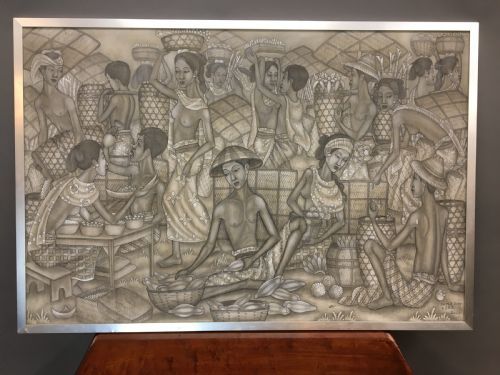


Antique Market Painting
These antique market painting works capture bustling town squares and commerce scenes across Britain and Europe through oils and watercolours.
Antique Market Painting
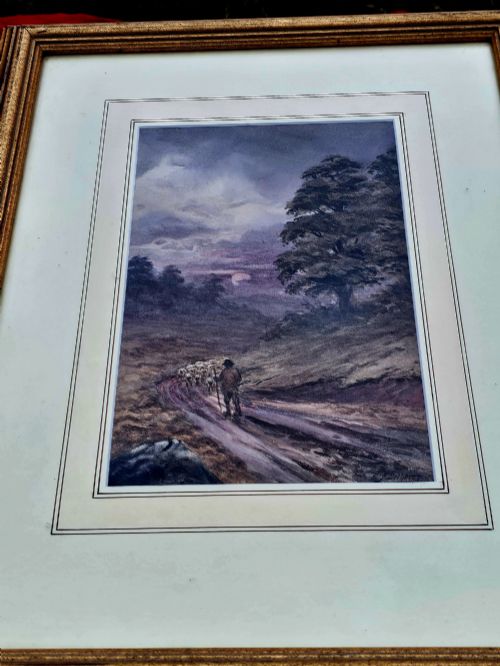
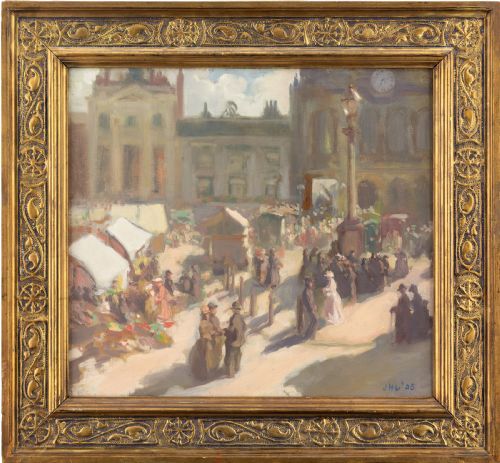
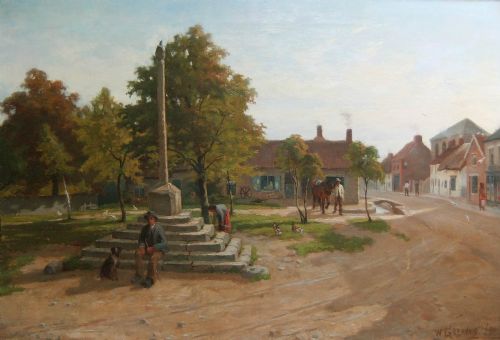
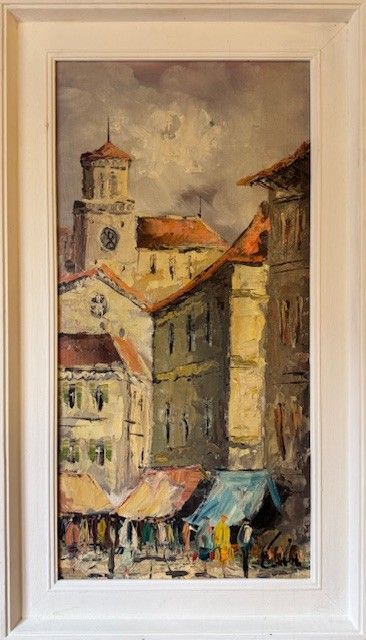
An antique market painting depicts public trading scenes, town squares, and figures gathered around stalls from the nineteenth and early twentieth centuries. These works range from detailed British street watercolours to broader continental townscapes executed in oil on canvas or panel. Buyers encounter bustling Dutch flower markets, Venetian canalside commerce, and quiet Yorkshire village gatherings.
The compositions frequently focus on daily life, showing vendors with baskets, cattle being herded, and historic market crosses. Mediums vary from delicate watercolours on paper to textured oil paintings housed in period giltwood frames. Pieces from this selection span Victorian genre scenes through to Edwardian townscapes and British Impressionism.
Materials and methods
Artists relied primarily on oil on canvas, oil on panel, and watercolour on paper to record these vibrant trading scenes. Canvases and wooden panels provided a stable ground for rich oil pigments, allowing for layered brushwork that defined figures and architecture. Watercolours on paper offered fluidity for lighter atmospheric effects, often enhanced with gouache highlights.
Framing played an integral role in presentation, with many works preserved in period wood and giltwood frames that complement the painting style. Porcelain figures occasionally supplement the flat art, showcasing moulded and painted ceramic techniques from European factories.
Antique Market Painting Retail Price Guide 2026
Typical asking prices for market painting among the pieces listed under this phrase on Sellingantiques today, from the lower quarter to the upper quarter. They describe what is for sale here now, not the wider market.
Listings feature works from the nineteenth century up to the 1930s, executed in watercolour, oil on canvas, and porcelain.
Distinctions in quality
Quality rests upon the artist's ability to render human movement and architectural perspective within a crowded square. Stronger examples display confident brushwork and a balanced handling of light across figures and market stalls, whereas lesser works remain stiff and formulaic.
The preservation of the original paper or canvas, alongside authentic period framing, elevates a piece. Finer watercolours retain their original vibrancy without excessive fading, while oil paintings show stable surfaces free from heavy retouched areas.
Thomas Ellison·John Hodgson Lobley·Cornelis Christian Dommersen·Joseph W. Milliken·Royal Copenhagen·Samson of Paris·Rowland Henry Hill·Luigi Pastega
The Antique Market Painting Glossary
- Watercolour on paper
- A painting medium consisting of water-soluble pigments applied to paper. This technique allows for translucent washes and delicate atmospheric effects.
- Oil on canvas
- Pigments bound in a drying oil applied to a stretched woven fabric support. This combination permits rich texture and depth of colour.
- Genre painting
- Artwork depicting scenes from everyday life, typically involving ordinary people engaged in common activities. These works provide social history through art.
- Giltwood
- Wood carved and coated with gold leaf or a gold-coloured finish. This material is standard for traditional picture frames of the period.
- Townscape
- A painting or drawing depicting a built urban environment, streets, and public squares. These views often record historic architecture now altered or lost.
Antique Market Painting: Frequently Asked Questions
What periods do these market paintings date from?
The works span the nineteenth and early twentieth centuries, covering Victorian, Edwardian, and early modern periods.
Most pieces originate between the 1850s and the 1930s, reflecting changing artistic styles across Britain and Europe.
Where were these market scenes usually set?
Artists painted locations across Britain, including Yorkshire, Somerset, and Sussex, as well as continental European destinations.
Frequent continental subjects include Dutch flower markets, French town squares, Venetian canals, and Belgian market places.
How do watercolours differ from oil paintings here?
Watercolours are painted on paper using translucent pigments, creating lighter, more luminous atmospheric compositions often suited to town views.
Oil paintings utilise canvas or panel supports, offering deeper colour saturation and visible brush texture suited to heavier framed works.
How should I display a framed antique painting?
Display paintings away from direct sunlight and excessive humidity to protect fragile paper supports, watercolours, and giltwood frames.
Ensure the hanging wall can support the weight of heavier framed oil canvases, using appropriate picture hooks.