


Antique Marble Sofa Table
An antique marble sofa table brings classical stone and fine timber together for a room that needs a solid anchor.
Antique Marble Sofa Table
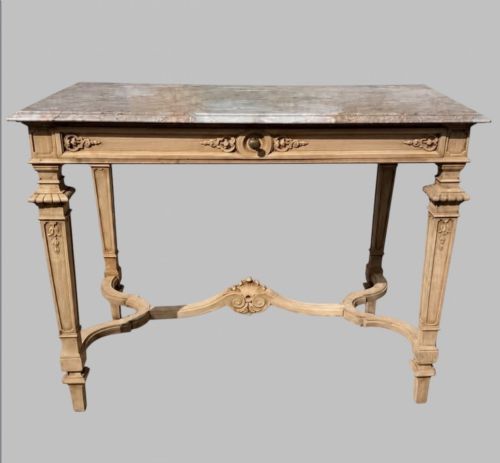
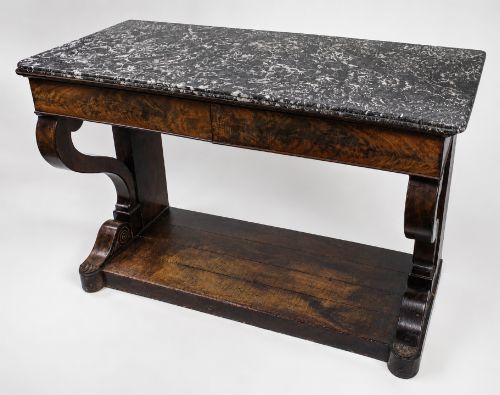
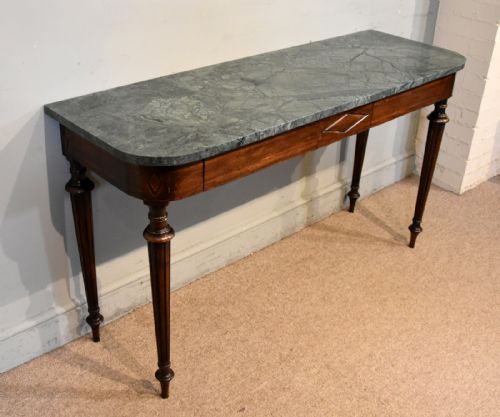
An antique marble sofa table usually takes the form of a console, side, or centre table designed to sit against a wall or in the middle of a room. The listings show a strong presence of French and English pieces, spanning the Regency period through the nineteenth century and into the early twentieth century.
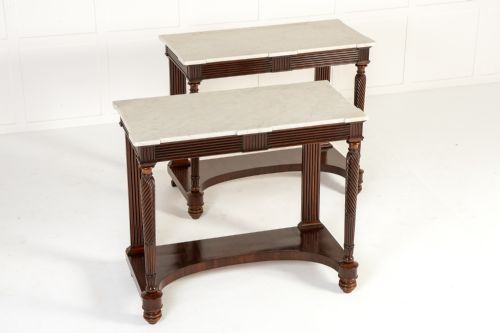
The primary function of these tables is to provide a sturdy stone surface atop a decorative wooden base. Console tables and side tables dominate the selection, offering substantial marble slabs supported by carved and polished frames.
How they were made
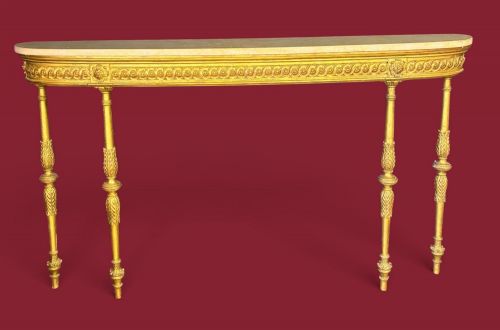
The construction relies heavily on dense hardwoods such as mahogany, rosewood, and walnut, paired with heavy marble tops. Cabinetmakers often employed gesso and giltwood to embellish the wooden frames with intricate classical motifs.
Makers shaped the timber using traditional joinery before mounting the stone slabs securely to the upper frame. Surface finishes range from French polish on figured veneers to painted and parcel-gilt treatments on simulated woods.
French Rococo, Neoclassical, and Louis XVI Revival styles dominate the decorative woodwork across the available console and centre tables.
What varies in quality
Quality rests primarily in the depth of the timber figuring and the weight and type of the marble used on the top. Finely carved giltwood and detailed mounts separate standard utility pieces from high-style revival works.
The crispness of the carving on the wooden frames and the symmetry of the wood grain dictate the standing of each piece. Superior examples show careful selection of flame mahogany or burr walnut paired with thick, well-figured stone.
The Antique Marble Sofa Table Glossary
- Console table
- A table designed to stand against a wall, frequently fixed with brackets. These pieces often feature decorative front legs while relying on the wall for extra stability.
- Giltwood
- Timber coated with gold leaf or a gold-coloured metallic finish. This treatment appears frequently on frames styled in the French taste.
- Regency
- A British design period spanning the early nineteenth century. Pieces from this era often draw on classical Greek and Roman motifs.
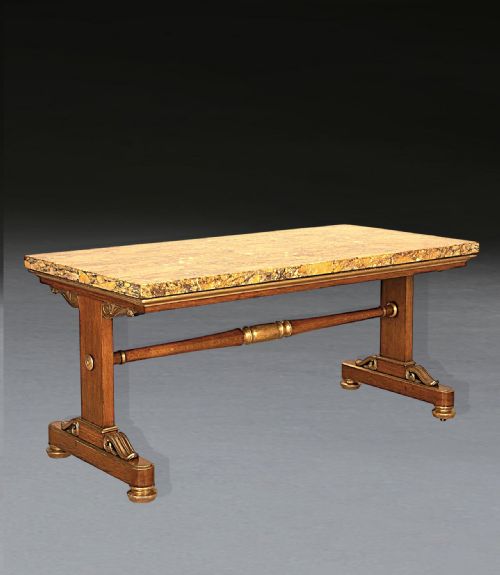
- Siena marble
- A distinctive yellow and brown Italian marble prized for its varied veining. It appears on select nineteenth-century centre tables.
- Flame mahogany
- Timber cut from the fork of the mahogany tree to create a distinctive flickering grain pattern. Cabinetmakers used this veneer for prominent table surfaces.
Antique Marble Sofa Table: Frequently Asked Questions
Where should I place a marble console table?
These tables suit hallways, living rooms, and dining spaces where a narrow footprint is useful. Their flat stone tops handle lamps and decorative objects with ease.
Because many console tables are designed to stand against a wall, they fit well in narrow entryways without obstructing movement.
How do I clean an antique marble top?
Use a soft, damp cloth with mild, pH-neutral soap to wipe down the stone surface. Avoid acidic cleaners, vinegar, and abrasive pads that can etch the polish.
Dry the marble thoroughly after cleaning to prevent water spots from forming on the polished finish.
What is the difference between a console and a centre table?
Console tables are built to stand flush against a wall and often feature finished detail only on the front and sides. Centre tables are finished on all four sides to sit in the middle of a room.
Both types utilise marble tops, but centre tables allow access from every angle.