

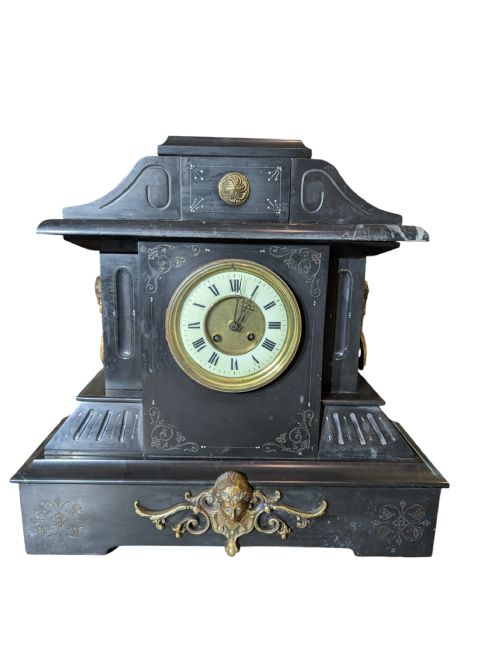


Antique Marble Mantelpiece
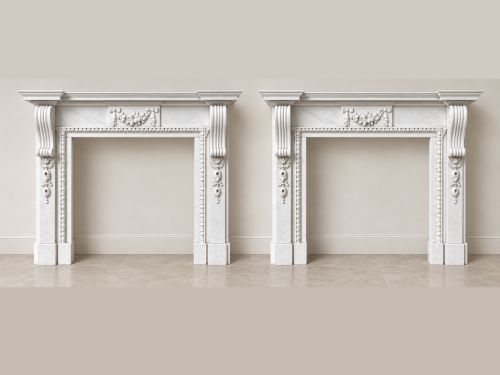
These antique marble mantelpiece items bring heavy stone and metal work to a hearth, offering solid classical presence and functional timekeeping.
Antique Marble Mantelpiece
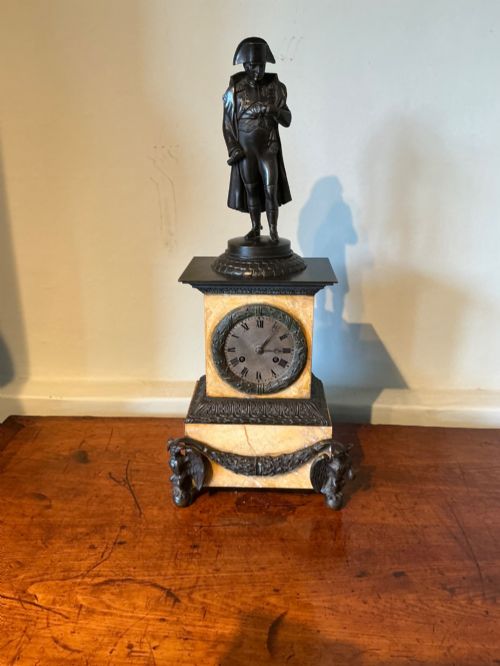
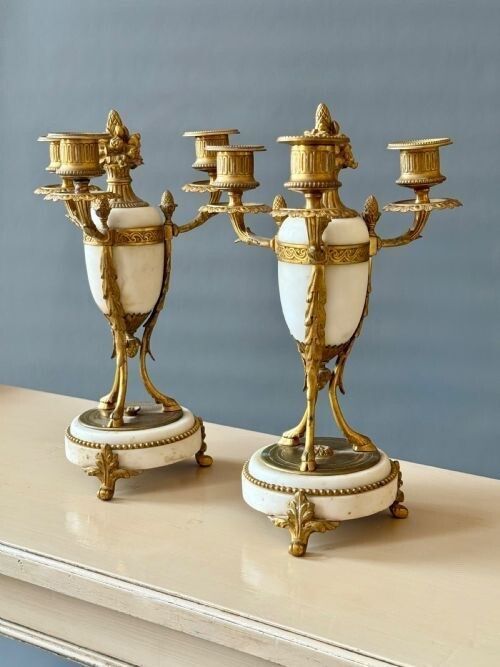
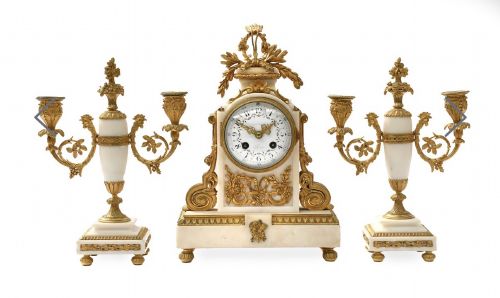
When you search for an antique marble mantelpiece, you encounter heavy stone hearth furniture and decorative garniture sets designed to sit upon a fireplace surround. These items frequently take the form of French mantel clocks flanked by candelabras or urns, drawing on nineteenth-century design idioms.
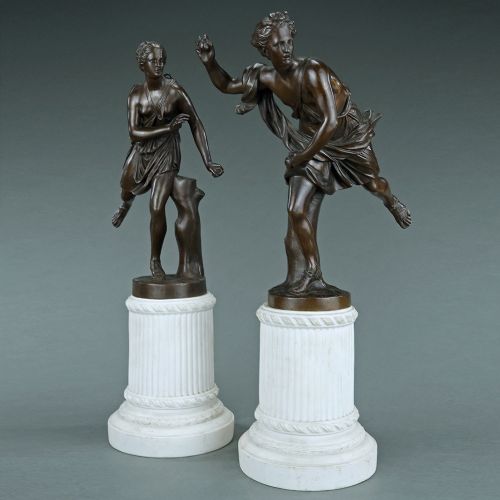
The versions most commonly met on this page combine carved stone blocks with cast metal mounts, originating from nineteenth-century France and England. They range from architectural clock cases in white or rouge marble to sculptural groups mounted on stone plinths.
Makers and workshops of the Victorian and later periods produced these works to anchor formal rooms, utilising contrasting stones like sienna and black rouge griotte. Collectors select them for their architectural weight and the integration of stonework with metal casting.
Materials and Construction
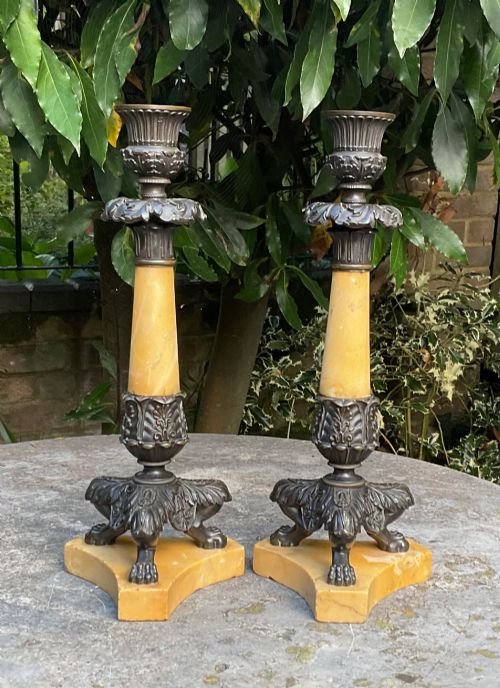
Makers built these pieces using solid blocks of natural stone, principally white marble, red marble, sienna, and black rouge griotte, shaped into architectural cases and sculptural bases. Stonemasons cut and polished the heavy mineral blocks to precise geometric or curved profiles.
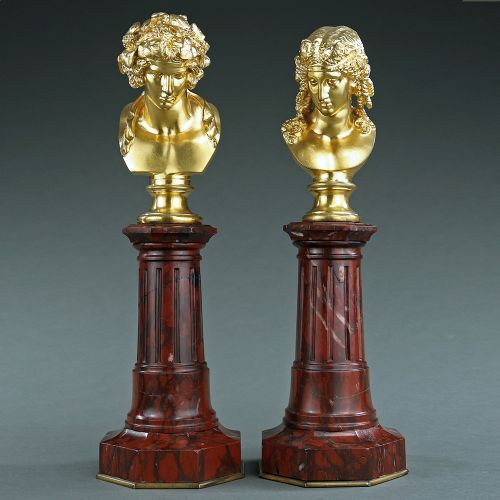
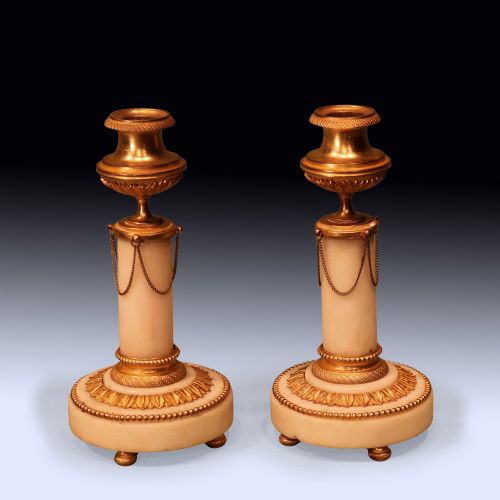
Foundries supplied the cast metal elements, utilising bronze, brass, spelter, and ormolu to create figures, dials, urns, and decorative mounts. Craftsmen applied fire gilding or chemical patination to the metal surfaces before securing them to the stone bodies with threaded pins.
Distinctions in Quality
Quality rests in the crispness of the stone cutting and the depth of the metal chasing, where sharper relief and cleaner joints distinguish finer workshops from standard production. The density and grain of the marble itself, together with the weight of the cast bronze or ormolu mounts, signal higher standards of manufacture.
The integration between the stone case and its metal garniture reveals the maker's care, with superior examples showing tight, flush fitting without excessive gap or filler. Original mercury gilding and well-preserved clock movements retain their integrity far better than later replacements or crude restorations.
Barbedienne·Thomas Hope·Baby and Jannings·C Masson
The Antique Marble Mantelpiece Glossary
- Garniture
- A set of matching decorative objects, typically a central clock accompanied by a pair of urns or candelabras designed to sit together on a mantel.
- Ormolu
- Finely chopped brass or bronze that is gilded with gold amalgam, producing a rich golden surface finish on decorative mounts.
- Rouge Griotte
- A deep red, mottled French limestone or marble often used for architectural clock cases and decorative bases.
- Sienna Marble
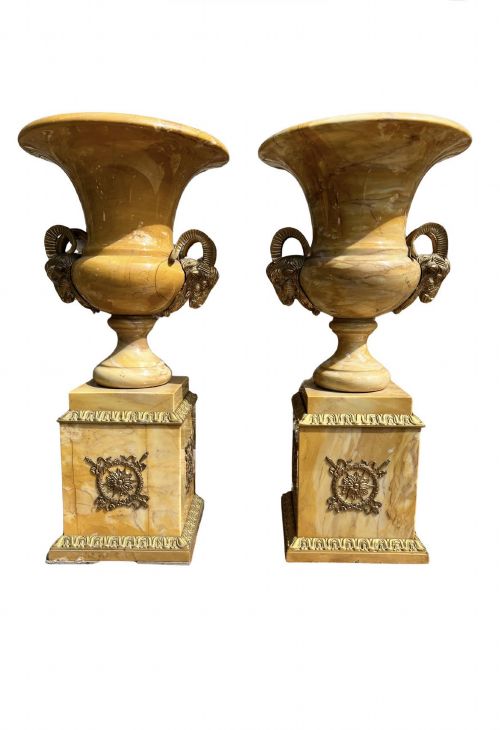
- A yellow or ochre-coloured Italian marble featuring dark veins, frequently utilised for Grand Tour vases and clock plinths.
- Spelter
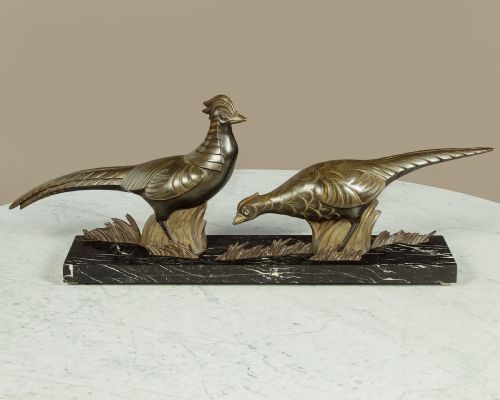
- An alloy of zinc and lead used as a cheaper substitute for bronze in casting decorative figures, particularly during the Art Deco period.
Antique Marble Mantelpiece: Frequently Asked Questions
What is a clock garniture?
A clock garniture is a matching set comprising a central timepiece and matching side pieces such as urns, vases, or candelabras. These sets were designed to create a balanced display across a fireplace shelf.
The central clock anchors the arrangement while the flanking pieces repeat the materials and decorative motifs, ensuring visual harmony in a formal interior.
How do I identify French Empire style?
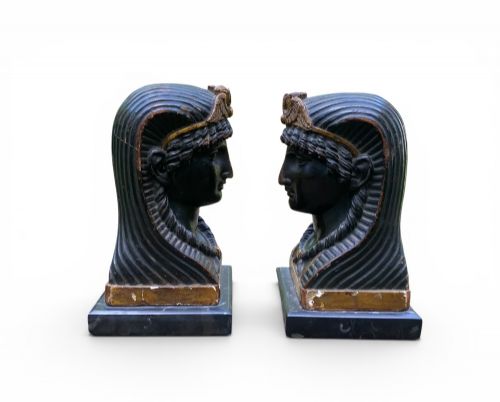
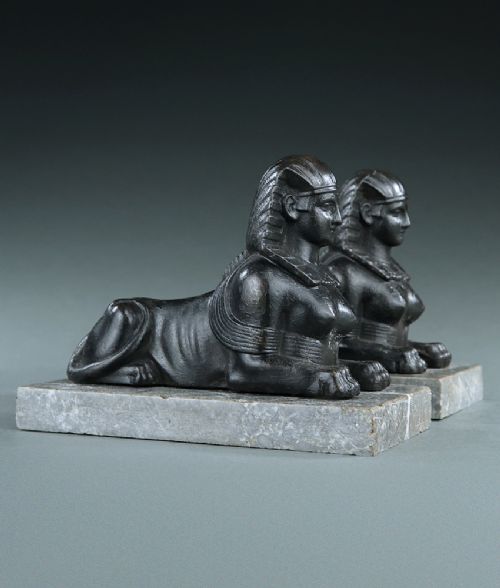
French Empire style relies on classical antiquity, drawing heavily on Greek, Roman, and Egyptian motifs. You will notice military trophies, sphinxes, laurel wreaths, and precise bronze mounts against dark marble.
This aesthetic emerged during the early nineteenth century under Napoleon, favouring heavy symmetry, rich gilding, and strong architectural presence.
What is Grand Tour marble?
Grand Tour pieces were acquired by wealthy travellers visiting classical sites in Italy and France during the eighteenth and nineteenth centuries. They often take the form of miniature architectural obelisks, classical busts, or decorative vases.
These items utilise distinctive local stones like sienna and rouge marble, serving as portable evidence of an educated traveller's continental journey.
How should I clean marble mantel pieces?
Cleaning antique marble requires nothing more than a soft, dry cloth to remove dust from the surface. Avoid chemical cleaners, acidic substances, or excess water, which can penetrate unsealed stone or damage old metal patinas.
For gilt bronze or ormolu mounts, a gentle dusting is sufficient, as harsh polishing removes the thin layer of gold leaf.