

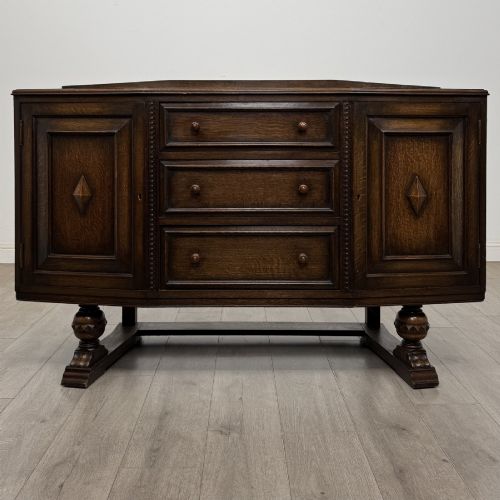
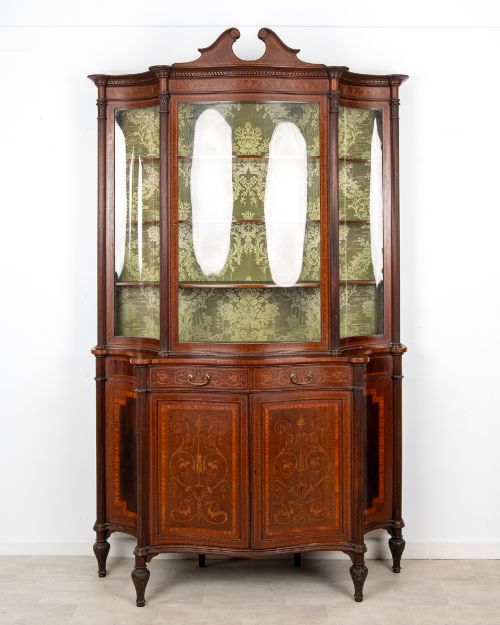


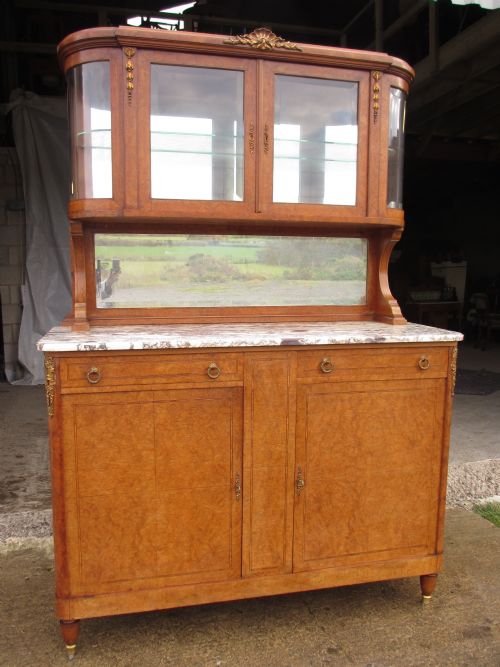
Antique Maple Sideboard
An antique maple sideboard brings figured grain and substantial storage into a dining room or hall.
Antique Maple Sideboard
The selections span several distinct periods including the 18th century, 19th century, the Edwardian era around 1900, and the Art Deco period of the 1930s. Alongside standard maple, variants emerge featuring contrasting timbers and specialised cabinetry work.
Many examples incorporate glass panels or marble tops, shifting the traditional sideboard form toward display cabinets and buffets. Origin styles range from British Victorian and Edwardian pieces to French Belle Epoque and American colonial furniture.
How they were made
Makers constructed these sideboards using solid timbers and decorative veneers, often highlighting the distinctive circular patterns of birds eye maple alongside mahogany, walnut, and satinwood. Carved details and serpentine curves shape the structural fronts of the 19th and 20th century pieces.
Metal hardware such as brass handles and ormolu mounts complement the woodwork, while fitted keys secure cabinet doors. Marble tops appear on specific buffet variants, adding a durable stone surface above the wooden framework.
Antique Maple Sideboard Retail Price Guide 2026
Typical asking prices for maple sideboard among the pieces listed under this phrase on Sellingantiques today, from the lower quarter to the upper quarter. They describe what is for sale here now, not the wider market.
Some French buffets arrive complete with their original keys, unlocking centuries-old cupboards that likely held secret dessert wines.
What varies in quality
The standard of a sideboard rests on the selection and matching of the maple veneer, where tight, even figuring across large doors commands greater attention than plain timber. Finely carved wood ornaments and robust structural joinery distinguish workshop standards from ordinary production.
Hardware execution also separates pieces, with substantial brass mounts, original ormolu, and integrated locking mechanisms reflecting high grade cabinet making. The inclusion of secondary woods like mahogany and satinwood for inlay work indicates finer manufacturing ambition.
Maple and Co
The Antique Maple Sideboard Glossary
- Birds Eye Maple
- A figure in maple wood resembling tiny swirling eyes caused by local disruptions in the grain growth. This decorative pattern is highly prized for cabinet doors and drawer fronts.
- Ormolu
- Gilded bronze mounts applied to furniture as decorative handles, feet, or surface ornaments. It appears frequently on French buffet pieces.
- Serpentine
- A furniture front characterised by a wavy shape with a convex centre flanked by concave curves. This contour requires skilled carpentry to execute on cabinet doors.
- Breakfront
- A large cabinet or bookcase where the central section projects forward from the flanking wings. This architectural arrangement creates depth and visual variety on large storage walls.
- Satinwood
- A durable hardwood with a lustrous, golden-yellow sheen used for contrasting stringing and inlay work. It often frames darker maple panels.
Antique Maple Sideboard: Frequently Asked Questions
What is an antique maple sideboard?
An antique maple sideboard is a substantial storage piece made primarily from maple or birds eye maple wood, designed for dining rooms and living spaces. These pieces provide surface display areas and enclosed shelving behind doors.
They appear across various eras including the Victorian and Edwardian periods, as well as Art Deco designs from the 1930s.
Where should I place a sideboard?
A sideboard sits naturally against a dining room wall to store crockery, glassware, and table linens while offering a surface for serving food. They also function effectively in large hallways or drawing rooms as display surfaces.
Consider the clearance needed for opening cabinet doors and drawers when positioning the piece in a room.
What materials are used besides maple?
Cabinet makers frequently combined maple with mahogany, walnut, and satinwood for contrasting borders, inlays, and structural frames. Brass hardware, glass panels, and marble tops also appear across the surviving pieces.
These mixed materials add structural strength and decorative contrast to the figured maple wood.